Showing posts with label writing. Show all posts

Monday, 3 December 2012

58. Lessons from the movies: Always be thinking about deadlines


For as long as there is printed media, or radio stations, or television there will always be deadlines.

You could have the best story in the world... but you get it in late and it is worthless. Now this may be an outmoded concept in a few years time.

And indeed it is arguably an already outdated idea for internet news bulletins but for everyone else it is still useful.

There is nothing like the pressure of a deadline to concentrate the mind. The news editor breathing down your neck can - oddly - bring clarity and focus to your work.

No more worrying about the right choice of words for your intros - just get the bloody thing written, broadcast, read.

And do not think that because a final deadline is, say 7pm, that's when you have until to write it. Unless you are writing the splash it's often a lot earlier.

Even on weeklies there has to be a steady flow of copy coming through. Those sub-editors don't come in just to eat their packed lunches.

So if out on a job - especially if you are working for a daily - keep a constant eye on the time. Don't forget to report in - but not too often - when you have a significant line or there has been a major development (apart from any thing else your story could be moved up the list).

If working fresh on a story allow yourself at least 20 minutes before the deadline to write your copy. If you are working on a developing story start writing before you get there.

But that is breaking news.

For the most part that is not the case. It is just filling in the bread and butter stories that is an issue.

Again this is why diaries are often useful. They allow a paper to propel itself into the forthcoming week - even if nothing much is happening on the patch.

Today's clip is from the 1940 classic His Girl Friday...

Cary Grant plays the cynical newspaper editor trying to hold on to his ace reporter - who also happens to be his ex-wife.

Sounds cheesy but under Howard Hawks's direction it is hilarious and fast-paced. And there's some great lines about journalism.

It is based on a 1929 play The Front Page - which was adapted into another movie in 1974... called The Front Page.

Anyway if you are interested you can buy the movie from Amazon - which, you see, is my effort at advertising.

This is the link:

Thursday, 15 November 2012

55. How to sell stories and photographs to newspapers and magazines.

There has never been so much need for journalism... and so little desire to pay for it.

But there is a lot to admire in the Samuel Johnson school: "No man but a blockhead ever wrote except for money."

There are, of course, plenty of blockheads. And to be fair you do need the experience to be a journalist - not a blockhead.

But let's face we are not writing for charity... and even if you are writing for charity, you'd like to get paid, right?

The prospect of actually earning money for what we write is what makes us professional journalists... unlike amateur or citizen journalists.

(Which strictly speaking isn't correct if you are British. We are subjects - but I think the idea of having subject journalists would only confuse matters - so let's stick with citizen.)

So to the point. Can you make money in this game while studying?

The simple answer is: Yes, you can. And should you be doing it? Yes, you should. And will you make a fortune doing it? Er, no.

If you've read these posts from the beginning - read lots of different papers, read the local newspaper, make contacts etc etc - and future ones this is what it is all about.

That is unless you have private means and want to be a journalist as a hobby - then please skip a few posts, there is nothing to see here.

For the rest of you this is what you do.

First off a question: What is the media? This isn't some bullshit philosophical question.

The correct answer is: Information, written/filmed/recorded/photographed and packaged for certain target audiences.

They generally fall into four categories: Geography, socio-economic, consumer or interest.

It is the wonder of our pluralistic media that everyone - or, at least, nearly everyone - is catered for. (Alas Hermit Monthly folded on account of the distribution costs.)

What does all this mean? Simply put having the right information (story) to yourself (exclusively) and packaging it (writing) to the right target (media organisation) means you may - just may - get paid for it (there are never any guarantees).

Note, no one is asking for your opinion (that probably isn't worth anything - at least not yet).

For now the basics:

1. Get a story: They come from all over the place - check the rest of this blog on how to do this.

2. Make sure it has not already been written: Go on the internet and search the mainstream media. Not just the paper you want to sell to but all of them.

3. Write the story: Unless you are already an established freelance you are highly unlikely to be paid on spec for an idea or concept. Otherwise known as "being put on an order".

4. Double check everything: Make sure your story is watertight. Muck it up now and you could be wasting a lot of people's time - not a good thing for them... or you.

5. Get a friend to read it: (Optional) Find someone who is willing to pull your work apart. Listen to their questions. If they can find holes in your work - you can be sure so will a professional news editor.

6. Try to get a package together: If there are photos/words to be had, make sure you've got them.

7. Think where you are going to place it: Decide where this particular story would best fit (this will change from story to story) and, importantly, who will pay.

8. Pitch: Generally speaking a cold call should go to a news/picture desk. If you live in the provinces find out who the area man is, especially if you are planning to make a go of this and continue to produce future stories.

9. Get the timing right: There is little point trying to sell something (unless it is huge and immediate) after news conference.

10. Hope and learn: If you've got a surefire winner you will probably know straight away. Don't get disheartened if it is rejected...

Future posts will go into more detail on some of these. In the meantime if you think you have a story drop me a line: journalismtips@hotmail.co.uk - if I can I'll make suggestions for UK papers.

Good luck.

Haven't got enough of journalism tips? Then "like" my Facebook page for updates and extras... https://www.facebook.com/JournalismTips


Wednesday, 7 November 2012

Journalism Tips. 51. Writing stories. Why I think you should take I out.


Sir Humphrey: The identity of the official whose alleged responsibility for this hypothetical oversight has been the subject of recent discussion is not shrouded in quite such impenetrable obscurity as certain previous disclosures may have led you to assume; but not to put too fine a point on it, the individual in question is, it may surprise you to learn, one whom your present interlocutor is in the habit of defining by means of the perpendicular pronoun.
Hacker: I beg your pardon?
Sir Humphrey: It was... I.


So far we've gone through the basics of finding people, using FoIs and the basics of making contacts. More on these subjects in a later posts.

Now we come to the business of actually writing the story.

As a general rule of thumb whenever you are tempted to write anything that is to be read by more than a handful of people go through it removing the word "I" - unless it is in quotation marks and somebody else has said it.

This goes for most news, features and reviews... and an awful lot of comment too.

If you don't believe me (again only to be rarely used) try reading a paper at random...

Pick up the Daily Express and run through its news pages. Or The Mirror... or the Bridlington Post... or the Falmouth Packet... or The Economist... even i won't have news stories with the word I (unless it is about the paper's circulation - but let's draw a veil over this).

Unless you are a fundamental part of the story - and going along to an event does NOT make you a fundamental part of the story it makes you an observer - you should never use it.

Instead what you write should be about other people. It is part of writing as a journalist. It is not to say that gonzo journalism or first hand reporting will never feature in your career it is just at this stage it is best to leave it on the park bench, give it a lolly and tell it you'll be back in five minutes - then not return to that area for at least the next five years.

"I" is what Twitter is for... not readers of your news stories.

Similar when reading student articles interviewing someone vaguely famous there is far too much what a great honour it is for the interviewer to meet them. Why "it's not every day that you get to meet global superstar and singer extraordinaire Frankie Cocoza..." (at this stage I'd like to apologise to readers of this blog from outside of the UK for even introducing the concept of a Frankie Cocoza into your consciousness. Needless to say he is some irritating little no mark who once appeared on the UK version of X Factor).

Ask yourself: Who will be interested in YOUR experience of meeting a celebrity? What will they get out of reading about you? Why would they care?

Again, stop reading stuff online and read a few properly subbed features in a newspaper or magazine. See for yourself how they are done.

The word "I" may feature occasionally but it is not the main focus.

Now before anyone starts let's put aside the writing of the brilliant Liz Jones - yes, I did say brilliant. She had a style which is often mocked but it is incredibly successful - and well read - especially among her target audience. That however takes a lot of experience because that is what she is sharing as part of her hook for readers.

Or take Hunter S Thompson who shoe horned himself into his stroies to create Gonzo journalism. This was not done on the basis of a single interview or evening. He lived and breathed the life of his subjects - or er not in some cases. You simply haven't got the time - yet.

Perhaps more importantly once you remove the "I" from your copy you begin to write differently. It naturally changes your persepective. Your copy-style changes, and quite rapidly, to one more like that of mainstream media.

To break my own rule: I once picked up a college magazine. And every single article featured the vertical pronoun and tucked away behind the reviews and the going out pages and editorials and lengthy articles of Developing World debt were two pages on the forthcoming student elections.

An important subject for most students, one might think? Perhaps an interview to hear the voices of somebody else in the paper? A meaty subject worthy of spending some time over...? Of course not each candidate was given 30 words to say what they would do if they won office.

I consoled myself with the fact the reviewer of James Joyce's Ulysses happened to enjoy it.

Update: A former colleague who has asked to remain anonymous sent me this rather glorious tale that illustrates the above beautifully...

She wrote:

This brings to mind a story told by an old editor of mine after a terrible accident involving a ferry when a number of lives had been lost. He was told at conference by the head of news that one particular junior reporter was at the hospital bedside of a survivor who had given a blow-by-account of the horror. "Great," said my old editor. "Let's clear two pages for a first person piece." Three hours later, when the 1,500-word story was submitted, it read something like this: "I was awoken at 6.30am by a phone call from my news editor. 'Get down to the ferry station', he said, with some urgency in his voice. Immediately I grabbed my notebook and my camera and headed out of the apartment, grabbing a bagel en route." And so it went on and on and on....

To keep up to date with future tips follow @journalismtips on Twitter or sign up below.


Wednesday, 17 October 2012

Journalism Tips 45. A few #journalism books to try out.


A little break from the finding people posts as in here and here and here. This is an occasional series of books and films the trainee reporter or journalism student may want to try out. No, they are not serious Murdoch-bashing, tabloid-trashing tomes. They are just general reads for the interested and curious reader.
If you want a journalismtip out of this it is... start thinking now about those Christmas stories especially for local newspapers. It comes around pretty quickly and the news editor will be on your case sooner than you think. Make sure the stories will hold... and make sure you can keep your gob shut the next time they scream for a page 43 nib, you could find your Yuletide splash being used as a filler.


1. Waterhouse On Newspaper Style by Keith Waterhouse
Simply brilliant. A classic. Every junior reporter - and indeed quite a few seniors - should have a copy. It was originally written as the style guide for the Daily Mirror (or as he would put it the Daily Mirror style guide) some time in the 1980s.
It's said that copies were photocopied and passed around from journalist to journalist. One day a reporter bumped into Waterhouse and asked him to sign his copy. Realising it was such a popular book he decided to publish it.
The book covers everything you could possibly need to know about writing by a master of his craft.
Revel Barker Publishing. Priced £9.99.


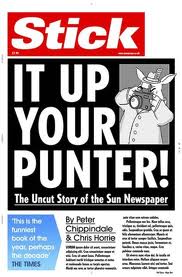
2. Stick It Up Your Punter: The Uncut Story of the Sun Newspaper by Peter Chippendale and Chris Horrie
Entertaining, funny and (for some) shocking all at the same time. Told in a lively way it delves into how the culture at News International developed over time. How investment in its brand of journalism and a swiftness to react made The Sun the country's best-selling tabloid and smashed its once superior rival dominance of the red top market. It may also give you a different perspective on the Wapping industrial dispute. The authors also wrote the equally excellent Disaster: Rise and Fall of News on Sunday - Anatomy of a Business Failure now out of print.
Pocket Books. Priced £7.99.


3. Tickle the Public. One Hundred Years of the Popular Press by Matthew Engel
Very interesting romp through the history of newspapers during the 20th Century. See how British newspaper habits moved from The Times to the Daily Star in a space of a few decades.
And if you think it is no longer applicable, then think again. The title comes from the rhyme popular in Fleet Street in the 19th Century: Tickle the public, make 'em grin, the more you tickle, the more you'll win. Teach the public, you'll never get rich, you live like a beggar, and die in a ditch. (In other words the perfect advice for new web start-ups.)
Now out of print but available on Amazon. Priced £00.01 to £98.27 + p&p.


4. My Trade: A Short History of British Journalism by Andrew Marr
You can't help but feel the Leveson Inquiry could have saved itself a few  weeks of questions if all the lawyers had bought themselves a copy of this enjoyable guide to modern reporting by the BBC's top - and very self-deprecating - interviewer. In a few pages the former editor of the Independent explains why by-lines are so important to reporters, how contacts work, the day to day of newspaper production - and, in particular, his own specialism the lobby - before moving on to how television reporting differs to print. Plus, as the title suggests, there is a wider view on how British newspapers have developed down the years.
Pan MacMillan. Priced £8.99.


5. Shock! Horror! The Tabloids In Action by Sally J. Taylor
It is easy - as well as being very lazy - to think that tabloids just make up all those sensational stories. That is not to say it has never happened but much of it is just down to hard work, dogged determination and (in the old days) very large cheque books being whipped out at just the right time. S.J. Taylor tells some of the stories behind the headlines (to use a cliche).
Now admittedly it has been a few years since I last read this excellent book but S J Taylor has written extensively on newspaper history since then. Particularly about the Daily Mail, An Unlikely Hero: A Newspaper Reborn - Vere Rothermere And How The Daily Mail Was Saved.
Out of print but available on Amazon. Priced £00.01 to £17.00.


To keep up to date with future tips follow @journalismtips on Twitter or sign up below.


Tuesday, 11 September 2012

Journalism Tips 38. How to get a job in journalism: Intros


There are two types of intro: The straight and the dropped. This deals with the former.

Some years ago the Daily Telegraph would boast about the length of its intros - 80-90-100 words plus were, if an exception, not uncommon. Particularly, if memory serves, in its cricket coverage. The writing was, of course, beautifully crafted by professionals at the top of their game... They could get away with it, you cannot.

Like many of the "rules" on the blog this is not hard and fast but a guideline - the problem is not that you occasionally break it but that you break it often.

So if your intros are regularly hitting 30-40 words you are doing something wrong. This really isn't a matter for debate. You are writing for a newspaper not a specialist manual.

Being direct does not mean dumbing down. Nor does it mean - heaven for fend - tabloid. It means being to the point. If it makes you feel any better remember you are part of the Twitter generation (well most of you).

It means that your average reader will be used to 140 character long sentences - including the spaces. That's around 22-24 word mark (I know, I've checked my own Twitter personal account - Anthony_Bonnici if you're interested - and several others, from both tabloid and broadsheet writers - to see how they compare).

So now 25 doesn't seem so bad, does it?

Here's a random example:

Channel 4 has cited concerns over security as the reason for cancelling a planned screening at its headquarters this week of a documentary film questioning the origins of Islam. (29 words)
Guardian

Channel 4 has cited security concerns as the reason for cancelling a planned screening at its headquarters this week of a documentary questioning Islam's origins. (25 words)

Or this from Associated Press (The Americans are masters of the verbose intro as they cram in too much information and reveal very little):

SEATTLE (AP) — Raffaele Sollecito, whose budding love affair with American exchange student Amanda Knox helped land him in an Italian prison for four years, maintains the couple's innocence in a new book but acknowledges that their sometimes bizarre behavior after her roommate's killing gave police reason for suspicion.

So let's look at the facts here:

1. The name: Raffaele Sollecito
2. He was on the verge of a love affair with 
3. Girlfriend's name: Amanda Knox
4. She was an American
5. And an exchange student
6. He was jailed
7. For four years
8. But continues to claim his innocence
9. In a new book
10. He admits their bizarre behaviour was suspicious
11. Amanda Knox's roommate was killed

The problem here is the reporter has not made up his mind what the important facts. And so rather than leaving something out he has put it all in — and that's why the sentence is 46 words long.

Why does it matter? Getting into the habit of tighter sentences is a useful lesson to learn, for a start. Now most "broadsheets" no longer are — they've taken the compact form. Editorial space, especially with ever squeezed budgets, is at a premium.

People's attention spans are certainly not what they were. Think I'm talking about dumbing down... try a copy of The Times, say, 100 years ago... 50 years ago... Hell! Even 20 years ago.


Here's a random article found on the Internet:


No mention of the latest deaths and not a hashtag in sightAs you can see, quite painful. Some might even say it's the future.

Let's put aside the general style and look at the second par.

The coroner for South-West Lancashire opened the inquest on the bodies of those who were killed, but, after taking formal evidence of identification in the case of nine, he adjourned the inquiry until next week. 

A total of 35 words.

Who else was he going to open the inquest for? And for all this we don't know the name of the South-West Lancashire coroner or, indeed, any details of the actual victims of this terrible railway accident.

Someone was clearly being paid by the word (actually they probably were).

Incidentally, seeing as we were talking about intros, this is what the Twitter generation would see:

Yesterday two more victims of the terrible railway accident which occurred on Tuesday evening at Ditton Junction, on the London and North-We

My own efforts for Twitter are this:

Two more people found in the wreckage of the Ditton Junction railway disaster died of their injuries yesterday taking the death toll to 15.

or with hashtags

Two more people caught in the #Ditton Junction #railway disaster wreckage died from their injuries yesterday bringing the death toll to 15.The coroner for South-West Lancashire opened the inquest on the bodies of those who were killed...

I'm sure people could do better.

To keep up to date with future tips follow @journalismtips on Twitter.


The point is lengthy sentences do not necessarily mean serious journalism. It can mean lazy flabby writing.


Ignore all these points if you are being paid by the word.


Sunday, 12 August 2012

Journalism Tips 37. How to get a job in journalism: Freedom of Information

Since the introduction of the Freedom of Information Act (FoI) public bodies have been bombarded by millions of requests for all manner of pointless and trivial data. Take this about zombie attacks in Leicestershire there is a real danger that such requests will result in pressure for the FoI to be tightened up — and believe me that's what every council, MP and every other public body wants. To a certain extent you can't blame them as FoI Man points out says we should start listening to the Act's critics.

First and foremost I'd suggest reading David Higgerson's brilliant FoI blog which is full of updates and very useful advice and suggestions.

But simply putting in an FoI is only one part of the equation. Why do we put in FoI requests? To produce copy - too often people take their eye off the ball. The aim is produce a story - simply having the figures/documents in themselves is not enough. For example stats based FoIs are useless unless there is an angle - again this is where contacts (yes, those again) become invaluable.

A good contact may be able to steer you in a given direction and help you refine your FoI to get the results you are after - because don't think that once you've lodged your request you can sit back and wait for the stories to come popping out the other end.

For local bodies have become increasingly aware of what FoIs can do and will do everything to stall and cause problems - perhaps acting within the law but not within the spirit of it.

So it helps if you have an idea of what you are looking for - otherwise it just becomes a needle in a haystack. Too often you will get back stats that show no marked difference at all from one year to the next. In most cases that isn't news - certainly not in itself.

News, at least in this context, should be dynamic. If it is not moving than is it news? Simply reporting that there has been an average of 30 deaths a year on London Underground over the past five years is not, in itself news - it is simply a statistic, a sad one, but a statistic in itself.

Clearly this is not to say that the individual stories aren't stories themselves. Or if it emerged that one station was notorious for accidental  deaths or suicides and that nothing had been done about it. Or that every year a particular month saw figures jump. In other words you still need an angle. Simply saying that over the entire network the figures have remained more or less static is not news, it is simply misfortune. Life by its very nature comes with the risk of death attached (actually it's guaranteed so let's say premature death).

Now had the figure spiked or plunged in one of those years then there is the possibility of a story, say, an investigation into why.

But the figures in themselves are dull reading and too many student FoIs are ill thought out. Simply groping in the dark for a potential story and finding little of value or nothing.

Alternatively you should be looking for stories that will produce copy whatever the result. For example the number of pensioners who have been arrested and for what crimes. In this respect whatever the figure/details it is a story within itself.

Secondly FoIs do simply revolve around figures, reports can be opened up, expenses revealed and so much more.

Again it is a question of being judicious with your search. And again you don't have to be working on a  national newspaper to make an impact. Take this for January 2011 when Cornwall Council was making massive cuts with some of its lowest paid workers being axed and all manner of "exciting" cost saving schemes.

My initial intention was to see how much was being spent on flights by the officers. This request was rejected as too time consuming. So I narrowed my request. This time restricting it to named individuals - the Cabinet and the most senior council managers, including the £200,000+ a year chief executive.

The results were (from a story point of view) pleasing. An austerity council had spent £5,000 to sent the most highly paid man on a training course to New York. The story was subsequently picked up by the Daily Express.

So here you are seeing the situation change: Council making large cuts but the spending at the top not.

Or this. In 2007/2008 there were a spate of suicides of young people in Bridgend, Wales. The media came under fire for apparently, claimed the authorities, inflaming the situation. Simply reporting the facts, they said, was making matters worse. The fact that national interest in the situation was only aroused after the fifth such death after a local news agency began to see a "cluster" develop appeared not to be of importance. The media were to blame.

It later emerged that there had in fact been 13 similar deaths - many had gone unreported initially. Even so this was the media's fault.

The deaths continued at a grim and relentless pace. Relations between the police, health authorities and the media were, to put it mildly, strained.

But it was at one press conference that the health authority revealed it had set up a task force more than a year before the cluster had started to emerge. Under questioning - as to why they had set this group up - they admitted they were acting on the advice of a report drawn up.

The next questions were obvious. What was the report? What did it say? Who wrote it? Why was it commissioned?

It took an FoI to get the report and alas the story never got the due prominence perhaps it deserved. But it did at least come out.

So to recap don't expect the FoI to be your passport to a succession of news stories. Think about the current situation globally and see if you can adapt what you are asking. For example cuts in council budgets is there a corresponding drop in the amount the local authorities spend on, for example, entertainment - or as is becoming frequently popular these days, award ceremonies for local councils.

Look at comparing two or three councils - the contrast may give you the story you are after. For example the amount a Chief Executive spends on taxis in neighbouring local authorities. If one CEO spends nothing and the other thousands than you have a story.

Learn to hone your FoIs. And keep a note of all the details - this is the start of your contact book. Once you have the details it does get easier.

Also learn to use public bodies' websites. All too often the info will be there but, as you can imagine, it is hidden away deep inside a labyrinth - and make a note of where it can be found.

And always, always, always state that your information comes from a Freedom of Information Act request. This info should be available to the public without us having to search and beg and plead or indeed have a special law...but that's the way it is.


Monday, 9 July 2012

Journalism Tips 36. How to get a job as a journalist.

Every year thousands of students graduate from some form of journalism or media course. It makes sense therefore that competition for the few jobs available really must be pretty fierce. Or so you would think.

Actually on the whole it's not particularly competitive because most young trainee reporters cannot be bothered - to rise above the herd really doesn't take very much. These odds are shortened by the growth in traineeships on national newspapers - which Hoover (it's a trademark - hence the cap) up most of the cream of that year's journalism graduates.

That is unfair since I have seen some brilliant - well almost - trainees fail to get one of the coveted places despite having an excellent CV and references...but you see where I am going with this.

Clearly you are the smarter than average trainee/student reporter - how do I know? You are reading this.

So what do you need to do? Well an excellent portfolio helps (more of what I mean by this on a later blog). A devotion to work experience helps also (ditto).

It's often said it is not what you know but who you know that makes a difference. When I started in this industry I didn't know any journalists - but I learned what I needed to know and got to know the people who helped me find work.

Within five years I was talking to former Observer reporter John (There are three rules in journalism. First, find a crocodile. Two, poke it in the eye with a stick. Three, stand back and report what happens next.) Sweeney whose original article on the tabloids - it was written in a fun not pious manner - got me interested in journalism.

A few years on (I was pretty slow) I was working with The Sun's brilliant chief reporter John Kay. It was reading his copy that helped shaped my own (it was never as good).

Each and every opportunity gets developed by experience and your knowledge....unless your parents are execs on a newspaper, in which case forget all I've said.

Some people are naturals most are not...if you're not preparation is the key and this is in part what this blog is all about. Going back to one of the earlier posts you will see that I claim most work experience is a pain in the butt for the majority of news editors. But if a good attitude, decent work ethic and a few stories makes the difference.

It helps also if you can bring new skills to the table but get the old ones first. If you are sent out on a story there's no point getting a first class video if you haven't got the names of the people you're interviewing. You'll note the headline is deliberately geared to SEO - we are all learning new skills, as we shall see in another post that too will prove important as your career progresses.

Given the state of much of the competition you should find a job with two/three months. If you are doing work experience and following this blog (and assuming there is a position available) it shouldn't take even that long. If you are getting lots of stories and the news editor is not rewriting all your copy ask him or her if they know of any jobs around - note not necessarily on their paper. It might even be worth asking for feedback at the end of the week (but be wary news editors put in massively long hours and come the end of the working week are more interested in getting out of the newsroom that sitting talking to the workie).

Again follow up good work experience places with more calls offering stories. Being dynamic and useful are welcome attributes. But make sure you are not the cause of more problems - write the story up so it is ready to go.

Being a pain is more likely to guarantee you won't get an opportunity even if you may have an occasional good idea.

For several months I had one caller who would ask in a vague manner if I'd be interested in certain stories when I asked him to send them over he'd tell me he hadn't written but didn't want to waste his time if I wasn't going to be interested... I took his name and didn't take any more of his calls.

Most of what you do will be a waste of your time. But do enough of it and, not only will you improve as a reporter, it will get you noticed. But, but, but it's got to be to at least to a half-decent standard - again this is something that past and future blogs will cover.

But first and foremost read the papers...you'll be surprised how much you can learn.

To keep up to date with future tips follow @journalismtips on Twitter or sign up below for email updates.


Sunday, 8 July 2012

Journalism Tips 35. Why every reporter should know their history.

In order to interview and write intelligently every decent reporter should be able to rely on some residual historical knowledge of their own. While Wikipedia may solve many of the problems while sitting in the office it is very little use while in the middle of an interview.
Similarly if you don't know what to ask Wikipedia for you are never going to find it. For example if there is a dustman's (or as they are know doubt called now a peripatetic disposable environmental logistical transition officer) strike and you know nothing of the Winter of Discontent than you won't be looking for it and more importantly you won't feature it in your story.
Some years ago I spoke to a reader while on a local newspaper and he complained: "The problem is that most local reporters are just thick. The editors are usually alright - but even then sometimes..."
It is not my view. Although given the paper I was working on at the time I could see how he may have reached that conclusion.
As a general rule of thumb I'd say it is worth having a detailed understanding of the recent (five years) events), reasonable background on the past 100 years and a decent amount of knowledge on overall British history.
You see, unlike science - people will expect you to know something about the past. (Scientists are a far more understanding mob than most people and they know the chances are that the day you flunked your GCSE chemistry was the last day you ever looked under a microscope. A little tip when interviewing anyone esp scientists about their work wait for them to finish their explanation before picking up your pen and then asking if they could put it into layman's terms for the readers...you understand the concept, of course, but you feel their words would be so much better. (This usually works until the day that someone responds that they WERE using layman's terms and your general ignorance is revealed)).
So why is history important? The chances are if you are working on locals you will have to cover the usual fare of anniversaries these are usually dull and uninspiring reads generally brought about by a complete lack of interest on the behalf of the reporter to the subject matter. By knowing of the events we can better understand the person's role in them and contextualise it within our story.
Again this is not about having a detailed history - we are still writing a story - but a general over view that stops us looking ignorant. It is a surefire way to lose the respect of the interviewee..alternatively a little knowledge can go a long way.


For a readable overview of British history it's worth reading This Sceptred Isle which romps through the 20th Century...there are also CDs and, no doubt, downloads.


Tuesday, 27 March 2012

31. Sensationalism is rarely sensational, esp in local newspapers. You might get away with it once or twice but not forever.

The trouble most people have with papers like The Sun and formerly the News of the World can be encapsulated in one word: "sensationalism". That and the fact they are read by the working classes...dreadful bunch of people.

The chattering classes can ignore tabloids with a dismissive wave of the hand without ever really looking into them, naturally.


And contrary to what some former tabloid hacks will tell you I never had to make anything up (actually that's a lie I did work for ahem the Sunday Sport - I was young, I was naive, I needed the money, that's usually the excuse...actually I needed the money - and I confess that it is not true that Kangaroos played a football match or Sir Trevor McDonald's face was seen on the White Cliffs of Dover).


But oddly enough, even here I didn't need to make much up. Indeed I learned a lot in how to investigate real - if not particularly edifying - stories on shoestring budgets.


How to track down a Blind Date contestant using their first name, approximate area and clues such as: "I work in a bakery where we make all kinds of bread, if you were a loaf what kind would it be?"


(In my defence here it was the biggest show on television at the time. And I was told to find a story on it once a week. I did. Every week. In the face of the bigger tabloids.)


However the same techniques I learned there - that got me genuine stories - I applied to more productive use years later. Tracing people with few clues and not much of a budget.


The good tabloids do produce sensationalism, if you will, but that is the result of bloody hard work and months of it. And it is only very occasionally wrong. Even the best reporters can make mistakes.


On the whole though I saw a lot of investigation go into stories.


Now compare it to this story. On the face of it the front page headline is correct: Bridport: Pickpockets target market day crowds - enough to scare the wits out of any pensioner.


All well and good until you get to the quotes from anyone in authority who say they have no knowledge of such a crime even taking place. Actually it gets even worse...the purse was found and handed in to the police. Indeed one might wonder why this honesty isn't trumpeted and the answer is lazy journalism and sensationalist reporting. 


Quite frankly it looks ridiculous to almost everyone or just scares naive and gullible local people for no due reason. 


A personal theory is that because local people know their area they will soon know what is and is not true. So while you can get away with such headlines once in a while the cumulative effect is ever diminishing returns. Sales jump up year on year because the news has become so much more racy but like the boy that cried wolf people soon stop paying attention to them in locals.


For once you know someone who is connected to the exaggerated circumstances distrust, like damp in walls, creeps in. Bit by bit the foundations of a local newspaper are undermined and will crumble.


It doesn't help that people will accuse you of sensationalism if they don't like the story as happened in this particular case.


So when tempted to write over blowing the circumstances, taking that top spin a little too hard, just remember you will be caught out. And it won't look good.


Tuesday, 20 March 2012

29. Pen – paper. Paper – pen. You only need two things to do this job. Always carry spares (esp when covering court).

(Press For Time: Bike not required)

If you strip away everything else - the local newspaper reporter only needs two things. A pen and a pad. That's all.

(Although you walk into a newspaper office without a mobile phone - which naturally they won't pay you for - and you won't be staying very long.)

So it always surprises me the number of trainee journalists who walk into a newspaper office without either.

It shows a distinct lack of preparedness by the reporter. No, you shouldn't have to pay for your equipment but at the same time if you are doing an NCTJ course or a degree in journalism you would hope you would be carrying these things around with you at all times anyway.

It's what makes you look like a potential journalist and not the GCSE student considering journalism as a possible career.

Having said that pen - paper. Paper - pen.

(Tommy Cooper: The joke only works with a jar AND spoon)


It's amazing how difficult it is to bring these two elements together. But it shouldn't be.

Carry spare pens with you at all times (although I have been in court and seen three pens fail on me during a case...I should have brought a fourth).

And always have a pen and paper ready when you call or get a call from news desk - you don't want to sound unprofessional rummaging around.

It is the most basic lesson you can learn as a professional journalist - because if you are not recording it,  what are you doing?


Monday, 19 March 2012

28. Look for stories while at college, write it and tell the local paper. You never know if there's a job coming up there.

As a student journalist you should be writing news or taking photographs for the college newspaper/website/radio (obviously not taking photos for the radio station - that would be pointless).

Please note that I said news. Not reviews, not musings, not comment, not a column, not analysis, not poetry, not critiques, not op eds — just news. Let me be more specific local news.

Hard though you may find this to take no one is interested in your views on the unfolding crisis on Syria as you saw it two weeks ago but finally got round to writing it between lectures.

Neither are they going to read your 2,000 word piece on the plight of women in the Gobi Desert - even the friends who say they have, haven't.

(Press Gang: It's sort of relevant)

It's all very well wanting to be a Guardian journalist — but all you will learn by writing such articles is why the Guardian isn't very well read and how to haemorrhage readers...just like the Guardian.

(By the way unless you are reading this from Oxbridge they probably aren't going to be too interested in having you anyway - it's all rather patrician is our Guardian.)

You will learn nothing about journalism or being a journalist and will bore the pants off of any editor when they try to read your oh-so-worthy cuttings. Actually they won't even look at them and anyway the point of this blog is to steer you towards a job without much need for an interview.

And trust me it works. I know.

Like countless journalists my career began in the student newspaper. If anything it was a wheeze thought up by a friend to get us out of any real work experience (odd since three of us went and remain in the media - probably a far higher ratio than any who did it properly).

Since none of us had a clue about newspapers we went charging into it. Our first big story was that sabbatical officers had all been taking huge loans from the Student Union off the back of their wages - so large in fact that they wouldn't have been able to pay them back out of their remaining pay.

Thus fulfilling the first rule of student journalism (the paper was paid for by a Union grant)  - bite the hand that feeds you.

The fact it I had a source, we dug through files, we asked questions - if only we'd known it we had stumbled across investigative journalism.

The story made the front page of the local paper - and yup, I was hooked. Journalism was simple, fun and I enjoyed it. I've spent the next 20 years trying to maintain that...it hasn't always been easy.

But what does this all mean? The first step is that your student newspaper/website/radio is your first step to understanding journalism - you can make all your mistakes (hopefully not too many legal ones) and not too many people will care. More importantly you can learn the tricks of the trade.

Want to be a political reporter? Attend student council meetings. Get to know the student union, find out what's happening with the block grant.

Want to do investigations do general news and make contacts - they will soon start telling you things you can devote more time too.

And as for those worthy pieces?

I can assure you an article about Student Union bar price increases for next year will be read a 1,000 times more than a piece on the West's Imperialistic ambitions in a post-dictatorship Middle East. Honestly if I wanted to read that I'd pick up the Economist and read it by someone who has been there and interviewed the leading players not some spotty oik with pretensions of being an armchair John Snow.

This is not to stamp on people's ambitions. But to give a good grounding in the basics.


Wednesday, 14 March 2012

26. Avoid putting banalities in your stories (ie a budget is a budget not a “pot of cash”). They make copy look amateurish.

When I started editing a local newspaper I wanted to make a few changes - actually, I wanted to change everything.


Which isn't quite as bold as it sounds. The paper once a thriving weekly in a beautiful market town was losing ten per cent of its sales year-on-year.


If you are not prepared for change you are part of the problem.


It occurred to me that one of the issues was we were not writing for readers. Which isn't quite as daft as it sounds. People who read newspapers still read. They don't flit from article to article reading the first few...hey! come back here, thank-you....pars.


So they want something that will inform and entertain them.


What they don't want is a collection of cliches and hackneyed phrases clumped together in a 350 word page lead - tied to together with some quotes from a local councillor.


I was trying to explain this to the worst offender, a junior reporter, who "agreed" with everything I said and then did her own thing again and again....and again and again and again....


And again...and again...and again and again (ok that's enough of that).


A big part of the problem is the language we use. Sometimes you get the impression local newspaper editors hate words (see left - quite why it can't have even a few paragraphs on the front is beyond me.


Especially when even the "downmarket" Daily Star manages to fit a few precious words on the front of its pages.)


But back to my point I was left with a problem. The copy was moribund at best but what could I tell her? They weren't cliches exactly. I explained the problem to a friend, a retired English professor, giving some examples: "Ah! he said" (he was dramatic that way) "you mean banalities."


And indeed they are. Council spending comes out of budgets - it is a perfectly acceptable and understandable word. They do not have "pots of money" like some old grandmother who keeps her savings in a jar. It's a bloody budget. Two examples of how stories sound amateurish:


COUNCILS in Dorset have warned there is not enough money in the pot to repair the county’s damaged roads.


And the second:


But while the district council insists the cost of the ‘jolly’ was allocated in the budget, the authority claims there is no money left in the pot to spend on toilets.


Actually the second example simply doesn't need the "left in the pot" at all - it doesn't add anything except banality.


It's not even being used as a pun.


As always it's not difficult to find examples when you start looking. Take this 


Homes in Havering boss Sheila Belgrave has been suspended from office – but the borough’s top brass are refusing to say why!


Simply dreadful on so many different levels.


The "borough's top brass"? I mean really? What's wrong with "her managers"? or "housing chiefs" or "councillors" or "senior officers" or "the local authority".


The trouble with using banalities like this is that you are removing any gravitas from the story. This is potentially a rather serious matter but the use of "top brass" and that exclamation mark bring it down to the language of the Beano (a future blog will deal with the usage of exclamation marks).


There have been plenty of other examples all pet hates of friends and former colleagues - many of whom are respected national newspaper journalists.


What about "slammed" as in "Councillors last night slammed protesters.."? It's not so much that it should never ever be used but use it and them sparingly.


Another is "floral tributes" or "flowers" or "bouquets" or wreathes" as they are more commonly known to everyone outside of local newspapers.


I'm sure you have other examples. Please feel free to get in touch because I'd like top include them. Thanks.

Monday, 12 March 2012

25. If in doubt ASK. But don’t over do it. If you want to know if a word is hyphened look in a dictionary or online.

As journalists we are expected to ask questions — sometimes even pretty dumb ones..

(My favourite is to wait for an expert to finish some particularly complicated explanation before adding: "Yes, I get it. But how would you explain that to the layman?" Often mumbling something about wanting it in their own words. However the stupid question is often necessary to extract the raw emotion of the situation. You may see the emotions etched on the faces of, say, a family who has lost a loved one but still need to ask how they are feeling to get the quote.)

No, dumb questions are sometimes required.

Except in the office. And certainly not from the workie who wants to become a journalist.

So keep your questions to a minimum (except the best ones such as: "Would you like tea or coffee?").

A personal favourite was told to me by a friend. A secretary was escorting a potential trainee out of the office when he asked if the paper he had just been interviewed for was a daily or a weekly.

(He didn't get the job...but he's probably now editing something on the web.)

Write everything you are told down, few things rile people more than having to keep telling a student journalist the same thing over and over again.

Remember you have a huge dictionary, atlas, encyclopaedia, gazetteer sitting on your desk - and hopefully you will have been able to switch it on - all by yourself. (Actually it is amazing the number of workies who can't...instead they sit there waiting for the news editor to crawl on their knees to get to the on button - once you've established it's your desk for the week please feel free to switch the bloody thing on.)


So don't go asking how do you spell something like onomatopoeia - check it quietly to yourself online (like I've just had to - having missed the fourth "o"). Actually, if ever tempted to use the word onomatopoeia, don't.

Also don't use the word psephologists (which I can spell and which I did once) it's flash and an unnecessary technical term...I'll let you look it up.

Certainly don't ask things like is the local MP Conservative or Labour - especially if doing work experience in, say, the U.S., Australia or Scotland.

Just be careful not show off your ignorance. If you can possibly avoid it. Here's another from an agency news editor: "I had to tell a new junior who Belinda Carlisle was the other day."

Don't ask. Just nod, make sure you get the name right and then check it online as soon as you can.

You should also pick your time to ask questions. When you see everyone getting stressed, staring intently at screens and barking down the phone with a little bit more intensity than they were four hours before is NOT a time to start asking dumb questions...

Btw if anyone can put this clip onto YouTube I'd be able to upload it onto here. Thanks.
http://www.metacafe.com/watch/an-WQEVJ7b7nhbbYt/the_paper_1994_racing_towards_deadline/

Oh and if you find this useful - please RT.

Friday, 9 March 2012

24. When you've finished a story, read it back to ensure it makes sense, has no typos has been spell checked and it scans well.

You would not believe just how impressed a news editor will be at the sight of clean copy - especially if you are on work experience.

Most of us are guilty of getting sloppy when it comes to Mr Copy - we've too much to do and we're physically and mentally tired.

Take this for example:

Right-wing extremists believe ace riots in Britain are 'inevitable,' a new study claims.


I'm sure they do but however much they may enjoy the riots they are more likely to be 'race' riots - that the right-wing extremists are concerned about.

You on the other hand are fresh out of college - wanting to make a name for yourself.

Because you should see work experience as an extended job interview. That's how I got my first job and it's how many others have got theirs.

So the one thing you really don't want to do have a news editor rolling his eyes at your stupid mistakes.

I've gone into this before but it is worth reiterating. Work experience is the editor's obligations to the community at the expense of his/her news editor's time.

One of the things that I noticed while back on the weeklies was that 15/16 year olds were generally better at writing copy than 22/23 year old journalism students.

For a start they listened and took notes when they were being briefed. Secondly they wrote in a plain, unaffected style. They checked for spelling mistakes and typos, they didn't rush it or see themselves as "above" the story put before them.

They never saw the press release as dull or the people or subject matter it was about as uninteresting. They were learning all the time.

In short they were being good journalists. Bit by bit you could trust them with bigger and better pieces.

You are not going to be given a political scandal if you can't get the wedding report right.

Because behind your back people are asking: "Are they any good?" before deciding if they can trust you with anything that might have the whiff of interest about it.

A news editor once complained to me - very probably about err me - that there was not a single story in the paper that didn't need some correction by the time it came to him...and he is only the second pair of (tired) eyes.

So imagine how you will stand out if your copy is clean. Silly mistakes spotted - I mean what idiot would type "right of passage" instead of "rite of passage"? Or refer to a 10,000 seat theatre? Or...well ok, we'll just leave it there.

The fact is we all make mistakes - in some cases they are small and embarrassing. In other cases, such as claims that newspaper reporters deliberately deleted messages from mobile phones in a cynical way to get more stories, they can see hundreds of decent people made unemployed.

A simple re-read of a story before hitting the send button is often enough to spot most of them. In other cases you may have to think about your vindictive conspiracy addled mind and actually check the facts...like ringing up the phone company to see what happens when police officers listen to messages instead of jumping to conclusions because of your pathological hatred of red tops and popularity.

*All mistakes in this article are deliberate and aimed at testing your ability to spot them (naturally).


Thursday, 8 March 2012

23. 99% of national newspaper showbiz journos start by doing news and learning the trade basics - including this ex one.

One of the most depressing things I picked up from returning to local papers were the number of journalism students who claimed they wanted to cover showbusiness - without having the foggiest idea of what it actually entails.

There is absolutely nothing wrong with the first part of this. I know and admire many brilliant reporters who cover this area of the news agenda.

And whatever Hugh Mungo Grant (a man who was quite willing to pay an impoverished mother desperate to cover her utility bills to perform a sex act on him - a fact that appears to be forgotten in politicians' haste to laud him as some latter day crusader against newspaper ethics) may say it is important to cover a wide spectrum of heavy (hard) news and light (soft) news.

It is easy to dismiss showbusiness as frivolous - because it largely is. But the skills in being a good showbusiness reporter should not be dismissed.

I know not least because I did it myself - albeit incredibly unsuccessfully and under duress.

I could not muster the day to day enthusiasm required to be a good showbusiness reporter - I did have my moments but they were, I admit, few and far between.

It is telling that now I don't have to show an interest in the subject The Spectator and The Economist are my usual reads rather than Heat or Hello. (I'm not even sure about the Radio Times, if I'm honest).

You may think when you dash off 300 words of your thoughts about the latest goings-on in the Big Brother house on your blog that this is "showbusiness journalism".

Let me break this to you gently...it's not, it's shit. Gentle enough for you?

No one - and I will repeat this later on in the blog - gives a stuff what you think about Big Brother or Justin Bieber or Madonna's music or the films of Quentin Tarantino.

Because it is just your opinion. And what's your opinion worth? Well, I think at the last count naff all. (I'm using so many alternatives to swear words I may do an 18+ journalismtips - what do you think?)

So before you start writing your blog all about your views on what piece of crap you've been watching - think this. Why would it impress a showbiz editor? And does it stand out from the million other navel gazing vomit spewed onto the Internet?

And if the answer is: Haven't a clue. Wonder why you are starting it. And wonder too what you can do to change this situation.

Finally learn the basics, they are all applicable to showbusiness reporting and without them you are just another airhead wannabe.

(Unless, of course, you happen to have access to celebrities that no one else has...you haven't? Oh, then you ARE an airhead wannabe.)

But let me be helpful. What to do that would make a difference and help you achieve your ultimate goal?

If you are reading this from college get to know the Ents Secretary and the editor of the college newspaper or website. Find out what are bands/acts are coming up. Get ahead of the curve. You've got your first "showbiz story" (look, you're starting from the bottom here).

Get in contact with the act's management and ask for interviews - you will get a lot of knock backs and disappointment (yes, welcome to the world of showbiz).

Ask about music and their personal lives. What's it like going on tour? Have they been to your town before? Read, read, read...the big interviews in the red tops - see what they are doing.

When they arrive on campus - get pix (they may be the biggest band in the world next year...ok, probably not. But why risk it?)

You'll notice that so far your opinions don't come into it - there's a reason for this.

Get to know the staff at the local arts centre - it doesn't have to be the big one with 3,000 seater events. Meet with the Ents editor of the local paper...and ask if you can do reviews - of everything - in exchange for free tickets. Yes, even the local am dram (showbusiness isn't just music, or fim or TV).

(Just remember never rundown a local am dram - it really should have been my first journalismtip - they can be such hateful people.)

Find out who the local celebs are try and make contact - plead for interviews with their agents for your college mag (you're building contacts all the time and learning to network...the bloke who manages the 1980s micro-celeb may well be best mates with this year's big teen boyband).

These are the skills you need. Sitting in a darkened room, lit only by the glow of the laptop pouring out your views to all and sundry is a sad and worthless activity which will...get...you....no...err...where.

And certainly don't go to a local newspaper and expect anyone to be impressed by you revealing your ambition - just expect to be laughed at (not always to your face).

More importantly when you get - even small stories - get in touch with the showbusiness team of the paper you want to work for...even more so if you have photos.

NOTE: As always if you find @journalismtips useful or even mildly amusing please RT. Thanks.