Showing posts with label journalism. Show all posts

Tuesday, 20 November 2012

57. Lessons from the movies - what sells well.


A short post today.

Stories about institutions can often read very dry - hence there is less (not necessarily no) interest in them.

People like to read about people. It is a simple fact of life. Always remember that.

If say writing about a local college transforming itself from a failing institution to an outstanding one consider going in on the headteacher that made it happen or a student who has benefited from the changes.

Major roadworks months overdue? Try finding the shop owners who will be affected.

If nothing else it makes the photos more interesting - rather than just a hole in the ground.

You will find that time restraints will mean that too often you will struggle to find a talking head willing to be photographed... so look out for them when the opportunity arises.

Today's clip comes from the superb Billy Wilder 1951 classic Ace In The Hole.

Cynical hack Chuck Tatum brings the circus to town when a man is trapped under a rock fall.

Well worth catching if only for the opening scenes of Kirk Douglas walking into a small local newspaper...

Oh yes, and the unforgetable line: "I've met a lot of hard boiled eggs in my time - but you are 20 minutes."

You can buy it here:


Monday, 19 November 2012

56. Making money from journalism. Finding news stories you can sell.

In this and over the next few posts we will be going into detail about selling news stories.

Any idiot can give away content for free (and if you are struggling to do even that than perhaps you should reconsider your career options).

But why should you be doing it? The immediate answer is obvious: The cash.

That, however, isn't the only or most important reason (it is highly unlikely you will be paying off your university fees - more likely a couple of takeaways).

Getting into the habit of selling stories concentrates the mind more than any classroom exercise. You will be on the look out for news stories in your day to day life.

You will start to see what makes a story and what doesn't. You will be competing against journalists in the real world... and have to deal with the public in the real world.

And after that you'll have to put up with seeing your byline robbed and a 50/50 chance you won't get the money... or at least have to spend an age chasing it up.

So a few generalisations:

1. Local newspapers and websites rarely pay for stories - even front page ones.

2. Tabloids pay better than broadsheets.

3. Sundays usually pay more than dailies.

4. Human interest sells better than hard news - celebrity exclusives pay best of all.

5. Bad news tends to sell better than good news.

6. Stories about middle-class young people do better than stories about working-class old people.

7. Good new photographs will help sell a story.

8. Exclusives can pay more than selling all around - but you will only get paid on publication.

9. Prepare to be ripped off time and again (and not just by the nasty papers - who are actually more likely to pay).

10. Being first helps but until you gain trust it might not always be enough.

And remember above all else - the most important byline is the one on the top of the cheque, as the (old) adage goes.

First off if you intend to sell a story to a national or a magazine or an agency do not merely pass yourself off as a student journalist. While strictly speaking it may be true it's also dishonest.

People may be more inclined to help a student rather than a professional reporter - and, understandably, they may get mightily pissed off if they discover you've been flogging off their story and soon as you've left them.

It's a greyer area if you run it in your student publication and then sell it on because than it is in the public domain.

Secondly don't go around telling people you work for the publication you WANT to sell it to. News editors take a very dim view of this -  not least because it will be they who will be dealing with any mess you leave.

And anyway these days they have enough problems dealing with complaints (mostly imagined or exaggerated) about their own reporters without having to deal with wannabes claiming to be on their staff.

(Oh yes, that too is dishonest.)

When in doubt try: Freelance reporter, which more or less covers everything.

Now stories come from anywhere - and there are no hard and fast rules. Previous posts in this blog have given you pointers on where to find general news.

But essentially what makes a story can be anything. Your college is a good place to start (ie a college netball team playing in a foreign town hit by a hurricane would probably make a story that people would pay for - especially with photos).

If you are a journalism student and assigned a patch listen out for the unusual - a celeb moving into the local area (be careful about this as estate agents have been known to conjure up these stories at times when an expensive property in their area isn't selling).


Thursday, 15 November 2012

55. How to sell stories and photographs to newspapers and magazines.

There has never been so much need for journalism... and so little desire to pay for it.

But there is a lot to admire in the Samuel Johnson school: "No man but a blockhead ever wrote except for money."

There are, of course, plenty of blockheads. And to be fair you do need the experience to be a journalist - not a blockhead.

But let's face we are not writing for charity... and even if you are writing for charity, you'd like to get paid, right?

The prospect of actually earning money for what we write is what makes us professional journalists... unlike amateur or citizen journalists.

(Which strictly speaking isn't correct if you are British. We are subjects - but I think the idea of having subject journalists would only confuse matters - so let's stick with citizen.)

So to the point. Can you make money in this game while studying?

The simple answer is: Yes, you can. And should you be doing it? Yes, you should. And will you make a fortune doing it? Er, no.

If you've read these posts from the beginning - read lots of different papers, read the local newspaper, make contacts etc etc - and future ones this is what it is all about.

That is unless you have private means and want to be a journalist as a hobby - then please skip a few posts, there is nothing to see here.

For the rest of you this is what you do.

First off a question: What is the media? This isn't some bullshit philosophical question.

The correct answer is: Information, written/filmed/recorded/photographed and packaged for certain target audiences.

They generally fall into four categories: Geography, socio-economic, consumer or interest.

It is the wonder of our pluralistic media that everyone - or, at least, nearly everyone - is catered for. (Alas Hermit Monthly folded on account of the distribution costs.)

What does all this mean? Simply put having the right information (story) to yourself (exclusively) and packaging it (writing) to the right target (media organisation) means you may - just may - get paid for it (there are never any guarantees).

Note, no one is asking for your opinion (that probably isn't worth anything - at least not yet).

For now the basics:

1. Get a story: They come from all over the place - check the rest of this blog on how to do this.

2. Make sure it has not already been written: Go on the internet and search the mainstream media. Not just the paper you want to sell to but all of them.

3. Write the story: Unless you are already an established freelance you are highly unlikely to be paid on spec for an idea or concept. Otherwise known as "being put on an order".

4. Double check everything: Make sure your story is watertight. Muck it up now and you could be wasting a lot of people's time - not a good thing for them... or you.

5. Get a friend to read it: (Optional) Find someone who is willing to pull your work apart. Listen to their questions. If they can find holes in your work - you can be sure so will a professional news editor.

6. Try to get a package together: If there are photos/words to be had, make sure you've got them.

7. Think where you are going to place it: Decide where this particular story would best fit (this will change from story to story) and, importantly, who will pay.

8. Pitch: Generally speaking a cold call should go to a news/picture desk. If you live in the provinces find out who the area man is, especially if you are planning to make a go of this and continue to produce future stories.

9. Get the timing right: There is little point trying to sell something (unless it is huge and immediate) after news conference.

10. Hope and learn: If you've got a surefire winner you will probably know straight away. Don't get disheartened if it is rejected...

Future posts will go into more detail on some of these. In the meantime if you think you have a story drop me a line: journalismtips@hotmail.co.uk - if I can I'll make suggestions for UK papers.

Good luck.

Haven't got enough of journalism tips? Then "like" my Facebook page for updates and extras... https://www.facebook.com/JournalismTips


Monday, 5 November 2012

Journalism Tips 50. Working your first patch. Contact building.

Today young reporters are taught all about data journalism - effectively glorified number crunching.

There's nothing wrong in this, in fact it can produce some brilliant investigative stories. It's also not that much fun.

Getting out onto a patch is really one of the best parts of the job. Actually talking to people you would never normally come into contact with makes it interesting.

Building up a relationship with someone so that they take you into their confidence is where - and I'm rather loathe to use the word - scoops happen (or at any rate half decent stories).

Now there is no point simply running around your patch trying to catch everyone and expecting them to tell you easily packaged, off the shelf, exclusives.

Like everything that takes time a fair amount of effort. But it's worth investing the time, especially if you are planning to be on the patch for a few years.

Quite simply having a number of a person does not make them a contact - otherwise we could all walk around with the Yellow Pages and call it our contacts book.

Real contacts need to be cultivated (which sounds slightly cynical but isn't). The contacts that will give you the best stories are those you make an effort with, the ones you speak to regularly.

You have to give them a reason to trust you - and you do that over time. If they see what you are writing and it is well researched, well written and fair - sometimes even if it is not in their best interests - they will begin to trust you.

It really does not take long. But really don't try and score cheap points, or sensationalise or needless stitch a person up over a minor joke (believe me public life is dull enough without trying to make everyone so paranoid they never try humour again).

If you fairly reflect what the person is trying to tell you, they will tell you more. And with trust comes information, better information, more guidance, advice on where to look for that better story... that exclusive which is going to get you a decent page lead in a national.

And it all starts with a simple introduction (and probably, but not always with a pint).

So let's go through this. You should have contacts among:

Local councillors

The police

Tenant and resident associations

A smattering of some of the larger religious groups

Licensed Victuallers Association

Federation of Small Business

Local theatres

Larger businesses

The shopping precinct

Local newspaper

Pressure groups - including friends groups

Sports clubs/leagues

This is only a very basic list but it's a solid start. If you followed the previous tips and started a Twitter feed for your patch you have a basic in.

Anything they tweet about that maybe of interest you have an immediate point of contact. Tweet them and ask for a chat. See if you can develop that moan about funding cuts or local road works killing business into something more. First check it's not been done before... or see how you can take the story on.


Local councils are often the first place. It may not seem it but these are incredibly important sources for your local area, more so than national Government.

This is the organisation that is the frontline when it comes to dealing with national policies. The local councillors are the ones that deal with real people in their surgeries, so they will see how those policies work in the real world. 

Running alongside this is the council's own policies - these too will affect local people. Then there is planning, not necessarily a full council policy, but a policy made from the planning committee.

Too often local papers aren't very good when it comes to dealing with councils. It may be in part that local newspaper reporters are often young and councillors are often middle-aged and old. It is a generalisation but it works as a rule of thumb.

Usually the most helpful councillors are the ones in opposition (funny that). So first off if you are going to contact people on your personal Twitter account I suggest removing any political stance you may have on your profile.

'Lefty' or 'Europhile' or whatever you may have may make people wary of talking to you. Bias will be seen in your copy anyway without you explicitly stating the fact.

Personally over the years I've been told I'm a Tory and a Socialist - even from people reading the same story.

Secondly local government often transcends party politics for the vast majority of its work. Thirdly you should be on the side of your readers (I will deal with this in a later post).

And finally most councillors are doing the job to help their communities and do the job not for money but a sense of duty. 

Now all of this is not to say you can't get on with some particular councillors more than you do others. 

Remember too that more often than not these people live in their areas they serve. By nature of their position they know a great many people, they hear about things both relevant to their work and not.

They are reading through reports, they will know the background to them. A long serving councillor will know what has been tried before... and why it didn't work. In short they can bring alive an otherwise boring planning application, or new road scheme, or parking costs and so on.

In other words lots of stuff you won't necessarily know.

And if they are very good - and media savvy - they will highlight potential areas and advise to stick around or turn up at a particular council meeting.

So yes it is worth attending a few meetings, even as a student. And if the local paper isn't there it may be worth filing a lead and seeing what happens.

But again wherever possible take the story out of the council chamber and into streets. Few things are more boring than a dialogue between half a dozen councillors at a meeting.

What is useful about attending is that you see first hand the councillors with the strongest opinions or those with particular interests. Make a note of them in your contact book - say a councillor interested in the local market it is worth going back to them again next time it comes up in a story.

A good contact book does take time to build up 


Saturday, 27 October 2012

Journalism Tips 48. Getting started on your patch: Building your contacts

If you started your journalism course at the beginning of the academic year you should have been given a patch or beat (that's an Americanism) to cover.

And by now you should have most of the important contacts in place. If you haven't then read on:

Let's start, as we always do, with the very basics. Now I am going to attempt to imagine the difficulty of being student reporter because press officers aren't going to deal with you.

This is a good thing because really all you want them for is the "you've got us bang to rights guv'" quote at the end.

Over the next few blogs we will look in detail about how you should be building up your patch. And how you should already be pitching to your local newspapers.

Today we will keep it simple.

Your (ahem) patch
Your contacts book should have at least 150 numbers in it by now. It may prove utterly useless to you when you finish the course but never discount them. I have hundreds of contacts in my book I've never called. But if I ever need them they are there.. or at least I know who I am chasing if the number turns out to be old.

We will come back to contacts but there are other things you should have done by now. You should have a Twitter feed for anyone in your area. By all means keep it separate from your personal account - it would help if you give it the name of your patch (or at least include it) and you keep it open. First tap out the name of your patch. See what comes up and follow them. Follow any obvious landmarks pubs, schools, local council etc. Make sure you include local councillors, the local MP and so on. Then using the advanced Twitter search that we saw in a previous post see if there is anyone less obvious you can follow.

Follow anyone that follows this Twitter account - if you've called it say My Whitechapel then the people will probably have an interest. You should be constanty tweeting from it asking for any stories always include the name of the patch. Inform people of the stories you are working on, give them updates, throw out more appeals for information.

Set up a special email account and link that to your Twitter feed.

On Google (I'm really not going to give you a link to that) set up Google Alerts, firstly for the name of your patch. But also the names of markets, major streets, the council, councillors, local celebrities etc etc.

Check out local news websites - even seemingly defunct ones which can spring back to life suddenly and for no obvious reason. Check also local bloggers - follow them and bookmark them.

Buy the local newspaper - yes, buy it every week! Again after a few weeks it will prove a wise investment (but I will come back to this).

Now all of this gives you a rolling news feed. It hasn't taken long - maybe one day of concentrated effort. But over the next few months this is the start of having some proper cuttings - AND possibly (just possibly) the start of making you real money for your journalism.

To keep up to date with future tips follow @journalismtips on Twitter or sign up below.

Thursday, 25 October 2012

Journalism Tips 47. Christmas ideas and Freedom of Information. Start thinking now. Plus a few more book ideas.

Last week I suggested that you start thinking about your Yuletide stories - you'll find it here along with a few suggested books.

A week has gone by so let me repeat the basic message: You really do need to be thinking about them now, especially if they are going to involve festive Freedom of Information requests.

Even more so if you've never made an FoI request before and have no idea how to do it. And if you're a student looking for work experience on your local paper or you simply want an easy cutting in a real newspaper then here is your chance.

And while you may think you have plenty of time - there are 61 days until Christmas it's not quite that simple.

Remember it takes 20 working days to get a FoI response it is rarely that easy. So from tomorrow (Friday 26) there are 42 working days (in theory).

But you won't get a response from most places on Christmas Eve - so we're down to 41.

Then you have to have your copy ready before the edition goes to print, so really you need to have it ready to go by December 14 (36 days) - even if the article is for between Christmas and New Year.

Of course it may take a few days to contact all the relevant people to make it a story - and it is Christmas so people will be busy... even if you have their contact numbers to hand. Let's say two days to contact the relevant people (34 days).

And if you haven't another two days (32 days) and then you have to actually write the thing - another day for you to write and read and re-read it (31 days).

The definition of a full working day means that even if you do get it in by 9.01am tomorrow morning - and to the right department the day will be practically over and the 20 working days won't actually start until Monday (30 days).

Allow for the request to be at the very least four days late (26 days); there to a problem with the request itself (does not comply etc) another five days (21 days) and a couple of days to actually make sense of what they send you (19 days) and you will see you are late already.

(Admittedly that was painful towards the end.)

So while you console yourself at missing this valuable deadline here's another few journalism books to add to your Christmas stocking... And in an exciting new development you can now click on the title and it will take you straight to the relevant Amazon page. I will master technology.


Scoop by Evelyn Waugh
William Boot possibly the most famous countryside correspondent of all time. A legend - and a living one since he was based on W. F. Deedes - in his own and many other life times. Briefly: confusion runs at the Daily Beast and a lowly rural reporter finds himself (and an awful lot of stuff) in Africa awaiting the much expected civil war.
There, by accident rather than design he finds himself beating the rest of the assembled hacks - including that of the Beast's (Daily Mail) arch rival the Daily Brute (Daily Express) - to pull of an amazing newspaper coup.
Waugh is brilliant and typically acerbic. A must.
First published 1938.


A Crooked Sixpence by Murray Sayle
Set in the - then fictional - Sunday Sun of the 1960s. Australian hack James O'Toole comes to try his luck in Fleet Street. He soon finds himself writing an article about a hit  pop star Ricky Roger's dubious parentage (or at least it was back then) and finds himself up against Ricky's publicist Mary Lou. The story continues with Mary Lou: "You can't give us publicity like that. After all, it's not Ricky's fault, is it?"
"Look, Mary Lou," said O'Toole. "We're not in the business of giving Ricky good publicity. This is supposed to be a newspaper. We print what we think people will be interested in.
"For years you have been feeding us your cooked-up rubbish about Ricky's ties and his favourite dishes and we published it because deluded editors thought it was interesting. Ricky got rich in the process and you seem to be doing all right yourself.
"Now we've got something which is even more interesting. Maybe Ricky's income will go down but that's no concern of ours. We're not here to build him up in the first place. Those who live by publicity can't squeal if they die by publicity, can they?


Pratt of the Argus by David Nobbs
It is the 1950s and Henry Pratt has just finished National Service. joins a small Northern newspaper in the mid-1950s. We follow him as he makes contacts in the worlds of politics, crime and sport.
Naturally they all come together for an hilarious finale. It's part of a series but you don't need to read the first book as this stands on its own.
And it is very, very funny... especially if you are a journalist (even after all this time).


To keep up to date with future tips follow @journalismtips on Twitter or sign up below.

Sunday, 21 October 2012

Working in journalism. 46. Finding people: Using Twitter.

So far social media has not played much of a part in these posts. But it can't be ignored and so to state the bloody obvious - it is now very important... although probably not quite as much as it thinks.

Now this is not going to be another of those 10 Twitter Tools for the reporter. I don't doubt they are not useful but they come and go as Twitter sees fit. (However if you have any suggestions please send them in and I'll give it a test run.)

So to Twitter. It's a useful resource - and one that no reporter should be without these days.

If you know the name of the person than it is obvious. But, as with many of you, not everyone uses their real name.

Hence we go back to our information trawl - Did they have any nicknames? What were the names of their friends? - that we looked at earlier.

The more unusual the name the easier it is. If the person we are searching for is John Smith clearly it's not going to be an easy task.

But what if we know they have a friend Eamon Starbrook - that is a useful first starting point. Check them first and run through their follows/followers.

It is possible that among them will be the John we are looking for.

Remember also to try out the different possible combitions of a person's name (ie James, Jimmy, Jim).

Read through the old Tweets. Small clues can be found. A mention of a particular shop may give you some idea of the area they live in - in other words narrowing down your search location all the time.

It does not matter how irrelevant the information may appear at first, what we are doing is building up a picture of the person's life.

Now it is very hit and miss whether people are actually on Twitter, many are not and many accounts remain idle.

Again you should be cross-referencing all the time. Look for other accounts that are linked, look for husbands, wifes, mothers, fathers, brothers, bosses, colleagues.

If we are searching for a person who has been in an accident try typing in the name of the road where it happened or the area. And remember to try different combinations so:

High Street Kensington

High St Kensington

High Street Ken

High St Ken

All produce different answers but all are talking about the same place.

If there has been a death try both Rip and R.I.P plus whatever other information you may have garnered from sources elsewhere.

Certainly using these techniques we were able to track down a name for the man shot by police which was to later spark the London - and later national - riots that swept the major cities of England in 2011.

Now Twitter also has an Advanced Search page which allows you to narrow your terms of reference to within 1mile. It's a powerful tool.

Having tried it out it does throw up some interesting connections and some not so obvious ones. So is well worth considering.

It can also make connections - although this is possible with TweetDeck. This could come in handy as your own investigations progress and you narrow down your searches.

It is worth considering using Topsy too. This will allow you to search tweets up to three years ago - but it is not foolproof and there are gaps. Again using this will help you make connections and perhaps confirm information you may have already picked up from elsewhere.

To keep up to date with future tips follow @journalismtips on Twitter or sign up below for email alerts.


Wednesday, 17 October 2012

Journalism Tips 45. A few #journalism books to try out.


A little break from the finding people posts as in here and here and here. This is an occasional series of books and films the trainee reporter or journalism student may want to try out. No, they are not serious Murdoch-bashing, tabloid-trashing tomes. They are just general reads for the interested and curious reader.
If you want a journalismtip out of this it is... start thinking now about those Christmas stories especially for local newspapers. It comes around pretty quickly and the news editor will be on your case sooner than you think. Make sure the stories will hold... and make sure you can keep your gob shut the next time they scream for a page 43 nib, you could find your Yuletide splash being used as a filler.


1. Waterhouse On Newspaper Style by Keith Waterhouse
Simply brilliant. A classic. Every junior reporter - and indeed quite a few seniors - should have a copy. It was originally written as the style guide for the Daily Mirror (or as he would put it the Daily Mirror style guide) some time in the 1980s.
It's said that copies were photocopied and passed around from journalist to journalist. One day a reporter bumped into Waterhouse and asked him to sign his copy. Realising it was such a popular book he decided to publish it.
The book covers everything you could possibly need to know about writing by a master of his craft.
Revel Barker Publishing. Priced £9.99.


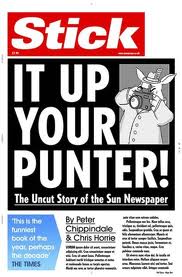
2. Stick It Up Your Punter: The Uncut Story of the Sun Newspaper by Peter Chippendale and Chris Horrie
Entertaining, funny and (for some) shocking all at the same time. Told in a lively way it delves into how the culture at News International developed over time. How investment in its brand of journalism and a swiftness to react made The Sun the country's best-selling tabloid and smashed its once superior rival dominance of the red top market. It may also give you a different perspective on the Wapping industrial dispute. The authors also wrote the equally excellent Disaster: Rise and Fall of News on Sunday - Anatomy of a Business Failure now out of print.
Pocket Books. Priced £7.99.


3. Tickle the Public. One Hundred Years of the Popular Press by Matthew Engel
Very interesting romp through the history of newspapers during the 20th Century. See how British newspaper habits moved from The Times to the Daily Star in a space of a few decades.
And if you think it is no longer applicable, then think again. The title comes from the rhyme popular in Fleet Street in the 19th Century: Tickle the public, make 'em grin, the more you tickle, the more you'll win. Teach the public, you'll never get rich, you live like a beggar, and die in a ditch. (In other words the perfect advice for new web start-ups.)
Now out of print but available on Amazon. Priced £00.01 to £98.27 + p&p.


4. My Trade: A Short History of British Journalism by Andrew Marr
You can't help but feel the Leveson Inquiry could have saved itself a few  weeks of questions if all the lawyers had bought themselves a copy of this enjoyable guide to modern reporting by the BBC's top - and very self-deprecating - interviewer. In a few pages the former editor of the Independent explains why by-lines are so important to reporters, how contacts work, the day to day of newspaper production - and, in particular, his own specialism the lobby - before moving on to how television reporting differs to print. Plus, as the title suggests, there is a wider view on how British newspapers have developed down the years.
Pan MacMillan. Priced £8.99.


5. Shock! Horror! The Tabloids In Action by Sally J. Taylor
It is easy - as well as being very lazy - to think that tabloids just make up all those sensational stories. That is not to say it has never happened but much of it is just down to hard work, dogged determination and (in the old days) very large cheque books being whipped out at just the right time. S.J. Taylor tells some of the stories behind the headlines (to use a cliche).
Now admittedly it has been a few years since I last read this excellent book but S J Taylor has written extensively on newspaper history since then. Particularly about the Daily Mail, An Unlikely Hero: A Newspaper Reborn - Vere Rothermere And How The Daily Mail Was Saved.
Out of print but available on Amazon. Priced £00.01 to £17.00.


To keep up to date with future tips follow @journalismtips on Twitter or sign up below.


Monday, 15 October 2012

Reporting for beginners. 44. Finding people in the real world (part 3).

In the previous posts we looked at what factors to take in with names and use of search engines when trying to trace someone. In this one we are going to look at gathering the information - in the real world.

First off don't ignore the obvious no matter how unlikely it may be. I once tracked down a Duke by calling directory enquiries. It can still happen, although it is increasingly rare.

Again much of this depends on how much time you have and how desperate you are to find someone.

But always keep in mind many of the people you want to track down have good reasons for not wanting to be found. We also live in a very transitory age. People can move not from street to street but county to county.

Again as part of our information gathering we need to look in many different places.

At the scene of an accident look for memorials. People will go there to lay floral tributes and leave messages. Keep in mind my earlier tips regarding death knocks which can be found here and here.

The same basic rules apply. In this case give the person time and only approach when they have begun walking away. Try not to hover too closely, so keep a respectful distance but not so far that you won't be able to catch up with them once they go.

You yourself should read through the messages. Look for any clues, obviously names and nicknames, as we will see in a later post even a first name is worth checking. But keep a note also of relationships ie aunts and uncles and make a note of their details, it may come in handy later when trying to track down family members.

Bear in mind that you can't ask people if they want to talk to you if you can't find them - and they not know or even think about the newspaper being interested in their story.

Check also local businesses and nearby homes as the person may live locally and be known. Keep a note of which properties you've tried and their response - if you need to go back at a later stage it will stop knocking on the same doors.

It is also worth checking with the police although don't rely on this unless you have a very good relationship with them, thesedays there is an almost automatic assumption that the family of the deceased or a person involved in an accident will not want to talk with you and they will refuse to ask on your behalf.

Many will also be fearful that you will get in the way of any subsequent investigation, forgeting that libel and subjudice laws will still apply in the event of any criminal action.

If the person has died speak with the coroner's office. If the inquest has been opened (albeit and adjourned) the details are a matter of public record and should be available to you.

It is also worth checking the local newspaper...even if you work for it. The BMDs (Birth, Marriage, Death or Hatched, Matched and Dispatched as it is also known) column can already have a notice in it.

Knowing the timing of an accident also helps. People generally follow the same patterns returning to a scene at about the same time may help you find someone who was around and may have witnessed it.

But it is not all about trying to find the relatives of people who have died. Journalists are always trying to track people down for all sorts of reasons for good as well as for ill.

The best way to find them is to keep a good contacts book. Having their number in the first place it certainly the quickest and easiest which is why having a good, up-to-date contacts book is worth its weight in gold.

However we can't have everyone's number but we can use what we have. A good relationship with councillors, who because of their role in the community will have their ear to the ground, will help if you know the rough area the person lives in.

Also try chairmen/women of residents and tenants associations. If they do not know ask them for any long term residents who may be living in the area.

Don't be put off if someone says they moved out some years ago. Keep asking for specifics: When did they move? Any idea where they moved to? What was their job? Married, divorced, single? Any known relatives/friends? Where did they live previously? Every scrap of information helps.

If you are after a particular expert try other people in their field or call magazines/websites that deal with their specialism and ask them. They are usually very helpful.

In smaller communities ring anyone whose number you find and ask if they can help. You would be surprised how many are still willing to put you in touch or contact the person on your behalf.

If you believe they have a business try rivals or better still go to the Companies House website and check for directorships.

As always, the more detail you can collect the easier it will be. Constant cross-referencing helps narrow down searches all the time. But, as always, there are no guarantees.

To keep up to date with future tips follow @journalismtips on Twitter.


Saturday, 13 October 2012

Tips for reporters 43. Finding people part 2

As explained in the previous post there really is no great secret to finding people.

In the olden days (that's pre-internet) there were telephone directories and communities; today there is the web and social networking.

However there are still a large number of people who fall in between these categories, although this will slowly fall as more people come of age and the older populations die away.

Of course in the future there will be other issues to deal with, namely the growing emphasis on privacy, which may or may not turn out to be an issue du jour.

But in the meantime let's work with what we have for the time being.

Always remember research is key. The more information you can collect the easier it is.

But let's not forget the obvious. Check electoral rolls, most decent newspapers have access to them nowadays. They range in sophistication with more or less data on them (name, address, public telephone numbers but also data such as ages, marriages, deaths, directorships and county court judgments (ccjs) - ie bankruptcies.

In the UK there is www.192.com which is available to everyone. You get 10 free basic searches a day but you only get limited information. You have to pay for the premium details.

 It does come at a small charge. But even if you don't have access to this or are not inclined to spend your own money it is worth trying it out as it can give certain clues. Having tried it out on myself it was of limited value when free. However cross-referencing the info with a search engine would have given me a starting point for my searches.

Another simple method would be to type out the name of the person I'm searching for and mobile (in the US I guess that would be cell) or contact. It's especially useful when looking for councillors (although they ought to include their details on the council website many don't these days); other public officials or prominent local business people.

A lot are involved in other community projects, ie a local charity auction. Their contact details may well be on press releases put online. Or they may sit on the board of a local institution, a museum for example. In which case type in just their surname and where they are involved because in many cases these places are far more formal and less inclined to use first names.

To keep up to date with future tips follow @journalismtips on Twitter.

Tuesday, 9 October 2012

Reporting Hints 42. Finding/Tracing people (part one).

There is an art to tracing people but it is very hit and miss and it can take a lot of time for not very much reward.
However that doesn't mean we shouldn't try. Naturally it helps to get all the information you possibly can on the person. It helps too if you are methodical.
So let's start with the basics:

Write down every scrap of information you can as you learn it. Make sure you include the source of that information in case you need to go back and check at a later date.
If you've found it online I suggest keeping the web address somewhere safe, it can save hours of work retracing your steps.

Names.

Not something you can take for granted. First off, you have to worry about spelling. There are, for example, around 14 different spellings of the name Mohammed - which if you think sounds pretty hard to trace wait until you hear there are 18 variations of the name Chantelle (in no particular order: Chantelle, Chantel, Chantal, Shantel, Shantelle, Seantel, Shauntelle, Shontelle, Shontal, Chantalle, Chawntelle, Chauntelle, Chantille, Chantielle, Chantell, Chantele, Chantalle).

Add to the this shortening of names. Jo could be Joanne, Jo-Anne, Josephine, Joan, Jocelyn etc etc.

Of course that is assuming that the name they go by is their first name. They may use a middle name instead of their first name. Surprisingly more common than it sounds (David Law, James McCartney or even William Pitt are some more famous examples - that's Jude, Paul and Brad(ley)).

Then you have street names, pseudonyms or nome de plumes (pen names) (think David Cornwall better known as John Le Carre); stage names (Michael Caine  -  Maurice Micklewhite), nicknames, avatars etc etc. It might even be an initial.

Surnames aren't particularly straight forward either. As well as the above you have to take in names changed by Deed Poll, married names, double barrelled names, and maiden names. Also re-marriages and, as above, misspellings.

Misspellings, even on public documents, are in far more common than you might believe. Keep this is mind especially when dealing with unusual names.

If you can get a middle name(s) it can also be useful in tracking people, especially those with common names. But remember many people drop them or simply don't use them on every document.

Ages

A date of birth is a big help. Remember in the UK it is day, month year unlike the US where it is month, day, year. Failing that it will help to get even a rough description. Are you looking for someone in their 20s or in their 70s? However never forget people are not always as observant as they like to think they are. So don't rely on it entirely. It is not unknown - or rare - for an eyewitness to describe someone as a "young girl in her 20s" when in fact the person you are chasing is actually a woman in their 40s.

Again make sure you keep a note of any scraps of information that come your way. As we shall see later it can come in handy when making connections. And even if it later transpires the information is wrong it means you can cross off avenues you may have otherwise have wasted time on


In the next part we look at where you can start finding names.

To keep up to date with future tips follow @journalismtips on Twitter.

Wednesday, 3 October 2012

41. Getting a job in journalism: How to make the most of work experience

Even the smallest of weekly newspapers can get inundated with requests for work experience. It means that in any given year 10 or 20 - perhaps even more on the bigger papers - wannabe reporters are coming through their doors.
Contrary to what you may be thinking (but not always) it is not purely an exercise in free labour. Believe me having dealt with the trail of destruction some trainees can leave behind it is often easier to do without them.

On the most part work experience is given for four reasons:
1. Almost everyone offering it will have done it themselves. It is the tried and tested method and they like to impart some of their own experience to the next generation.
2. It is part of the paper's "community remit". With budgets slashed to nothing it is a way of offering something extra to the people they serve.
3. They are looking for talent. That's right, they can even be looking for bright young journos (such as yourself).
If we are going to be cynical it can also be:
4. They need someone to churn out a dozen nibs, make tea and generally be a dog's body for a week.

Now reasons 1, 2 and 4 are all very laudable. It's No. 3 that we need to concern ourselves with. Bearing in mind a news editor can see so many trainees you will need to stand out from the crowd (let's call them people who haven't read this blog).

Newsrooms are usually much much smaller
So how do you do that? The answer is pretty simple... Make the news/editor's life easier. If you've been following this from the start you will have read tips 1 and 2 (I'm sure you can look them up yourself without need of a link).

If you've read the paper for a few weeks you should have a pretty good idea about what's going on in the local area, the topics they are interested in and gaps that aren't being filled.

The next thing to start doing is finding those stories - and that's before you go in. If you've never been in a real life newsroom before they can be daunting. The chances are you will start on a Monday and finish on a Friday. So far so normal. But unless you are working on a daily or a weekly that comes out at the end of the week you will get a rather disjointed view. 

For a start if the paper comes out on a Wednesday the reporters will be working to deadline. You won't see the process gearing up... it will be geared up. They will be busy trying to find a splash (front page) or chasing around after last minute quotes or trying to make the dang fool of an editor's "great" campaign - thought up over a tea and a biscuit 20 minutes before - become a reality. 

Sure they will try and throw you some stuff and take time out to go through it (if you are lucky) but, on the whole, they simply won't have time. You will certainly not their main priority.

This might be an altogether different story if come day one you walk in with that page 3 story that everyone was looking for two hours before.

If not, sit in a corner and expect to be largely ignored. Until Wednesday, with deadline passed the collective sigh of relief let's everyone relax for five minutes and even get around to asking you your name.

But that's only half the story. You may finish your week, if you are lucky, with experience of a newsroom, a couple of bylines, a notepad filled with squiggles purporting to be 15 words a minute shorthand and little else. 

Your week is up and you never see anyone in that newsroom ever again. That, after all, is what most people do.

Now think about it differently. This is the first stage of getting a job. Perhaps not this week, nor next month, maybe not even next year but you are feeling for an opening.

Firstly, you will know who to speak to when pitching a story. Secondly, you will have a good idea of when the news editor is busy (not a good time) and when it is quieter (a good time) to speak to them. Thirdly, you will have direct contact numbers for the people involved. Finally, they will have an idea of who you are when you are talking to them - and will give you some time.

For every story that makes the news editor will look kindly upon you, shine a little light in your direction, offer you more work experience and at some time in the future will advise you on any jobs that may be coming up ahead of the crowd. And if you are very useful may even give the editor a nod in your direction.

So instead of treating a week's worth of experience as a one off look at it instead as the start of a new and useful relationship with a newsroom.

After all the whole point of being a journalism student is to get a job in the trade. That is unless you really have more money than sense.

To keep up to date with future tips follow @journalismtips on Twitter.


Tuesday, 11 September 2012

Journalism Tips 38. How to get a job in journalism: Intros


There are two types of intro: The straight and the dropped. This deals with the former.

Some years ago the Daily Telegraph would boast about the length of its intros - 80-90-100 words plus were, if an exception, not uncommon. Particularly, if memory serves, in its cricket coverage. The writing was, of course, beautifully crafted by professionals at the top of their game... They could get away with it, you cannot.

Like many of the "rules" on the blog this is not hard and fast but a guideline - the problem is not that you occasionally break it but that you break it often.

So if your intros are regularly hitting 30-40 words you are doing something wrong. This really isn't a matter for debate. You are writing for a newspaper not a specialist manual.

Being direct does not mean dumbing down. Nor does it mean - heaven for fend - tabloid. It means being to the point. If it makes you feel any better remember you are part of the Twitter generation (well most of you).

It means that your average reader will be used to 140 character long sentences - including the spaces. That's around 22-24 word mark (I know, I've checked my own Twitter personal account - Anthony_Bonnici if you're interested - and several others, from both tabloid and broadsheet writers - to see how they compare).

So now 25 doesn't seem so bad, does it?

Here's a random example:

Channel 4 has cited concerns over security as the reason for cancelling a planned screening at its headquarters this week of a documentary film questioning the origins of Islam. (29 words)
Guardian

Channel 4 has cited security concerns as the reason for cancelling a planned screening at its headquarters this week of a documentary questioning Islam's origins. (25 words)

Or this from Associated Press (The Americans are masters of the verbose intro as they cram in too much information and reveal very little):

SEATTLE (AP) — Raffaele Sollecito, whose budding love affair with American exchange student Amanda Knox helped land him in an Italian prison for four years, maintains the couple's innocence in a new book but acknowledges that their sometimes bizarre behavior after her roommate's killing gave police reason for suspicion.

So let's look at the facts here:

1. The name: Raffaele Sollecito
2. He was on the verge of a love affair with 
3. Girlfriend's name: Amanda Knox
4. She was an American
5. And an exchange student
6. He was jailed
7. For four years
8. But continues to claim his innocence
9. In a new book
10. He admits their bizarre behaviour was suspicious
11. Amanda Knox's roommate was killed

The problem here is the reporter has not made up his mind what the important facts. And so rather than leaving something out he has put it all in — and that's why the sentence is 46 words long.

Why does it matter? Getting into the habit of tighter sentences is a useful lesson to learn, for a start. Now most "broadsheets" no longer are — they've taken the compact form. Editorial space, especially with ever squeezed budgets, is at a premium.

People's attention spans are certainly not what they were. Think I'm talking about dumbing down... try a copy of The Times, say, 100 years ago... 50 years ago... Hell! Even 20 years ago.


Here's a random article found on the Internet:


No mention of the latest deaths and not a hashtag in sightAs you can see, quite painful. Some might even say it's the future.

Let's put aside the general style and look at the second par.

The coroner for South-West Lancashire opened the inquest on the bodies of those who were killed, but, after taking formal evidence of identification in the case of nine, he adjourned the inquiry until next week. 

A total of 35 words.

Who else was he going to open the inquest for? And for all this we don't know the name of the South-West Lancashire coroner or, indeed, any details of the actual victims of this terrible railway accident.

Someone was clearly being paid by the word (actually they probably were).

Incidentally, seeing as we were talking about intros, this is what the Twitter generation would see:

Yesterday two more victims of the terrible railway accident which occurred on Tuesday evening at Ditton Junction, on the London and North-We

My own efforts for Twitter are this:

Two more people found in the wreckage of the Ditton Junction railway disaster died of their injuries yesterday taking the death toll to 15.

or with hashtags

Two more people caught in the #Ditton Junction #railway disaster wreckage died from their injuries yesterday bringing the death toll to 15.The coroner for South-West Lancashire opened the inquest on the bodies of those who were killed...

I'm sure people could do better.

To keep up to date with future tips follow @journalismtips on Twitter.


The point is lengthy sentences do not necessarily mean serious journalism. It can mean lazy flabby writing.


Ignore all these points if you are being paid by the word.


Sunday, 12 August 2012

Journalism Tips 37. How to get a job in journalism: Freedom of Information

Since the introduction of the Freedom of Information Act (FoI) public bodies have been bombarded by millions of requests for all manner of pointless and trivial data. Take this about zombie attacks in Leicestershire there is a real danger that such requests will result in pressure for the FoI to be tightened up — and believe me that's what every council, MP and every other public body wants. To a certain extent you can't blame them as FoI Man points out says we should start listening to the Act's critics.

First and foremost I'd suggest reading David Higgerson's brilliant FoI blog which is full of updates and very useful advice and suggestions.

But simply putting in an FoI is only one part of the equation. Why do we put in FoI requests? To produce copy - too often people take their eye off the ball. The aim is produce a story - simply having the figures/documents in themselves is not enough. For example stats based FoIs are useless unless there is an angle - again this is where contacts (yes, those again) become invaluable.

A good contact may be able to steer you in a given direction and help you refine your FoI to get the results you are after - because don't think that once you've lodged your request you can sit back and wait for the stories to come popping out the other end.

For local bodies have become increasingly aware of what FoIs can do and will do everything to stall and cause problems - perhaps acting within the law but not within the spirit of it.

So it helps if you have an idea of what you are looking for - otherwise it just becomes a needle in a haystack. Too often you will get back stats that show no marked difference at all from one year to the next. In most cases that isn't news - certainly not in itself.

News, at least in this context, should be dynamic. If it is not moving than is it news? Simply reporting that there has been an average of 30 deaths a year on London Underground over the past five years is not, in itself news - it is simply a statistic, a sad one, but a statistic in itself.

Clearly this is not to say that the individual stories aren't stories themselves. Or if it emerged that one station was notorious for accidental  deaths or suicides and that nothing had been done about it. Or that every year a particular month saw figures jump. In other words you still need an angle. Simply saying that over the entire network the figures have remained more or less static is not news, it is simply misfortune. Life by its very nature comes with the risk of death attached (actually it's guaranteed so let's say premature death).

Now had the figure spiked or plunged in one of those years then there is the possibility of a story, say, an investigation into why.

But the figures in themselves are dull reading and too many student FoIs are ill thought out. Simply groping in the dark for a potential story and finding little of value or nothing.

Alternatively you should be looking for stories that will produce copy whatever the result. For example the number of pensioners who have been arrested and for what crimes. In this respect whatever the figure/details it is a story within itself.

Secondly FoIs do simply revolve around figures, reports can be opened up, expenses revealed and so much more.

Again it is a question of being judicious with your search. And again you don't have to be working on a  national newspaper to make an impact. Take this for January 2011 when Cornwall Council was making massive cuts with some of its lowest paid workers being axed and all manner of "exciting" cost saving schemes.

My initial intention was to see how much was being spent on flights by the officers. This request was rejected as too time consuming. So I narrowed my request. This time restricting it to named individuals - the Cabinet and the most senior council managers, including the £200,000+ a year chief executive.

The results were (from a story point of view) pleasing. An austerity council had spent £5,000 to sent the most highly paid man on a training course to New York. The story was subsequently picked up by the Daily Express.

So here you are seeing the situation change: Council making large cuts but the spending at the top not.

Or this. In 2007/2008 there were a spate of suicides of young people in Bridgend, Wales. The media came under fire for apparently, claimed the authorities, inflaming the situation. Simply reporting the facts, they said, was making matters worse. The fact that national interest in the situation was only aroused after the fifth such death after a local news agency began to see a "cluster" develop appeared not to be of importance. The media were to blame.

It later emerged that there had in fact been 13 similar deaths - many had gone unreported initially. Even so this was the media's fault.

The deaths continued at a grim and relentless pace. Relations between the police, health authorities and the media were, to put it mildly, strained.

But it was at one press conference that the health authority revealed it had set up a task force more than a year before the cluster had started to emerge. Under questioning - as to why they had set this group up - they admitted they were acting on the advice of a report drawn up.

The next questions were obvious. What was the report? What did it say? Who wrote it? Why was it commissioned?

It took an FoI to get the report and alas the story never got the due prominence perhaps it deserved. But it did at least come out.

So to recap don't expect the FoI to be your passport to a succession of news stories. Think about the current situation globally and see if you can adapt what you are asking. For example cuts in council budgets is there a corresponding drop in the amount the local authorities spend on, for example, entertainment - or as is becoming frequently popular these days, award ceremonies for local councils.

Look at comparing two or three councils - the contrast may give you the story you are after. For example the amount a Chief Executive spends on taxis in neighbouring local authorities. If one CEO spends nothing and the other thousands than you have a story.

Learn to hone your FoIs. And keep a note of all the details - this is the start of your contact book. Once you have the details it does get easier.

Also learn to use public bodies' websites. All too often the info will be there but, as you can imagine, it is hidden away deep inside a labyrinth - and make a note of where it can be found.

And always, always, always state that your information comes from a Freedom of Information Act request. This info should be available to the public without us having to search and beg and plead or indeed have a special law...but that's the way it is.