Showing posts with label local newspapers. Show all posts

Tuesday, 19 August 2014

How to get and conduct a showbiz interview

It seems that almost every other reporter wants to work on a showbiz desk these days.

The chance of hanging around with celebrities and getting the inside gossip is, apparently, an alluring prospect for wannabe hacks.

The problem, as so many soon discover, is that getting an interview with One Direction or the Kate Moss or whoever is flavour of the month is pretty near impossible for the majority of local reporters.


It has nothing to do with how talented the reporter is or how good the newspaper they write for, it is simply that demands on the biggest stars are great and the rewards for appearing in a local with an ever declining circulation are hardly worth their effort.


So you have to think your way around the problem and - as always - be ready to put in a lot of effort and your own free time.

Firstly, be realistic. By all means shoot for the stars but also be prepared to manage your own expectations because you can often get interesting chats with - at least reasonable - well-known names.

Remember that newspaper readerships are getting older, a faded popstar that was topping the charts before you were even born will, in all probability, still resonate with some, if not all, of your readers.

An older star - no longer worried about their image - is more likely to be candid about their life in the limelight. And there is also the possibility that next week they will pop up on Celebrity Big Brother or whatever passes for light entertainment in this day and age.... Or, almost equally applicable and seemingly likely, for them be arrested.

The place to start is the local theatre, arts centre, venue, festival organisers or even a TV chef restaurant opening. Large provincial towns can often attract a mix of upcoming talent, desperate for any gig as part of their path to stardom and B-listers eking out an income. Smaller towns can be surprising. Those far from big population centres with poor transport links and small venues can attract big talent, especially if they are preparing for a big tour and need a "live" rehearsal.

For any, half decent interview, you will need space in the paper. If big interviews are not a regular feature it's worth making the case for them. For a start, the venues are probably already advertisers. What's good for them is good for the paper's revenue.

And whether you like it or not, celebrity does sell. A half decent interview on the page will get read, it will also attract readers online because even the most forgotten stars tend to have a fanbase somewhere.... even if it is only a couple of people.

Once space is secured or even if it is not (there's always the web), approach the venue's pr or marketing officer. They will mostly be overjoyed to hear from you and will do their best to accommodate what you are after. It will also save you having to deal directly with the celeb's pr (if they have one) yourself - a distinct advantage, as you will soon learn should you eventually become a full-time showbiz reporter. If it is a big, well-known festival that attracts national coverage don't demand the headline act or nothing.

Building up working relationships is a key to bigger and better things for the future. Let them see what you can do and the value you can bring to them.

Arrange the whole thing well in advance of the event itself, lots of things can go wrong and last minute cancellations are not uncommon. Don't expect a face to face chat. The chances are they are playing one gig in town and moving on. The pros for the venue and the celeb themselves is often to generate more ticket sales. Running an interview after the event is of little use to the person arranging it on your behalf.

It may be possible for say the star of, say, a pantomime, who may be playing the same theatre for several weeks. But on the whole forget it.

Once arranged you must prepare. Simply calling them and asking how they are is not an interview. Read up on them, see what they have achieved, what they have been up to since hitting or fading from the spotlight, learn what their interests are and what they've spoken about in the past. Don't just rely on Wikipedia, although a telling question can be: "If there's one thing you could change on your Wiki entry, what would it be?"

Don't whatever you do make the whole thing parochial. Do ask them if they know the local area or what they are hoping to see but don't make it the focus of the whole interview.

I once sat through a round table dominated by a tedious local journo (fair play to them), who even when the star admitted he probably couldn't find the paper's catchment area on a map, continued to bombard the (pretty big) celeb with questions about it. Frankly, the end result would have been tedious even for the most proud local reader.

Also don't go in there thinking you are next Jeremy Paxman, the celeb has given up their time to talk to you. Firing questions about some long forgotten affair they had will ensure it is cut-off pretty quickly. This is not to say, don't broach the subject, just don't make it your number one question. Filling a 1,000 word space with just a couple of quotes is a pretty difficult task, even for experienced writers.

Start gently, ask about the upcoming gig, bring up their interests and, if possible do relate it to the local area if applicable. If all is going well, move it on. "I was reading about...." is often a good way to take the interview to a wider remit.

It does, of course, help to have an interest in your subject but don't get bogged down in fandom or let it show too much during the interview. Unless writing for a specialist magazine/website you have to make the subject appeal to the wider reader.

As with all interviews, tape it. Let the person know, legally you don't have to but it is polite.  To save hours of transcribing, make a note of the counter when particularly interesting comments are said. As importantly, listen to what is being said. If you engage with the subject you will get a lot more out of them. Taping, even short chats is pretty essential these days. Should the person accidentally put their foot in it by saying something controversial, it is much harder (although some will try) to deny it or accuse you of taking something out of context. Hold on to the recording for a few weeks after the interview is published.

Now sometimes interviews are very hastily arranged and you don't have time to fully, if at all, prepare. Don't try and bluff your way through, you'll be caught out and don't try and use it as an excuse if you've had a week's notice and couldn't be bothered. If you were too busy that's not the interviewee's problem.

If you found this article useful or enjoyable please RT, thanks.


Monday, 3 December 2012

58. Lessons from the movies: Always be thinking about deadlines


For as long as there is printed media, or radio stations, or television there will always be deadlines.

You could have the best story in the world... but you get it in late and it is worthless. Now this may be an outmoded concept in a few years time.

And indeed it is arguably an already outdated idea for internet news bulletins but for everyone else it is still useful.

There is nothing like the pressure of a deadline to concentrate the mind. The news editor breathing down your neck can - oddly - bring clarity and focus to your work.

No more worrying about the right choice of words for your intros - just get the bloody thing written, broadcast, read.

And do not think that because a final deadline is, say 7pm, that's when you have until to write it. Unless you are writing the splash it's often a lot earlier.

Even on weeklies there has to be a steady flow of copy coming through. Those sub-editors don't come in just to eat their packed lunches.

So if out on a job - especially if you are working for a daily - keep a constant eye on the time. Don't forget to report in - but not too often - when you have a significant line or there has been a major development (apart from any thing else your story could be moved up the list).

If working fresh on a story allow yourself at least 20 minutes before the deadline to write your copy. If you are working on a developing story start writing before you get there.

But that is breaking news.

For the most part that is not the case. It is just filling in the bread and butter stories that is an issue.

Again this is why diaries are often useful. They allow a paper to propel itself into the forthcoming week - even if nothing much is happening on the patch.

Today's clip is from the 1940 classic His Girl Friday...

Cary Grant plays the cynical newspaper editor trying to hold on to his ace reporter - who also happens to be his ex-wife.

Sounds cheesy but under Howard Hawks's direction it is hilarious and fast-paced. And there's some great lines about journalism.

It is based on a 1929 play The Front Page - which was adapted into another movie in 1974... called The Front Page.

Anyway if you are interested you can buy the movie from Amazon - which, you see, is my effort at advertising.

This is the link:

Tuesday, 20 November 2012

57. Lessons from the movies - what sells well.


A short post today.

Stories about institutions can often read very dry - hence there is less (not necessarily no) interest in them.

People like to read about people. It is a simple fact of life. Always remember that.

If say writing about a local college transforming itself from a failing institution to an outstanding one consider going in on the headteacher that made it happen or a student who has benefited from the changes.

Major roadworks months overdue? Try finding the shop owners who will be affected.

If nothing else it makes the photos more interesting - rather than just a hole in the ground.

You will find that time restraints will mean that too often you will struggle to find a talking head willing to be photographed... so look out for them when the opportunity arises.

Today's clip comes from the superb Billy Wilder 1951 classic Ace In The Hole.

Cynical hack Chuck Tatum brings the circus to town when a man is trapped under a rock fall.

Well worth catching if only for the opening scenes of Kirk Douglas walking into a small local newspaper...

Oh yes, and the unforgetable line: "I've met a lot of hard boiled eggs in my time - but you are 20 minutes."

You can buy it here:


Saturday, 27 October 2012

Journalism Tips 48. Getting started on your patch: Building your contacts

If you started your journalism course at the beginning of the academic year you should have been given a patch or beat (that's an Americanism) to cover.

And by now you should have most of the important contacts in place. If you haven't then read on:

Let's start, as we always do, with the very basics. Now I am going to attempt to imagine the difficulty of being student reporter because press officers aren't going to deal with you.

This is a good thing because really all you want them for is the "you've got us bang to rights guv'" quote at the end.

Over the next few blogs we will look in detail about how you should be building up your patch. And how you should already be pitching to your local newspapers.

Today we will keep it simple.

Your (ahem) patch
Your contacts book should have at least 150 numbers in it by now. It may prove utterly useless to you when you finish the course but never discount them. I have hundreds of contacts in my book I've never called. But if I ever need them they are there.. or at least I know who I am chasing if the number turns out to be old.

We will come back to contacts but there are other things you should have done by now. You should have a Twitter feed for anyone in your area. By all means keep it separate from your personal account - it would help if you give it the name of your patch (or at least include it) and you keep it open. First tap out the name of your patch. See what comes up and follow them. Follow any obvious landmarks pubs, schools, local council etc. Make sure you include local councillors, the local MP and so on. Then using the advanced Twitter search that we saw in a previous post see if there is anyone less obvious you can follow.

Follow anyone that follows this Twitter account - if you've called it say My Whitechapel then the people will probably have an interest. You should be constanty tweeting from it asking for any stories always include the name of the patch. Inform people of the stories you are working on, give them updates, throw out more appeals for information.

Set up a special email account and link that to your Twitter feed.

On Google (I'm really not going to give you a link to that) set up Google Alerts, firstly for the name of your patch. But also the names of markets, major streets, the council, councillors, local celebrities etc etc.

Check out local news websites - even seemingly defunct ones which can spring back to life suddenly and for no obvious reason. Check also local bloggers - follow them and bookmark them.

Buy the local newspaper - yes, buy it every week! Again after a few weeks it will prove a wise investment (but I will come back to this).

Now all of this gives you a rolling news feed. It hasn't taken long - maybe one day of concentrated effort. But over the next few months this is the start of having some proper cuttings - AND possibly (just possibly) the start of making you real money for your journalism.

To keep up to date with future tips follow @journalismtips on Twitter or sign up below.

Thursday, 25 October 2012

Journalism Tips 47. Christmas ideas and Freedom of Information. Start thinking now. Plus a few more book ideas.

Last week I suggested that you start thinking about your Yuletide stories - you'll find it here along with a few suggested books.

A week has gone by so let me repeat the basic message: You really do need to be thinking about them now, especially if they are going to involve festive Freedom of Information requests.

Even more so if you've never made an FoI request before and have no idea how to do it. And if you're a student looking for work experience on your local paper or you simply want an easy cutting in a real newspaper then here is your chance.

And while you may think you have plenty of time - there are 61 days until Christmas it's not quite that simple.

Remember it takes 20 working days to get a FoI response it is rarely that easy. So from tomorrow (Friday 26) there are 42 working days (in theory).

But you won't get a response from most places on Christmas Eve - so we're down to 41.

Then you have to have your copy ready before the edition goes to print, so really you need to have it ready to go by December 14 (36 days) - even if the article is for between Christmas and New Year.

Of course it may take a few days to contact all the relevant people to make it a story - and it is Christmas so people will be busy... even if you have their contact numbers to hand. Let's say two days to contact the relevant people (34 days).

And if you haven't another two days (32 days) and then you have to actually write the thing - another day for you to write and read and re-read it (31 days).

The definition of a full working day means that even if you do get it in by 9.01am tomorrow morning - and to the right department the day will be practically over and the 20 working days won't actually start until Monday (30 days).

Allow for the request to be at the very least four days late (26 days); there to a problem with the request itself (does not comply etc) another five days (21 days) and a couple of days to actually make sense of what they send you (19 days) and you will see you are late already.

(Admittedly that was painful towards the end.)

So while you console yourself at missing this valuable deadline here's another few journalism books to add to your Christmas stocking... And in an exciting new development you can now click on the title and it will take you straight to the relevant Amazon page. I will master technology.


Scoop by Evelyn Waugh
William Boot possibly the most famous countryside correspondent of all time. A legend - and a living one since he was based on W. F. Deedes - in his own and many other life times. Briefly: confusion runs at the Daily Beast and a lowly rural reporter finds himself (and an awful lot of stuff) in Africa awaiting the much expected civil war.
There, by accident rather than design he finds himself beating the rest of the assembled hacks - including that of the Beast's (Daily Mail) arch rival the Daily Brute (Daily Express) - to pull of an amazing newspaper coup.
Waugh is brilliant and typically acerbic. A must.
First published 1938.


A Crooked Sixpence by Murray Sayle
Set in the - then fictional - Sunday Sun of the 1960s. Australian hack James O'Toole comes to try his luck in Fleet Street. He soon finds himself writing an article about a hit  pop star Ricky Roger's dubious parentage (or at least it was back then) and finds himself up against Ricky's publicist Mary Lou. The story continues with Mary Lou: "You can't give us publicity like that. After all, it's not Ricky's fault, is it?"
"Look, Mary Lou," said O'Toole. "We're not in the business of giving Ricky good publicity. This is supposed to be a newspaper. We print what we think people will be interested in.
"For years you have been feeding us your cooked-up rubbish about Ricky's ties and his favourite dishes and we published it because deluded editors thought it was interesting. Ricky got rich in the process and you seem to be doing all right yourself.
"Now we've got something which is even more interesting. Maybe Ricky's income will go down but that's no concern of ours. We're not here to build him up in the first place. Those who live by publicity can't squeal if they die by publicity, can they?


Pratt of the Argus by David Nobbs
It is the 1950s and Henry Pratt has just finished National Service. joins a small Northern newspaper in the mid-1950s. We follow him as he makes contacts in the worlds of politics, crime and sport.
Naturally they all come together for an hilarious finale. It's part of a series but you don't need to read the first book as this stands on its own.
And it is very, very funny... especially if you are a journalist (even after all this time).


To keep up to date with future tips follow @journalismtips on Twitter or sign up below.

Wednesday, 17 October 2012

Journalism Tips 45. A few #journalism books to try out.


A little break from the finding people posts as in here and here and here. This is an occasional series of books and films the trainee reporter or journalism student may want to try out. No, they are not serious Murdoch-bashing, tabloid-trashing tomes. They are just general reads for the interested and curious reader.
If you want a journalismtip out of this it is... start thinking now about those Christmas stories especially for local newspapers. It comes around pretty quickly and the news editor will be on your case sooner than you think. Make sure the stories will hold... and make sure you can keep your gob shut the next time they scream for a page 43 nib, you could find your Yuletide splash being used as a filler.


1. Waterhouse On Newspaper Style by Keith Waterhouse
Simply brilliant. A classic. Every junior reporter - and indeed quite a few seniors - should have a copy. It was originally written as the style guide for the Daily Mirror (or as he would put it the Daily Mirror style guide) some time in the 1980s.
It's said that copies were photocopied and passed around from journalist to journalist. One day a reporter bumped into Waterhouse and asked him to sign his copy. Realising it was such a popular book he decided to publish it.
The book covers everything you could possibly need to know about writing by a master of his craft.
Revel Barker Publishing. Priced £9.99.


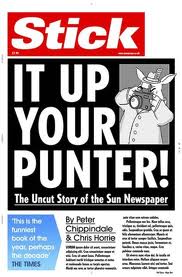
2. Stick It Up Your Punter: The Uncut Story of the Sun Newspaper by Peter Chippendale and Chris Horrie
Entertaining, funny and (for some) shocking all at the same time. Told in a lively way it delves into how the culture at News International developed over time. How investment in its brand of journalism and a swiftness to react made The Sun the country's best-selling tabloid and smashed its once superior rival dominance of the red top market. It may also give you a different perspective on the Wapping industrial dispute. The authors also wrote the equally excellent Disaster: Rise and Fall of News on Sunday - Anatomy of a Business Failure now out of print.
Pocket Books. Priced £7.99.


3. Tickle the Public. One Hundred Years of the Popular Press by Matthew Engel
Very interesting romp through the history of newspapers during the 20th Century. See how British newspaper habits moved from The Times to the Daily Star in a space of a few decades.
And if you think it is no longer applicable, then think again. The title comes from the rhyme popular in Fleet Street in the 19th Century: Tickle the public, make 'em grin, the more you tickle, the more you'll win. Teach the public, you'll never get rich, you live like a beggar, and die in a ditch. (In other words the perfect advice for new web start-ups.)
Now out of print but available on Amazon. Priced £00.01 to £98.27 + p&p.


4. My Trade: A Short History of British Journalism by Andrew Marr
You can't help but feel the Leveson Inquiry could have saved itself a few  weeks of questions if all the lawyers had bought themselves a copy of this enjoyable guide to modern reporting by the BBC's top - and very self-deprecating - interviewer. In a few pages the former editor of the Independent explains why by-lines are so important to reporters, how contacts work, the day to day of newspaper production - and, in particular, his own specialism the lobby - before moving on to how television reporting differs to print. Plus, as the title suggests, there is a wider view on how British newspapers have developed down the years.
Pan MacMillan. Priced £8.99.


5. Shock! Horror! The Tabloids In Action by Sally J. Taylor
It is easy - as well as being very lazy - to think that tabloids just make up all those sensational stories. That is not to say it has never happened but much of it is just down to hard work, dogged determination and (in the old days) very large cheque books being whipped out at just the right time. S.J. Taylor tells some of the stories behind the headlines (to use a cliche).
Now admittedly it has been a few years since I last read this excellent book but S J Taylor has written extensively on newspaper history since then. Particularly about the Daily Mail, An Unlikely Hero: A Newspaper Reborn - Vere Rothermere And How The Daily Mail Was Saved.
Out of print but available on Amazon. Priced £00.01 to £17.00.


To keep up to date with future tips follow @journalismtips on Twitter or sign up below.


Monday, 15 October 2012

Reporting for beginners. 44. Finding people in the real world (part 3).

In the previous posts we looked at what factors to take in with names and use of search engines when trying to trace someone. In this one we are going to look at gathering the information - in the real world.

First off don't ignore the obvious no matter how unlikely it may be. I once tracked down a Duke by calling directory enquiries. It can still happen, although it is increasingly rare.

Again much of this depends on how much time you have and how desperate you are to find someone.

But always keep in mind many of the people you want to track down have good reasons for not wanting to be found. We also live in a very transitory age. People can move not from street to street but county to county.

Again as part of our information gathering we need to look in many different places.

At the scene of an accident look for memorials. People will go there to lay floral tributes and leave messages. Keep in mind my earlier tips regarding death knocks which can be found here and here.

The same basic rules apply. In this case give the person time and only approach when they have begun walking away. Try not to hover too closely, so keep a respectful distance but not so far that you won't be able to catch up with them once they go.

You yourself should read through the messages. Look for any clues, obviously names and nicknames, as we will see in a later post even a first name is worth checking. But keep a note also of relationships ie aunts and uncles and make a note of their details, it may come in handy later when trying to track down family members.

Bear in mind that you can't ask people if they want to talk to you if you can't find them - and they not know or even think about the newspaper being interested in their story.

Check also local businesses and nearby homes as the person may live locally and be known. Keep a note of which properties you've tried and their response - if you need to go back at a later stage it will stop knocking on the same doors.

It is also worth checking with the police although don't rely on this unless you have a very good relationship with them, thesedays there is an almost automatic assumption that the family of the deceased or a person involved in an accident will not want to talk with you and they will refuse to ask on your behalf.

Many will also be fearful that you will get in the way of any subsequent investigation, forgeting that libel and subjudice laws will still apply in the event of any criminal action.

If the person has died speak with the coroner's office. If the inquest has been opened (albeit and adjourned) the details are a matter of public record and should be available to you.

It is also worth checking the local newspaper...even if you work for it. The BMDs (Birth, Marriage, Death or Hatched, Matched and Dispatched as it is also known) column can already have a notice in it.

Knowing the timing of an accident also helps. People generally follow the same patterns returning to a scene at about the same time may help you find someone who was around and may have witnessed it.

But it is not all about trying to find the relatives of people who have died. Journalists are always trying to track people down for all sorts of reasons for good as well as for ill.

The best way to find them is to keep a good contacts book. Having their number in the first place it certainly the quickest and easiest which is why having a good, up-to-date contacts book is worth its weight in gold.

However we can't have everyone's number but we can use what we have. A good relationship with councillors, who because of their role in the community will have their ear to the ground, will help if you know the rough area the person lives in.

Also try chairmen/women of residents and tenants associations. If they do not know ask them for any long term residents who may be living in the area.

Don't be put off if someone says they moved out some years ago. Keep asking for specifics: When did they move? Any idea where they moved to? What was their job? Married, divorced, single? Any known relatives/friends? Where did they live previously? Every scrap of information helps.

If you are after a particular expert try other people in their field or call magazines/websites that deal with their specialism and ask them. They are usually very helpful.

In smaller communities ring anyone whose number you find and ask if they can help. You would be surprised how many are still willing to put you in touch or contact the person on your behalf.

If you believe they have a business try rivals or better still go to the Companies House website and check for directorships.

As always, the more detail you can collect the easier it will be. Constant cross-referencing helps narrow down searches all the time. But, as always, there are no guarantees.

To keep up to date with future tips follow @journalismtips on Twitter.


Wednesday, 3 October 2012

41. Getting a job in journalism: How to make the most of work experience

Even the smallest of weekly newspapers can get inundated with requests for work experience. It means that in any given year 10 or 20 - perhaps even more on the bigger papers - wannabe reporters are coming through their doors.
Contrary to what you may be thinking (but not always) it is not purely an exercise in free labour. Believe me having dealt with the trail of destruction some trainees can leave behind it is often easier to do without them.

On the most part work experience is given for four reasons:
1. Almost everyone offering it will have done it themselves. It is the tried and tested method and they like to impart some of their own experience to the next generation.
2. It is part of the paper's "community remit". With budgets slashed to nothing it is a way of offering something extra to the people they serve.
3. They are looking for talent. That's right, they can even be looking for bright young journos (such as yourself).
If we are going to be cynical it can also be:
4. They need someone to churn out a dozen nibs, make tea and generally be a dog's body for a week.

Now reasons 1, 2 and 4 are all very laudable. It's No. 3 that we need to concern ourselves with. Bearing in mind a news editor can see so many trainees you will need to stand out from the crowd (let's call them people who haven't read this blog).

Newsrooms are usually much much smaller
So how do you do that? The answer is pretty simple... Make the news/editor's life easier. If you've been following this from the start you will have read tips 1 and 2 (I'm sure you can look them up yourself without need of a link).

If you've read the paper for a few weeks you should have a pretty good idea about what's going on in the local area, the topics they are interested in and gaps that aren't being filled.

The next thing to start doing is finding those stories - and that's before you go in. If you've never been in a real life newsroom before they can be daunting. The chances are you will start on a Monday and finish on a Friday. So far so normal. But unless you are working on a daily or a weekly that comes out at the end of the week you will get a rather disjointed view. 

For a start if the paper comes out on a Wednesday the reporters will be working to deadline. You won't see the process gearing up... it will be geared up. They will be busy trying to find a splash (front page) or chasing around after last minute quotes or trying to make the dang fool of an editor's "great" campaign - thought up over a tea and a biscuit 20 minutes before - become a reality. 

Sure they will try and throw you some stuff and take time out to go through it (if you are lucky) but, on the whole, they simply won't have time. You will certainly not their main priority.

This might be an altogether different story if come day one you walk in with that page 3 story that everyone was looking for two hours before.

If not, sit in a corner and expect to be largely ignored. Until Wednesday, with deadline passed the collective sigh of relief let's everyone relax for five minutes and even get around to asking you your name.

But that's only half the story. You may finish your week, if you are lucky, with experience of a newsroom, a couple of bylines, a notepad filled with squiggles purporting to be 15 words a minute shorthand and little else. 

Your week is up and you never see anyone in that newsroom ever again. That, after all, is what most people do.

Now think about it differently. This is the first stage of getting a job. Perhaps not this week, nor next month, maybe not even next year but you are feeling for an opening.

Firstly, you will know who to speak to when pitching a story. Secondly, you will have a good idea of when the news editor is busy (not a good time) and when it is quieter (a good time) to speak to them. Thirdly, you will have direct contact numbers for the people involved. Finally, they will have an idea of who you are when you are talking to them - and will give you some time.

For every story that makes the news editor will look kindly upon you, shine a little light in your direction, offer you more work experience and at some time in the future will advise you on any jobs that may be coming up ahead of the crowd. And if you are very useful may even give the editor a nod in your direction.

So instead of treating a week's worth of experience as a one off look at it instead as the start of a new and useful relationship with a newsroom.

After all the whole point of being a journalism student is to get a job in the trade. That is unless you really have more money than sense.

To keep up to date with future tips follow @journalismtips on Twitter.


Thursday, 27 September 2012

How to be a journalist 39. The death knock (Part One)

Without doubt one of the hardest, most emotionally draining jobs for the average reporter is the death knock. It is not, as many critics of the Press will have you believe, a simple act of voyeurism into grief. If you believe that you are in the wrong job - many do and many leave.
And if you find it is not emotionally draining than you ought to see someone about it. I've yet to meet anyone who doesn't feel that way.


The fact is we do an awful lot of these and you never quite get used to them. Not once. So why do we do them? A successful death knock will stop a death becoming just another statistic. It's much harder for those in authority to dismiss numbers than it is to ignore individuals. Bland excuses can be made, figures fudged, the truth bent, things swept under the carpet. Try doing that with a real person - an individual who has experienced pain.

It can also act as an obituary, sometimes but not always, something the family will want to hold on to as a keepsake.

And in the meantime, you as a reporter, will be accused of all manner of despicable behaviour. You will, for your efforts, be accused of intrusion, of being scum, of being a vulture, of preying on grief, of only being interested in selling papers, of being uncaring, of being these and many, many more things.

Which is why you have to believe in what you are doing, in why you believe their story could make a difference. Not only for the family, in the short and medium term, but for others in the long run. And it can make a difference. And, no, I do not believe I am self-deluding. I genuinely believe - as you should - that as reporters what we do is important and can make a difference. Of course I am not saying it will prevent all future deaths of a similar nature; but in some cases it may help highlight and focus energy on a particular area, ie a rat run, a cycling accident at a junction, an industrial accident, a murder.

Also don't go making assumptions, that too is a very bad idea. Being sensitive is essential. Firstly, in order to show you are a member of the human race but also to win over a family's confidence.

Despite all of this we are still there to tell a person's story. If the door is slammed in your face you have failed. I say this because, hard as it is, you should do the knock. Simply not bothering or relying on social media is a disgrace to yourself and your trade.

So hopefully I've established why they are necessary. Many may well disagree, that is their prerogative.

DON'T:
1. Make assumptions. Each death should be treated purely on its own merits.
2. Ever say, 'I know how it must feel'. Unless you can back that statement up by talking about the death of one of your own loved ones and feel it may help in making a connection. In general avoid meaningless platitudes.
3. Rely entirely on social media UNLESS there is no other possible way of doing it. Even then ask to speak to family members in person or by phone.
4. Lack confidence. Yes, it is a nerve wracking experience for the reporter but a polite, professional manner is better than a stammering bunch of nerves, which will only make you sound shifty and not inspire confidence that you will be able to tell the family's story in a way they would want. Indeed a bad approach can and will engender distrust.
5. Be scruffy. Again, you are knocking on a door unannounced, this is about showing you are a professional.
6. Go mob handed to a doorstep. If several newspaper reporters, agency reporters, photographers, camera crews and radio journalists turn up at once send two trusted representatives who can then share the information. There is nothing like an undignified scrabble to upset the family. But trust in your fellow reporters is key.
7. Rush. If a family is good enough to talk to you give them the time they need to tell their story. If you have a deadline looming do explain you have to file but be prepared to stay longer.
8. Ever offer money for someone's story.

DO:
1. Apologise for disturbing them. This is your acknowledgment that you are an outsider at an intensely personal time but avoids the impersonal platitudes (I'm sorry for your loss etc) which the family may well find odd coming from a total stranger.
2. Follow the family's wishes. But if they ask you to go away do remember to ask if it would be possible to come back at some later stage. Ask when that would be convenient.
3. Check everything you've been told by the authorities. Including the spellings of the deceased's name and age. Police and coroners can make mistakes. If this is for print then errors cannot be easily rectified. That in itself can be very upsetting. Indeed even if a family say no to an interview it is still worth asking if you can double check the details.
4. Work out what you are going to say beforehand. It will allow you to make the key points as to why you believe their story is important and will, hopefully, reduce your nervousness.
5. Establish you are speaking to an adult and, where possible, their relationship to the deceased.
6. Remember a person did not become important the moment they died. They were important to their friends and family in life. Build up a picture of that life as best you can.
7. Ask for a photograph that best sums up their life. Preferably with their family.
8. Consider asking the family would they like to be read out any tribute piece. This is controversial in newspapers so check with your newsdesk and it's certainly not something that is advisable in every circumstance but I've rarely - if ever - found it to be a problem. A brief run through ensures there are no misunderstandings; that the details are correct; that you or the family have not left out something that is important; and it helps build up trust with the family. (You must explain it may be edited before going in the paper.)

NEXT: Building up a picture of someone's life on a death knock.

For further reading see Jackie Newton excellent blog here on death knocks.

And here's the Press Gazette report on her research. (I see that many of the negative comments have been removed.)

And here's a personal and view from Australian journalist Sarah Harris on why they are important.

And here's Roy Greenslade offering another view - note he didn't speak to the newspaper he was referring to in the story.

And another Roy Greenslade piece an extract fromThe phone hacking scandal: journalism on trial is by Jackie Newton and Sallyanne Duncan.

To keep up to date with future tips follow @journalismtips on Twitter.

Sunday, 12 August 2012

Journalism Tips 37. How to get a job in journalism: Freedom of Information

Since the introduction of the Freedom of Information Act (FoI) public bodies have been bombarded by millions of requests for all manner of pointless and trivial data. Take this about zombie attacks in Leicestershire there is a real danger that such requests will result in pressure for the FoI to be tightened up — and believe me that's what every council, MP and every other public body wants. To a certain extent you can't blame them as FoI Man points out says we should start listening to the Act's critics.

First and foremost I'd suggest reading David Higgerson's brilliant FoI blog which is full of updates and very useful advice and suggestions.

But simply putting in an FoI is only one part of the equation. Why do we put in FoI requests? To produce copy - too often people take their eye off the ball. The aim is produce a story - simply having the figures/documents in themselves is not enough. For example stats based FoIs are useless unless there is an angle - again this is where contacts (yes, those again) become invaluable.

A good contact may be able to steer you in a given direction and help you refine your FoI to get the results you are after - because don't think that once you've lodged your request you can sit back and wait for the stories to come popping out the other end.

For local bodies have become increasingly aware of what FoIs can do and will do everything to stall and cause problems - perhaps acting within the law but not within the spirit of it.

So it helps if you have an idea of what you are looking for - otherwise it just becomes a needle in a haystack. Too often you will get back stats that show no marked difference at all from one year to the next. In most cases that isn't news - certainly not in itself.

News, at least in this context, should be dynamic. If it is not moving than is it news? Simply reporting that there has been an average of 30 deaths a year on London Underground over the past five years is not, in itself news - it is simply a statistic, a sad one, but a statistic in itself.

Clearly this is not to say that the individual stories aren't stories themselves. Or if it emerged that one station was notorious for accidental  deaths or suicides and that nothing had been done about it. Or that every year a particular month saw figures jump. In other words you still need an angle. Simply saying that over the entire network the figures have remained more or less static is not news, it is simply misfortune. Life by its very nature comes with the risk of death attached (actually it's guaranteed so let's say premature death).

Now had the figure spiked or plunged in one of those years then there is the possibility of a story, say, an investigation into why.

But the figures in themselves are dull reading and too many student FoIs are ill thought out. Simply groping in the dark for a potential story and finding little of value or nothing.

Alternatively you should be looking for stories that will produce copy whatever the result. For example the number of pensioners who have been arrested and for what crimes. In this respect whatever the figure/details it is a story within itself.

Secondly FoIs do simply revolve around figures, reports can be opened up, expenses revealed and so much more.

Again it is a question of being judicious with your search. And again you don't have to be working on a  national newspaper to make an impact. Take this for January 2011 when Cornwall Council was making massive cuts with some of its lowest paid workers being axed and all manner of "exciting" cost saving schemes.

My initial intention was to see how much was being spent on flights by the officers. This request was rejected as too time consuming. So I narrowed my request. This time restricting it to named individuals - the Cabinet and the most senior council managers, including the £200,000+ a year chief executive.

The results were (from a story point of view) pleasing. An austerity council had spent £5,000 to sent the most highly paid man on a training course to New York. The story was subsequently picked up by the Daily Express.

So here you are seeing the situation change: Council making large cuts but the spending at the top not.

Or this. In 2007/2008 there were a spate of suicides of young people in Bridgend, Wales. The media came under fire for apparently, claimed the authorities, inflaming the situation. Simply reporting the facts, they said, was making matters worse. The fact that national interest in the situation was only aroused after the fifth such death after a local news agency began to see a "cluster" develop appeared not to be of importance. The media were to blame.

It later emerged that there had in fact been 13 similar deaths - many had gone unreported initially. Even so this was the media's fault.

The deaths continued at a grim and relentless pace. Relations between the police, health authorities and the media were, to put it mildly, strained.

But it was at one press conference that the health authority revealed it had set up a task force more than a year before the cluster had started to emerge. Under questioning - as to why they had set this group up - they admitted they were acting on the advice of a report drawn up.

The next questions were obvious. What was the report? What did it say? Who wrote it? Why was it commissioned?

It took an FoI to get the report and alas the story never got the due prominence perhaps it deserved. But it did at least come out.

So to recap don't expect the FoI to be your passport to a succession of news stories. Think about the current situation globally and see if you can adapt what you are asking. For example cuts in council budgets is there a corresponding drop in the amount the local authorities spend on, for example, entertainment - or as is becoming frequently popular these days, award ceremonies for local councils.

Look at comparing two or three councils - the contrast may give you the story you are after. For example the amount a Chief Executive spends on taxis in neighbouring local authorities. If one CEO spends nothing and the other thousands than you have a story.

Learn to hone your FoIs. And keep a note of all the details - this is the start of your contact book. Once you have the details it does get easier.

Also learn to use public bodies' websites. All too often the info will be there but, as you can imagine, it is hidden away deep inside a labyrinth - and make a note of where it can be found.

And always, always, always state that your information comes from a Freedom of Information Act request. This info should be available to the public without us having to search and beg and plead or indeed have a special law...but that's the way it is.


Monday, 9 July 2012

Journalism Tips 36. How to get a job as a journalist.

Every year thousands of students graduate from some form of journalism or media course. It makes sense therefore that competition for the few jobs available really must be pretty fierce. Or so you would think.

Actually on the whole it's not particularly competitive because most young trainee reporters cannot be bothered - to rise above the herd really doesn't take very much. These odds are shortened by the growth in traineeships on national newspapers - which Hoover (it's a trademark - hence the cap) up most of the cream of that year's journalism graduates.

That is unfair since I have seen some brilliant - well almost - trainees fail to get one of the coveted places despite having an excellent CV and references...but you see where I am going with this.

Clearly you are the smarter than average trainee/student reporter - how do I know? You are reading this.

So what do you need to do? Well an excellent portfolio helps (more of what I mean by this on a later blog). A devotion to work experience helps also (ditto).

It's often said it is not what you know but who you know that makes a difference. When I started in this industry I didn't know any journalists - but I learned what I needed to know and got to know the people who helped me find work.

Within five years I was talking to former Observer reporter John (There are three rules in journalism. First, find a crocodile. Two, poke it in the eye with a stick. Three, stand back and report what happens next.) Sweeney whose original article on the tabloids - it was written in a fun not pious manner - got me interested in journalism.

A few years on (I was pretty slow) I was working with The Sun's brilliant chief reporter John Kay. It was reading his copy that helped shaped my own (it was never as good).

Each and every opportunity gets developed by experience and your knowledge....unless your parents are execs on a newspaper, in which case forget all I've said.

Some people are naturals most are not...if you're not preparation is the key and this is in part what this blog is all about. Going back to one of the earlier posts you will see that I claim most work experience is a pain in the butt for the majority of news editors. But if a good attitude, decent work ethic and a few stories makes the difference.

It helps also if you can bring new skills to the table but get the old ones first. If you are sent out on a story there's no point getting a first class video if you haven't got the names of the people you're interviewing. You'll note the headline is deliberately geared to SEO - we are all learning new skills, as we shall see in another post that too will prove important as your career progresses.

Given the state of much of the competition you should find a job with two/three months. If you are doing work experience and following this blog (and assuming there is a position available) it shouldn't take even that long. If you are getting lots of stories and the news editor is not rewriting all your copy ask him or her if they know of any jobs around - note not necessarily on their paper. It might even be worth asking for feedback at the end of the week (but be wary news editors put in massively long hours and come the end of the working week are more interested in getting out of the newsroom that sitting talking to the workie).

Again follow up good work experience places with more calls offering stories. Being dynamic and useful are welcome attributes. But make sure you are not the cause of more problems - write the story up so it is ready to go.

Being a pain is more likely to guarantee you won't get an opportunity even if you may have an occasional good idea.

For several months I had one caller who would ask in a vague manner if I'd be interested in certain stories when I asked him to send them over he'd tell me he hadn't written but didn't want to waste his time if I wasn't going to be interested... I took his name and didn't take any more of his calls.

Most of what you do will be a waste of your time. But do enough of it and, not only will you improve as a reporter, it will get you noticed. But, but, but it's got to be to at least to a half-decent standard - again this is something that past and future blogs will cover.

But first and foremost read the papers...you'll be surprised how much you can learn.

To keep up to date with future tips follow @journalismtips on Twitter or sign up below for email updates.


Sunday, 8 July 2012

Journalism Tips 35. Why every reporter should know their history.

In order to interview and write intelligently every decent reporter should be able to rely on some residual historical knowledge of their own. While Wikipedia may solve many of the problems while sitting in the office it is very little use while in the middle of an interview.
Similarly if you don't know what to ask Wikipedia for you are never going to find it. For example if there is a dustman's (or as they are know doubt called now a peripatetic disposable environmental logistical transition officer) strike and you know nothing of the Winter of Discontent than you won't be looking for it and more importantly you won't feature it in your story.
Some years ago I spoke to a reader while on a local newspaper and he complained: "The problem is that most local reporters are just thick. The editors are usually alright - but even then sometimes..."
It is not my view. Although given the paper I was working on at the time I could see how he may have reached that conclusion.
As a general rule of thumb I'd say it is worth having a detailed understanding of the recent (five years) events), reasonable background on the past 100 years and a decent amount of knowledge on overall British history.
You see, unlike science - people will expect you to know something about the past. (Scientists are a far more understanding mob than most people and they know the chances are that the day you flunked your GCSE chemistry was the last day you ever looked under a microscope. A little tip when interviewing anyone esp scientists about their work wait for them to finish their explanation before picking up your pen and then asking if they could put it into layman's terms for the readers...you understand the concept, of course, but you feel their words would be so much better. (This usually works until the day that someone responds that they WERE using layman's terms and your general ignorance is revealed)).
So why is history important? The chances are if you are working on locals you will have to cover the usual fare of anniversaries these are usually dull and uninspiring reads generally brought about by a complete lack of interest on the behalf of the reporter to the subject matter. By knowing of the events we can better understand the person's role in them and contextualise it within our story.
Again this is not about having a detailed history - we are still writing a story - but a general over view that stops us looking ignorant. It is a surefire way to lose the respect of the interviewee..alternatively a little knowledge can go a long way.


For a readable overview of British history it's worth reading This Sceptred Isle which romps through the 20th Century...there are also CDs and, no doubt, downloads.


Sunday, 1 July 2012

Journalism Tips 34. Reporters out on the road: The essential kit.

On a previous tip I said you only need two things to do this job a pen and a piece of paper. Strictly speaking that is true but in order to make life a little easier you will need a few more things...as I've remembered having been put back on the road, albeit temporarily.

You see the problem is it is all a bit more complicated - and expensive. So let's take as a given the basics, pen and a piece of paper (nearly enough for most local newspapers but not entirely). What else then? A mobile phone - and don't expect the paper to pay for it. You will need one even on the most backwater of locals. Newsdesks will expect to get in touch with you at any time and the mobile phone is your electronic tag....but they are unlikely to provide it.
I worked at one paper where one of the reporters refused to give their mobiles to the newsdesk because they didn't want to be bothered. I believe they are now doing PR for a cats' home or something equally important. Don't even think it.
The fact is that despite the fact they expect you to have one most newspaper groups will refuse to cover your contract. They will - and should - cover your work calls but don't be entirely surprised if they don't.
The big change came in around the early 1990s, when mobiles then the preserve of national newspaper reporters started to be used more and more by the more ambitious local journos. By 2000 every reporter had one.
I also advise you get a smart phone...failing that you will need a lot of other stuff to lug around.

Namely:

A Sat Nav. In ye olden days when the A to Z was king I used to turn up to jobs hot, sweaty and late because of appalling sense of direction. But the advent of the Sat Nav changed all that. Today I turn up hot and sweaty but, crucially, on time. It's saved a lot of leg work. Of course even the Sat Nav has had its day and you will find maps on most decent mobiles.

A camera. I've spoken too about the need for a camera, photographers being short on the ground thesedays. The importance of photographs has risen dramatically as we slowly migrate to online. An Internet story without a photo is pretty much a dead story. Being able to send pix from the scene - and the faster the better - is a hugely useful for the online team. Many phones also do video...even better. Of course the quality doesn't have to be tip top - this is about supplementing photographers not replacing them.

A lap top - WITH Internet access. Filing from the scene, especially if you work on a daily is essential. You simply can't rely on being able to get back to the office. And if it's a big on-going story then you shouldn't do. But it will probably need a dongle (or whatever they call them in the US) and that will cost. However a smart phone should be adequate to file, although certainly not perfect. 

A dictaphone.  Pretty useful it is too, especially when you discover that your shorthand isn't 100wpm after standing outside in -10º for five hours or when you are in the middle of a riot, it's actually less obtrusive, more or less hidden in the palm of your hand. But also when door knocking it's useful. Writing things down in front of people can make them nervous, they will become more aware of what they are saying and you will lose eye contact every few seconds to jot down what they are saying. Again most phones have them built in thesedays so it's all rather surprising that court security staff don't take them off you when you go in...unlike the dictaphone because you are not allowed to tape court proceedings.

Now if you are relying on all this stuff you will also need a spare battery...unless you have an Apple in which case you will need FIVE spare batteries. Actually you won't because Apple don't have replaceable batteries. So in that case you will need - and believe me you WILL need - an external charger. Speaking of chargers if you are driving it may be worth investing in a dual cigarette lighter socket so that you can charge two devices at the same time.

When on the nationals I used to take two mobiles and spare sim cards just to be on the safe side. The loss of a mobile is a major headache and is not appreciated by the desk...so what if you were mugged, no one cares. 

Indeed on the nationals you need a whole heap of extra stuff you probably won't need on locals or regionals. An overnight bag with at least a week's worth of clothes, although even that may not be enough. One reporter - whose I fortunately cannot remember - once complained: "I've been turning my underpants inside out so many times they look like a humbug..."
You also need your passport on you at all times. I carried mine for two years without ever going abroad until I was sent to Dubai and only just made the flight...it would have been a fairly major downer to have missed it.

But all reporters need to have enough cash - as in real notes - to get the teas in. A cashpoint isn't always available but (again on nationals you will probably need a working credit card). Also a small sack of change (unless you are in London or Cornwall) in which case a large sack of change for parking. Never underestimate just how much you will need...it will never ever be enough.

A radio is useful too. Oh and a book...for the really long jobs (mine was usually the Good Pub Guide but McNae's Essential Law is probably a much more useful item).

Other assorted items that are handy to have around. A stout pair of boots, wellingtons, a large coat, sun tan lotion, expenses forms and an umbrella.

And naturally I have forgotten something. We always do...

I did: It's also worth having an electrical extension lead and additional sockets (trust me you will need them one day).

Anything else?


Monday, 7 May 2012

33. Always remember on a local newspaper someone will know when you’ve written crap. A bad reputation is not a good thing.

Really this is a continuation of my earlier post about sensationalism in the local Press.

I suppose the argument goes that since sales are in decline the way to reverse it is by aping the big beasts of Fleet Street. Of course the editors that go down this route don't then insist upon having the stories to back it up.

Instead they think exaggeration, the use of hyperbole and unnecessary drama is the key. In short they bullshit.

As I wrote recently, this is an appalling avenue to go down.

When I first took over a local paper I went to various bodies that I thought might be worth talking to. This included the local golf club (see a later point).

I asked to speak to the club secretary. He was only too pleased to meet me, so that he could laugh in my face. He then asked me to repeat what I had said to his assistant - he, quite spontaneously, laughed too, which sent the club secretary into gales of mirth yet again.

There was clearly a problem with the paper...as I hadn't even started.

The problem for too many local newspapers is that their staff are (usually) young. Not surprising given the wages. As a result many (though by no means all) leave to either enter the world of PR or head to bigger newspapers...many more quit altogether. A few (and by no means always the best) will get promotion and head up the management route.

Of course the problem with having so many young staff, especially if they are from outside the patch, is that they will make fundamental mistakes. They will not know the history of the area or the long running feuds, they will fail to understand the significance of an event or be unclear as to the impact of a decision.

And with the staff numbers being squeezed there is not enough time to learn. It is one of the reasons I advocate fewer stories written well.

Because simple mistakes - made too often - undermine the product.

So the junior reporter - along with everyone else - should remember that although they may be only a small cog in the paper's production, they may have a far longer term impact on its future.

And while you may only be passing through the jobs of others now and the future may be affected by simple actions. The loss of an advertiser and a few readers may not be the end of the newspaper (although I bet the advertiser is these days) but the cumulative effect may be.

To keep up to date with future tips follow @journalismtips on Twitter.


Tuesday, 27 March 2012

31. Sensationalism is rarely sensational, esp in local newspapers. You might get away with it once or twice but not forever.

The trouble most people have with papers like The Sun and formerly the News of the World can be encapsulated in one word: "sensationalism". That and the fact they are read by the working classes...dreadful bunch of people.

The chattering classes can ignore tabloids with a dismissive wave of the hand without ever really looking into them, naturally.


And contrary to what some former tabloid hacks will tell you I never had to make anything up (actually that's a lie I did work for ahem the Sunday Sport - I was young, I was naive, I needed the money, that's usually the excuse...actually I needed the money - and I confess that it is not true that Kangaroos played a football match or Sir Trevor McDonald's face was seen on the White Cliffs of Dover).


But oddly enough, even here I didn't need to make much up. Indeed I learned a lot in how to investigate real - if not particularly edifying - stories on shoestring budgets.


How to track down a Blind Date contestant using their first name, approximate area and clues such as: "I work in a bakery where we make all kinds of bread, if you were a loaf what kind would it be?"


(In my defence here it was the biggest show on television at the time. And I was told to find a story on it once a week. I did. Every week. In the face of the bigger tabloids.)


However the same techniques I learned there - that got me genuine stories - I applied to more productive use years later. Tracing people with few clues and not much of a budget.


The good tabloids do produce sensationalism, if you will, but that is the result of bloody hard work and months of it. And it is only very occasionally wrong. Even the best reporters can make mistakes.


On the whole though I saw a lot of investigation go into stories.


Now compare it to this story. On the face of it the front page headline is correct: Bridport: Pickpockets target market day crowds - enough to scare the wits out of any pensioner.


All well and good until you get to the quotes from anyone in authority who say they have no knowledge of such a crime even taking place. Actually it gets even worse...the purse was found and handed in to the police. Indeed one might wonder why this honesty isn't trumpeted and the answer is lazy journalism and sensationalist reporting. 


Quite frankly it looks ridiculous to almost everyone or just scares naive and gullible local people for no due reason. 


A personal theory is that because local people know their area they will soon know what is and is not true. So while you can get away with such headlines once in a while the cumulative effect is ever diminishing returns. Sales jump up year on year because the news has become so much more racy but like the boy that cried wolf people soon stop paying attention to them in locals.


For once you know someone who is connected to the exaggerated circumstances distrust, like damp in walls, creeps in. Bit by bit the foundations of a local newspaper are undermined and will crumble.


It doesn't help that people will accuse you of sensationalism if they don't like the story as happened in this particular case.


So when tempted to write over blowing the circumstances, taking that top spin a little too hard, just remember you will be caught out. And it won't look good.


Wednesday, 21 March 2012

30. Keep contacts on a Word doc not a paper address book. It's neater, easier to update, can be backed up & harder to lose.

As a reporter I've always made a point of watching journalists I admire and tried to learn their "secrets".

And I've certainly been lucky to work alongside some of the very best. They are all very different characters but had one thing in common: contacts.

These days a reporter doing his or her job - and doing it well - can be arrested for having contacts - for that you can thank The Guardian.

Despite this contacts remain an essential part of the industry. They are one of the things that make the difference between a good and bad reporter - and all the elements in between.

So it is a surprise in the digital age to see the number of trainees still using address books to keep their contacts.

Apart from the obvious - you can lose the bloody thing - they soon become tatty and virtually impossible to read.

People move and numbers get scrubbed out...anyone living in London for any length of time will by now have got used to their fourth change of area code (01, 081/071, 0208/0207 and now 0203).

Plus there is not much room for notes - a useful thing when meeting contacts.

Personally I use Word. You don't have to. When I first put this up on Twitter a student contacted to tell me I'd got it all wrong, I was out of date, why wasn't I suggesting Cloud.

I didn't need to use the full 140 characters of Twitter 14 sufficed. **** off, ****.

But I did look into it. And by all means if you have nothing better to do with your time look at Cloud contacts or whatever.

Personally I found Word simple and easy to use. You can search with ease and, if you keep them in a rough A-Z format you can check if you've made a spelling mistake.

It's also incredibly easily transferrable. I email my contacts on a semi-regular basis which means that if I lose one I have it somewhere else.


Monday, 19 March 2012

28. Look for stories while at college, write it and tell the local paper. You never know if there's a job coming up there.

As a student journalist you should be writing news or taking photographs for the college newspaper/website/radio (obviously not taking photos for the radio station - that would be pointless).

Please note that I said news. Not reviews, not musings, not comment, not a column, not analysis, not poetry, not critiques, not op eds — just news. Let me be more specific local news.

Hard though you may find this to take no one is interested in your views on the unfolding crisis on Syria as you saw it two weeks ago but finally got round to writing it between lectures.

Neither are they going to read your 2,000 word piece on the plight of women in the Gobi Desert - even the friends who say they have, haven't.

(Press Gang: It's sort of relevant)

It's all very well wanting to be a Guardian journalist — but all you will learn by writing such articles is why the Guardian isn't very well read and how to haemorrhage readers...just like the Guardian.

(By the way unless you are reading this from Oxbridge they probably aren't going to be too interested in having you anyway - it's all rather patrician is our Guardian.)

You will learn nothing about journalism or being a journalist and will bore the pants off of any editor when they try to read your oh-so-worthy cuttings. Actually they won't even look at them and anyway the point of this blog is to steer you towards a job without much need for an interview.

And trust me it works. I know.

Like countless journalists my career began in the student newspaper. If anything it was a wheeze thought up by a friend to get us out of any real work experience (odd since three of us went and remain in the media - probably a far higher ratio than any who did it properly).

Since none of us had a clue about newspapers we went charging into it. Our first big story was that sabbatical officers had all been taking huge loans from the Student Union off the back of their wages - so large in fact that they wouldn't have been able to pay them back out of their remaining pay.

Thus fulfilling the first rule of student journalism (the paper was paid for by a Union grant)  - bite the hand that feeds you.

The fact it I had a source, we dug through files, we asked questions - if only we'd known it we had stumbled across investigative journalism.

The story made the front page of the local paper - and yup, I was hooked. Journalism was simple, fun and I enjoyed it. I've spent the next 20 years trying to maintain that...it hasn't always been easy.

But what does this all mean? The first step is that your student newspaper/website/radio is your first step to understanding journalism - you can make all your mistakes (hopefully not too many legal ones) and not too many people will care. More importantly you can learn the tricks of the trade.

Want to be a political reporter? Attend student council meetings. Get to know the student union, find out what's happening with the block grant.

Want to do investigations do general news and make contacts - they will soon start telling you things you can devote more time too.

And as for those worthy pieces?

I can assure you an article about Student Union bar price increases for next year will be read a 1,000 times more than a piece on the West's Imperialistic ambitions in a post-dictatorship Middle East. Honestly if I wanted to read that I'd pick up the Economist and read it by someone who has been there and interviewed the leading players not some spotty oik with pretensions of being an armchair John Snow.

This is not to stamp on people's ambitions. But to give a good grounding in the basics.