Showing posts with label office politics. Show all posts

Wednesday, 17 October 2012

Journalism Tips 45. A few #journalism books to try out.


A little break from the finding people posts as in here and here and here. This is an occasional series of books and films the trainee reporter or journalism student may want to try out. No, they are not serious Murdoch-bashing, tabloid-trashing tomes. They are just general reads for the interested and curious reader.
If you want a journalismtip out of this it is... start thinking now about those Christmas stories especially for local newspapers. It comes around pretty quickly and the news editor will be on your case sooner than you think. Make sure the stories will hold... and make sure you can keep your gob shut the next time they scream for a page 43 nib, you could find your Yuletide splash being used as a filler.


1. Waterhouse On Newspaper Style by Keith Waterhouse
Simply brilliant. A classic. Every junior reporter - and indeed quite a few seniors - should have a copy. It was originally written as the style guide for the Daily Mirror (or as he would put it the Daily Mirror style guide) some time in the 1980s.
It's said that copies were photocopied and passed around from journalist to journalist. One day a reporter bumped into Waterhouse and asked him to sign his copy. Realising it was such a popular book he decided to publish it.
The book covers everything you could possibly need to know about writing by a master of his craft.
Revel Barker Publishing. Priced £9.99.
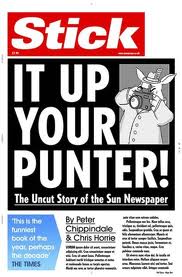

2. Stick It Up Your Punter: The Uncut Story of the Sun Newspaper by Peter Chippendale and Chris Horrie
Entertaining, funny and (for some) shocking all at the same time. Told in a lively way it delves into how the culture at News International developed over time. How investment in its brand of journalism and a swiftness to react made The Sun the country's best-selling tabloid and smashed its once superior rival dominance of the red top market. It may also give you a different perspective on the Wapping industrial dispute. The authors also wrote the equally excellent Disaster: Rise and Fall of News on Sunday - Anatomy of a Business Failure now out of print.
Pocket Books. Priced £7.99.


3. Tickle the Public. One Hundred Years of the Popular Press by Matthew Engel
Very interesting romp through the history of newspapers during the 20th Century. See how British newspaper habits moved from The Times to the Daily Star in a space of a few decades.
And if you think it is no longer applicable, then think again. The title comes from the rhyme popular in Fleet Street in the 19th Century: Tickle the public, make 'em grin, the more you tickle, the more you'll win. Teach the public, you'll never get rich, you live like a beggar, and die in a ditch. (In other words the perfect advice for new web start-ups.)
Now out of print but available on Amazon. Priced £00.01 to £98.27 + p&p.


4. My Trade: A Short History of British Journalism by Andrew Marr
You can't help but feel the Leveson Inquiry could have saved itself a few  weeks of questions if all the lawyers had bought themselves a copy of this enjoyable guide to modern reporting by the BBC's top - and very self-deprecating - interviewer. In a few pages the former editor of the Independent explains why by-lines are so important to reporters, how contacts work, the day to day of newspaper production - and, in particular, his own specialism the lobby - before moving on to how television reporting differs to print. Plus, as the title suggests, there is a wider view on how British newspapers have developed down the years.
Pan MacMillan. Priced £8.99.


5. Shock! Horror! The Tabloids In Action by Sally J. Taylor
It is easy - as well as being very lazy - to think that tabloids just make up all those sensational stories. That is not to say it has never happened but much of it is just down to hard work, dogged determination and (in the old days) very large cheque books being whipped out at just the right time. S.J. Taylor tells some of the stories behind the headlines (to use a cliche).
Now admittedly it has been a few years since I last read this excellent book but S J Taylor has written extensively on newspaper history since then. Particularly about the Daily Mail, An Unlikely Hero: A Newspaper Reborn - Vere Rothermere And How The Daily Mail Was Saved.
Out of print but available on Amazon. Priced £00.01 to £17.00.


To keep up to date with future tips follow @journalismtips on Twitter or sign up below.


Wednesday, 3 October 2012

41. Getting a job in journalism: How to make the most of work experience

Even the smallest of weekly newspapers can get inundated with requests for work experience. It means that in any given year 10 or 20 - perhaps even more on the bigger papers - wannabe reporters are coming through their doors.
Contrary to what you may be thinking (but not always) it is not purely an exercise in free labour. Believe me having dealt with the trail of destruction some trainees can leave behind it is often easier to do without them.

On the most part work experience is given for four reasons:
1. Almost everyone offering it will have done it themselves. It is the tried and tested method and they like to impart some of their own experience to the next generation.
2. It is part of the paper's "community remit". With budgets slashed to nothing it is a way of offering something extra to the people they serve.
3. They are looking for talent. That's right, they can even be looking for bright young journos (such as yourself).
If we are going to be cynical it can also be:
4. They need someone to churn out a dozen nibs, make tea and generally be a dog's body for a week.

Now reasons 1, 2 and 4 are all very laudable. It's No. 3 that we need to concern ourselves with. Bearing in mind a news editor can see so many trainees you will need to stand out from the crowd (let's call them people who haven't read this blog).

Newsrooms are usually much much smaller
So how do you do that? The answer is pretty simple... Make the news/editor's life easier. If you've been following this from the start you will have read tips 1 and 2 (I'm sure you can look them up yourself without need of a link).

If you've read the paper for a few weeks you should have a pretty good idea about what's going on in the local area, the topics they are interested in and gaps that aren't being filled.

The next thing to start doing is finding those stories - and that's before you go in. If you've never been in a real life newsroom before they can be daunting. The chances are you will start on a Monday and finish on a Friday. So far so normal. But unless you are working on a daily or a weekly that comes out at the end of the week you will get a rather disjointed view. 

For a start if the paper comes out on a Wednesday the reporters will be working to deadline. You won't see the process gearing up... it will be geared up. They will be busy trying to find a splash (front page) or chasing around after last minute quotes or trying to make the dang fool of an editor's "great" campaign - thought up over a tea and a biscuit 20 minutes before - become a reality. 

Sure they will try and throw you some stuff and take time out to go through it (if you are lucky) but, on the whole, they simply won't have time. You will certainly not their main priority.

This might be an altogether different story if come day one you walk in with that page 3 story that everyone was looking for two hours before.

If not, sit in a corner and expect to be largely ignored. Until Wednesday, with deadline passed the collective sigh of relief let's everyone relax for five minutes and even get around to asking you your name.

But that's only half the story. You may finish your week, if you are lucky, with experience of a newsroom, a couple of bylines, a notepad filled with squiggles purporting to be 15 words a minute shorthand and little else. 

Your week is up and you never see anyone in that newsroom ever again. That, after all, is what most people do.

Now think about it differently. This is the first stage of getting a job. Perhaps not this week, nor next month, maybe not even next year but you are feeling for an opening.

Firstly, you will know who to speak to when pitching a story. Secondly, you will have a good idea of when the news editor is busy (not a good time) and when it is quieter (a good time) to speak to them. Thirdly, you will have direct contact numbers for the people involved. Finally, they will have an idea of who you are when you are talking to them - and will give you some time.

For every story that makes the news editor will look kindly upon you, shine a little light in your direction, offer you more work experience and at some time in the future will advise you on any jobs that may be coming up ahead of the crowd. And if you are very useful may even give the editor a nod in your direction.

So instead of treating a week's worth of experience as a one off look at it instead as the start of a new and useful relationship with a newsroom.

After all the whole point of being a journalism student is to get a job in the trade. That is unless you really have more money than sense.

To keep up to date with future tips follow @journalismtips on Twitter.


Tuesday, 20 March 2012

29. Pen – paper. Paper – pen. You only need two things to do this job. Always carry spares (esp when covering court).

(Press For Time: Bike not required)

If you strip away everything else - the local newspaper reporter only needs two things. A pen and a pad. That's all.

(Although you walk into a newspaper office without a mobile phone - which naturally they won't pay you for - and you won't be staying very long.)

So it always surprises me the number of trainee journalists who walk into a newspaper office without either.

It shows a distinct lack of preparedness by the reporter. No, you shouldn't have to pay for your equipment but at the same time if you are doing an NCTJ course or a degree in journalism you would hope you would be carrying these things around with you at all times anyway.

It's what makes you look like a potential journalist and not the GCSE student considering journalism as a possible career.

Having said that pen - paper. Paper - pen.

(Tommy Cooper: The joke only works with a jar AND spoon)


It's amazing how difficult it is to bring these two elements together. But it shouldn't be.

Carry spare pens with you at all times (although I have been in court and seen three pens fail on me during a case...I should have brought a fourth).

And always have a pen and paper ready when you call or get a call from news desk - you don't want to sound unprofessional rummaging around.

It is the most basic lesson you can learn as a professional journalist - because if you are not recording it,  what are you doing?


Monday, 12 March 2012

25. If in doubt ASK. But don’t over do it. If you want to know if a word is hyphened look in a dictionary or online.

As journalists we are expected to ask questions — sometimes even pretty dumb ones..

(My favourite is to wait for an expert to finish some particularly complicated explanation before adding: "Yes, I get it. But how would you explain that to the layman?" Often mumbling something about wanting it in their own words. However the stupid question is often necessary to extract the raw emotion of the situation. You may see the emotions etched on the faces of, say, a family who has lost a loved one but still need to ask how they are feeling to get the quote.)

No, dumb questions are sometimes required.

Except in the office. And certainly not from the workie who wants to become a journalist.

So keep your questions to a minimum (except the best ones such as: "Would you like tea or coffee?").

A personal favourite was told to me by a friend. A secretary was escorting a potential trainee out of the office when he asked if the paper he had just been interviewed for was a daily or a weekly.

(He didn't get the job...but he's probably now editing something on the web.)

Write everything you are told down, few things rile people more than having to keep telling a student journalist the same thing over and over again.

Remember you have a huge dictionary, atlas, encyclopaedia, gazetteer sitting on your desk - and hopefully you will have been able to switch it on - all by yourself. (Actually it is amazing the number of workies who can't...instead they sit there waiting for the news editor to crawl on their knees to get to the on button - once you've established it's your desk for the week please feel free to switch the bloody thing on.)


So don't go asking how do you spell something like onomatopoeia - check it quietly to yourself online (like I've just had to - having missed the fourth "o"). Actually, if ever tempted to use the word onomatopoeia, don't.

Also don't use the word psephologists (which I can spell and which I did once) it's flash and an unnecessary technical term...I'll let you look it up.

Certainly don't ask things like is the local MP Conservative or Labour - especially if doing work experience in, say, the U.S., Australia or Scotland.

Just be careful not show off your ignorance. If you can possibly avoid it. Here's another from an agency news editor: "I had to tell a new junior who Belinda Carlisle was the other day."

Don't ask. Just nod, make sure you get the name right and then check it online as soon as you can.

You should also pick your time to ask questions. When you see everyone getting stressed, staring intently at screens and barking down the phone with a little bit more intensity than they were four hours before is NOT a time to start asking dumb questions...

Btw if anyone can put this clip onto YouTube I'd be able to upload it onto here. Thanks.
http://www.metacafe.com/watch/an-WQEVJ7b7nhbbYt/the_paper_1994_racing_towards_deadline/

Oh and if you find this useful - please RT.

Friday, 9 March 2012

24. When you've finished a story, read it back to ensure it makes sense, has no typos has been spell checked and it scans well.

You would not believe just how impressed a news editor will be at the sight of clean copy - especially if you are on work experience.

Most of us are guilty of getting sloppy when it comes to Mr Copy - we've too much to do and we're physically and mentally tired.

Take this for example:

Right-wing extremists believe ace riots in Britain are 'inevitable,' a new study claims.


I'm sure they do but however much they may enjoy the riots they are more likely to be 'race' riots - that the right-wing extremists are concerned about.

You on the other hand are fresh out of college - wanting to make a name for yourself.

Because you should see work experience as an extended job interview. That's how I got my first job and it's how many others have got theirs.

So the one thing you really don't want to do have a news editor rolling his eyes at your stupid mistakes.

I've gone into this before but it is worth reiterating. Work experience is the editor's obligations to the community at the expense of his/her news editor's time.

One of the things that I noticed while back on the weeklies was that 15/16 year olds were generally better at writing copy than 22/23 year old journalism students.

For a start they listened and took notes when they were being briefed. Secondly they wrote in a plain, unaffected style. They checked for spelling mistakes and typos, they didn't rush it or see themselves as "above" the story put before them.

They never saw the press release as dull or the people or subject matter it was about as uninteresting. They were learning all the time.

In short they were being good journalists. Bit by bit you could trust them with bigger and better pieces.

You are not going to be given a political scandal if you can't get the wedding report right.

Because behind your back people are asking: "Are they any good?" before deciding if they can trust you with anything that might have the whiff of interest about it.

A news editor once complained to me - very probably about err me - that there was not a single story in the paper that didn't need some correction by the time it came to him...and he is only the second pair of (tired) eyes.

So imagine how you will stand out if your copy is clean. Silly mistakes spotted - I mean what idiot would type "right of passage" instead of "rite of passage"? Or refer to a 10,000 seat theatre? Or...well ok, we'll just leave it there.

The fact is we all make mistakes - in some cases they are small and embarrassing. In other cases, such as claims that newspaper reporters deliberately deleted messages from mobile phones in a cynical way to get more stories, they can see hundreds of decent people made unemployed.

A simple re-read of a story before hitting the send button is often enough to spot most of them. In other cases you may have to think about your vindictive conspiracy addled mind and actually check the facts...like ringing up the phone company to see what happens when police officers listen to messages instead of jumping to conclusions because of your pathological hatred of red tops and popularity.

*All mistakes in this article are deliberate and aimed at testing your ability to spot them (naturally).


Tuesday, 6 March 2012

21. Journalism is not a 9–5 job. If you think it is work in another office, don't sit around clock watching. It's annoying.

In an ideal world we all finish work dead-on 5pm. But it is not an ideal world.

Journalism and newspapers should be about passion. (Admittedly it is also about low staff numbers and a management that squeezes every last ounce of good will and morale out of its dedicated team.)

These are the contradictions of the modern newspaper office...and quite honestly probably the old newspaper office as well.

Working time directive? Beats me.

One news editor on a national would wait for the first reporter to leave the office on a Friday evening and then call them to send them to some far flung job.

A tad vindictive but he had his staff on hand until at least 7.30pm when eventually a mass exodus meant everyone was taking their chances - to be called back and sent on some pointless task was the equivalent of being shot during a jail breakout. Everyone knew the risks but it outweighed the time served.

However such things are unlikely to be much of an issue on a local newspaper.

The issue there is more likely to be about you. For the more you put into your work, the more you get out.

You spend hours at tedious council meetings, you will get the contacts and the better stories. And the quicker you can build up a great portfolio the quicker you can get out of that paper.

And when you do you will earn more money, you will work on bigger and better stories and you will be more attractive to people. (Obviously that last one is a lie the bigger the paper the more repellent you become to the outside world - but don't let that put you off. You will get more respect whatever the local MP and your editor may say to convince you otherwise.)

But anyway the irony is that the more contacts you build the easier the job becomes - because the people are at hand.

Plus look around you. What are your colleagues doing? Reporters who swan off on time or sit there and claim back every last minute of overtime in lieu are not appreciated.

Because those pages still need filling and if you aren't part of the solution to that - you are taking the space of someone who is. And nowadays editors are reluctant to get rid of staff because they will probably not get someone to replace them.

And don't think people don't notice - we're *ahem* meant to be trained observers. We notice everything.

And anyway news unfortunately doesn't fall into the 9-5 routine. Annoyingly it happens at awkward times - like just as you are about to go home. It's here when instinct should kick in. When your very reason for being a journalist should override everything else.

Another pre-internet example from a local newspaper. Shortly after 5pm on January 28, 2000 a man carrying a samari sword entered the offices of Cheltenham MP Nigel Jones. Within minutes Robert Ashman had killed the MP's aide Andrew Pennington.

All plans for the Friday night were cancelled - no one needed to ask or even say it - reporters and photographers were sent to the scene and relevant addresses.

The library was raided as we put together backgrounders on all three men.

In those antiquated times a new front page was drawn up by the subs, photocopied and then distributed to the newsagents as an extra. It makes me sound like Methuselah.

The next day's edition was a sell-out. Newspaper sales executives (normally a gloomy bunch) were scouring the offices trying to take the reporters' copies of the paper.

No one got out until 10.30pm. Nor did they much the next day or the day after...

OK so it's easy to pick a big story and say you have to work longer hours - you will have to do it anyway even just filling some of the mind-numbing crap editors insist on filling their pages with.

So accept it. You are not going to have the luxury of a 40 hour week. And if that's what you came into the business for you are going to be sorely disappointed.

You can always become a PR (the pay is marginally better too).

Having said all this I don't want it to become a charter for long hours. Appreciate the editor who rolls up his own sleeves and joins with his team to help speed the work along - there aren't many of them.


Thursday, 1 March 2012

18. Always dress smartly, you don’t know where you may have to go. Looking like a slob is bad for you and the newspaper.


Information, Broadcasting and Labour Permanent Secretary Amos Malupenga has warned Journalists in the country that they risked being barred from covering functions at State House and any other state function if they continue with their ‘improper’ dressing.
The visibly annoyed Mr. Malupenga was shocked to see some Journalists from named private media houses dressed in dirty jeans, hanging shirt and wearing canvas when they covered President Michael Sata at State House yesterday.
Mr. Malupenga threatened that media personnel who fail to dress properly will would not be allowed to cover the Head of State.
Mr. Malupenga said at a meeting with all media heads at Cabinet Office it was resolved that Journalists covering State functions should be smartly dressed at all times.
ZANIS reports that the Permanent Secretary was addressing Journalists at State House in Lusaka yesterday.
“I had a meeting with your bosses at Cabinet Office and we resolved that action shall be taken with immediate effect on Journalists who opted not to dress smartly and don’t cry foul because we expect you media people to look presentable by dressing in proper attire.
“Don’t accuse us of putting blocks to frustrate your work,” Mr. Malupenga said.

As a reporter you will rarely know where you are going or who you are meeting from one day to the next. This doesn't apply to everyone who works on papers - some know they will be sitting in the office churning out press releases until their P45 arrives on their desk.

(But since you, dear reader, are checking out jornalismtips let us assume you hope to do rather better than that.)

In an ideal world you will (for chaps at least) wear a suit - but in this age of austerity (as indeed it has been especially for new weekly newspaper reporters in the past 20 years) not always affordable. But you will at least need one for special occasions - such as covering funerals, Remembrance Sunday, royal visits and the like....oh yes and for going to your next interview with another newspaper.

But a smart dress code is essential. At the very least - and it is worth noting what the rest of the news reporters are wearing - smart trousers and a shirt and tie are essential.

Remember you are meeting the public and while you may not agree with a tie the person you are interviewing might. They will look and be judging you and appearance is a part of that.

Plus if you are going to knock on the door of a stranger do you really think jeans and a t-shirt would encourage people to invite you in?

People will take you more seriously if you are smart - particularly (but by no means exclusively) the elderly, and especially that which went through National Service.

More importantly though it is simply polite and professional. Looking like a slob will only confirm some people's already dim view of our occupation.

And on a local you are fighting to be taken seriously. While I agree journalism is more about intelligent questioning and writing every element is important - perhaps some more than others but important nonetheless.

So in a way I can sympathise with Amos Malupenga's view point...but that is a whole different story.


Thursday, 23 February 2012

13. Most journalists, esp on locals, aren’t well paid. Don’t take a job then whine about pay. Be good at it and find another

Some things happen by chance. One being that just as I am about to start writing about journalists' pay I read the brilliant Simon Kuper in the FT's Weekend Magazine (I'd suggest it's worth a read but at £3 an edition the FT is probably out of your price bracket...I get to claim it back).

But just in case the link goes down or it gets squirrelled behind a pay-wall this is what your average reporter - and he's talking about nationals not regionals or locals - has to contend with:


In 1947, Winston Churchill wrote a story about an imaginary conversation with his father’s ghost. Churchill tells the ghost that he writes books and journalism. “Ah, a reporter,” the ghost replies. “There is nothing discreditable in that. I myself wrote articles for the Daily Graphic when I went to South Africa. And well I was paid for them. A hundred pounds an article.” Churchill’s father visited South Africa in 1891. If he wrote those articles for certain newspapers today, he would still get £100, or maybe nothing.
If you've read the full article he is wrong about one thing - in locals lots of what you write can make a difference...even that week.

In the UK the average salary is £26,200. If you are earning this or possibly even more - congratulations you must be the editor (perhaps you could be kind enough to suggest this blog to trainees or mention it if you give a talk journalism students).

The fact is you are not going to be earning anything like this. Now I could talk about how unfair it all is...or why you should go on strike, but I'll leave that up to the NUJ (these are practical tips not Never Never Land).

Quite frankly if there were a lot less of you so keen to get into this job my pay would go up because there would be a shortage of reporters - so bugger off.

Since you are hell bent on becoming a reporter - stop complaining. The one sure fire way of getting anything like a decent pay increase is to leave the paper - and if that's to stay in journalism it is to move to a bigger one. Either that or get promoted.

So don't - whatever you do - move to your first paper and think that's it. Keep flexible at least for the first few years (unless you are fabulously wealthy and just slumming it or your partner happens to be).

And don't whine about the pay. If you're not a reporter don't bother becoming one if money will be an issue - you've been told. Even if you become a senior in two/three years time the chances are you'll only be on £20,000 - and probably only £18,500 if you are at the same paper you were a junior at).

Loyalty - quite honestly - doesn't pay. But you are still there to do a job. So do it because the best way to get another job is to have great cuts and know what you are doing. And then you can keep moving up.

Tomorrow: Where and tear....

Wednesday, 22 February 2012

12. At least feign enthusiasm when doing work experience on local newspapers – even if you don’t actually feel it

In a newsroom people's impressions of you are made very quickly.

It is filled full of people making snap judgments through years of interviews and doorsteps.

So one mistimed word, an ill-conceieved phrase, an insolent look can ruin your chances of ever working in that newsroom again.

Do everything - without complaint. Better do - and offer to do - even more.

You see it's very well turning up to a newsroom believing it to be staffed with cynical seen-it-all hacks.

Nothing could be further from the truth, he lied.

Sure there are a lot of reporters who see out one day to the next - occasionally (but not always) bothering to stir when something suitably big or exciting comes along.

And then there aren't. There are the ones that can get up each morning and know that what ever is going on in their patch that day they will get to see or experience the best and the worst of it.

I must confess after returning to local newspapers - following a decade long stint on the nationals - I did wonder how so many (but certainly not all) reporters end up the way they do.

After all journalism colleges churn out thousands of bright, young things all with dreams of becoming the next Woodstein or Burnward or - holy of bloody holies working for The Guardian - and within a year they are as depressed and depressing as even the oldest hack.

(Which is largely unfair to old hacks - many of us retain some interest in our chosen trade.)

(Scene from The Paper - features the word "art" they mean photographs)

It has  to be the newspaper industry itself which weighs upon them. Uninspiring leadership, the churn it out, finish at five attitude (at least for the editor...everyone else can stay until the paper is finished).

But clearly I'm going off on a tangent. The point is that as a young reporter you are expected to rise above all this. You haven't got a mortgage to worry about, you haven't seen half the staff disappear from the newsroom like some Stalinist purge, you pay levels kept to near subsistence levels for four years on the trot, or senior reporters replaced five months after they left with a green junior - a bit like yourself (on three-quarters of the pay because if it was any less it would be beneath the NMW), or good stories spiked because the editor doesn't want to upset someone, or put up with good editors replaced with cheap and nasty versions. Or indeed just become fed up with the fact

You've yet to see any of these things so don't think for one minute you can walk into a newsroom and have the same world weary cynicism that even the office junior is allowed to adopt...because no one will thank you for it.

Indeed, you'll have plenty of time to be cynical later on in your career.

The truth is newspapers rely on the young and enthusiastic (in other words the naive, cheap and stupid) so don't think playing the hard-bitten reporter is going to wash with anyone - because the jolly chap in the corner cheerfully writing about the W.I. meeting might just be a former national man with more experience in their back pocket than you shall ever have in your entire career (btw I was not that reporter - bloody hated WI reports and can be seen moaning in a corner...very loudly).

So what people want is the enthusiasm. This is not to be confused with going up to news desk or bothering the reporters every 10 minutes asking for something to do...see earlier point.

Later I'll go on to other ways you can fill your time productively while doing work experience.


Tomorrow: Don't get too settled. The (bad) pay in local journalism.


Monday, 20 February 2012

10. When starting work experience, a new job or going to an interview bring in a story or idea – editors will be impressed.

I can tell you what it's like to work for a newspaper. Imagine a combine, one of those huge threshing machines that eat up a row of wheat like nothing, bearing right down on you. You're running in front of it, all day long, day in and day out, just inches in front of the maw, where steel blades are whirring and clacking and waiting for you to get tired or make one slip. The only way to keep the combine off you is to throw it something else to rip apart and digest. What you feed it is stories. Words and photos. Ten inches on this, fifteen inches on that, a vertical shot here and a horizontal there, scraps of news and film that go into the maw where they are processed and dumped onto some page to fill the spaces around the ads. Each story buys you a little time, barely enough to slap together the next story, and the next and the next. You never get far ahead, you never take a breather, all you do is live on the hustle. Always in a rush, always on deadline, you keep scrambling to feed the combine. That's what it's like. The only way to break free is with a big story, one you can ride for a while and tear off in pieces so big, the combine has to strain to choke them down. That buys you a little time. But sooner or later the combine will come chomping after you again, and you better be read to feed it all over again. --Ray Ring
from the novel Arizona Kiss
(Taken from: http://www.schindler.org/quote.shtml)

And it's true. Newspapers need constant filling and it is a grind. You can make a good impression by actually bringing a story in.

Believe me bringing in even a half decent story will get you noticed - bring in two or three and you're practically in the door.

But watch for the pitfalls...we've all done them. Before suggesting a story idea check that it hasn't been done before. Hopefully you will have been taking note of the earlier tips about reading the paper first but it's worth double checking the paper's website too.

Secondly don't get disheartened if your idea isn't taken up. There may be reasons, not immediately obvious, why the paper won't run it (there may be legal issues with previous stories, you could be writing about the editor's best friend, could be something to do with advertising).

However the very fact that you bring in something will at least be noticed.

Don't wait until you start the job/work experience to write it up. Write as much as you can - you may want to leave the official comments until later (many press offices will refuse to talk to people who are not bona fide journalists - so calling from the paper's offices does have an advantage).

If you are very organised try putting in a Freedom of Information request weeks beforehand. Don't make it too complicated and don't expect a reply within the time - a general rule of thumb is six or seven weeks before.

For ideas check the brilliant David Higgerson blog. So what if it's a rip from a successful FoI in Dundee, if you are in Surrey the same idea can be used. The chances are no one in the newspaper office has had the time to do it.

Alternatively use your local knowledge. Listen out for stories - and check them out to make sure they will work.

There is no point putting up a great idea and then watching it fall apart after you've told the news editor.

And really don't take offence if he wants a staff reporter to help you with it. It means it was a good idea and they want to make doubly sure.

If nothing else bringing in an idea shows you are a go-getter.

Being a smart Alec I once turned up to an interview bringing in 67 ideas for stories and follow-ups based on that week's newspaper which I'd written on - quite literally the back of an envelope. (Note I can say literally because it was on the back of envelope as opposed to a cigarette packet which, if I had done and I hadn't, would mean I have very small hand-writing....or perhaps short ideas....ok let's just park that and move on).

So back to ideas. Bringing in your own story/stories also helps because in the vast majority of cases no one knows what to do with you or what you are capable of....be that for good or ill.

But if you do it and do it well, you are more likely to be entrusted with more work - perhaps even proper work...it sure beats sitting twiddling your thumbs and being offered the chance to join a real reporter at the Magistrates' Court if you are very lucky...

So a quick recap. Make sure it's not been done, make sure it's doable, don't promise anything you can't deliver.

Tomorrow: Why being cool or curmudgeonly doesn't work.


Monday, 6 February 2012

4. When a senior reporter or editor tells you how to write something don’t say “I agree” say “thank-you”

If someone is trying to explain what is wrong with your copy - don't respond with "I agree" as if some how this is a negotiation taking place.

I once had a reporter do this again and again - despite me asking them  not to. It was infuriating and bad manners.

The idea of saying "sorry" or "thank-you" seemed to be impossible for them to say.

Needless to say they agreed so much  they made the same mistakes again and again week in, week out.

If someone has the patience to sit you down and go through your copy don't see it as a criticism just try and learn from it.