Showing posts with label newspapers. Show all posts

Thursday, 15 November 2012

55. How to sell stories and photographs to newspapers and magazines.

There has never been so much need for journalism... and so little desire to pay for it.

But there is a lot to admire in the Samuel Johnson school: "No man but a blockhead ever wrote except for money."

There are, of course, plenty of blockheads. And to be fair you do need the experience to be a journalist - not a blockhead.

But let's face we are not writing for charity... and even if you are writing for charity, you'd like to get paid, right?

The prospect of actually earning money for what we write is what makes us professional journalists... unlike amateur or citizen journalists.

(Which strictly speaking isn't correct if you are British. We are subjects - but I think the idea of having subject journalists would only confuse matters - so let's stick with citizen.)

So to the point. Can you make money in this game while studying?

The simple answer is: Yes, you can. And should you be doing it? Yes, you should. And will you make a fortune doing it? Er, no.

If you've read these posts from the beginning - read lots of different papers, read the local newspaper, make contacts etc etc - and future ones this is what it is all about.

That is unless you have private means and want to be a journalist as a hobby - then please skip a few posts, there is nothing to see here.

For the rest of you this is what you do.

First off a question: What is the media? This isn't some bullshit philosophical question.

The correct answer is: Information, written/filmed/recorded/photographed and packaged for certain target audiences.

They generally fall into four categories: Geography, socio-economic, consumer or interest.

It is the wonder of our pluralistic media that everyone - or, at least, nearly everyone - is catered for. (Alas Hermit Monthly folded on account of the distribution costs.)

What does all this mean? Simply put having the right information (story) to yourself (exclusively) and packaging it (writing) to the right target (media organisation) means you may - just may - get paid for it (there are never any guarantees).

Note, no one is asking for your opinion (that probably isn't worth anything - at least not yet).

For now the basics:

1. Get a story: They come from all over the place - check the rest of this blog on how to do this.

2. Make sure it has not already been written: Go on the internet and search the mainstream media. Not just the paper you want to sell to but all of them.

3. Write the story: Unless you are already an established freelance you are highly unlikely to be paid on spec for an idea or concept. Otherwise known as "being put on an order".

4. Double check everything: Make sure your story is watertight. Muck it up now and you could be wasting a lot of people's time - not a good thing for them... or you.

5. Get a friend to read it: (Optional) Find someone who is willing to pull your work apart. Listen to their questions. If they can find holes in your work - you can be sure so will a professional news editor.

6. Try to get a package together: If there are photos/words to be had, make sure you've got them.

7. Think where you are going to place it: Decide where this particular story would best fit (this will change from story to story) and, importantly, who will pay.

8. Pitch: Generally speaking a cold call should go to a news/picture desk. If you live in the provinces find out who the area man is, especially if you are planning to make a go of this and continue to produce future stories.

9. Get the timing right: There is little point trying to sell something (unless it is huge and immediate) after news conference.

10. Hope and learn: If you've got a surefire winner you will probably know straight away. Don't get disheartened if it is rejected...

Future posts will go into more detail on some of these. In the meantime if you think you have a story drop me a line: journalismtips@hotmail.co.uk - if I can I'll make suggestions for UK papers.

Good luck.

Haven't got enough of journalism tips? Then "like" my Facebook page for updates and extras... https://www.facebook.com/JournalismTips


Friday, 9 November 2012

Journalism Tips 53. Lessons from the movies: Keeping a diary

To begin with I am not taking about a Piers Morgan style diary as I suspect that it is highly unlikely that your expose of the mayor fiddling his expenses and the cold stares he gives you will be of much interest to a wider audience.

Today's post is about newsdesk diaries.

One of the things you soon find in any newsroom - be it newspaper, television, radio or website - is that news does not come in nice easy to handle packages.

And that goes for nationals, regionals to even the most hype-local of weeklies because news is funny like that.

One week you are scrabbling around trying to find nine page leads and something that will vaguely look slightly less embarrassing to stick on the front and the next the editor is agonising over what they should splash with that day.

(Admittedly the former is rather more common than the latter.... and when I say rather more common I mean usual.)

Now this lumpy and, quite frankly inconvenient news scheduling is a bit of a pain in the butt for news editors and will soon prove to be a rather bigger one for you since it will be you (the reporter) who has to find the stories to fill the pages.

The result is a constant scramble of chasing after so-so news stories to turn into page leads and shorts or nibs (news in brief).

And what that means is time is constantly running out for the edition, minor stories are propelled into page lead status and longer investigations are forgotten about.

So it is worth considering the introduction of the newsdesk diary. A full diary - which admittedly does take time - will pay long term dividends.

Many newspapers already have them. But they are all too often restricted to upcoming court cases and dates of forthcoming meetings (councils and the like).

A really good diary will go much further. It is worth taking half an hour each week after edition (or better once the paper is printed) to see which stories are worth a follow up.

A few examples: A new major supermarket announces it is coming into town. Everyone says that it will be the end of the small independent shopkeeper.

Inevitably protest groups are set up. There is much anger and many meetings. People are up in arms (literally, because all you can afford is to live in a rough part of town).

The council gives the go-ahead and in the store rolls. And for some reason everyone thinks the story has ended there.

Of course you may run odd follow ups about boycotts, protests and so on (which always happen on a Saturday morning when no one is working). You may also, if people can be bothered to tell you, run stories about small shops closing down as a result of lost business. But this is waiting for events to happen.

Now think again. A diary entry making note that the store opened three, six, nine and 12 months before will help you gauge how the town is coping with new supermarket.

Instead of writing that the local shops have closed down you can chart their progress. Is it as bad as everyone feared? If the answer is yes, a campaign: Shop local! Save Our Shops! Over the next few weeks and months you will have a series of engaging, relevant local community stories that will engender good will from locals and - more importantly - fill that space on page nine. (I will deal with running a campaign in a later post).

Or what about an inquest? A small child dies after drowning in a pool. The parents are naturally devastated and, understandably, at the time really do not want to talk. But the issue is an important one. Making a note of the anniversary of the death and asking again if they wish to talk a year on from the tragedy is not unreasonable. No one is suggesting their pain is any less. However they may feel they now want to talk so as to warn others. Well told, the story will have lost little of its relevancy or importance.

Example three: A local nursery has shut down and the parents have had to find somewhere else for their beloved brats to go. One month, two months, three months on... have they found new places? What does it mean for the parents? Have they had to give up work because they can no longer afford child care? And so on...

A few quick calls - to the organisers of the campaign to save the nursery - will soon establish if there is a problem. If there is a page lead... if not a nib.

There is a spin off from all of this as well. In two of the above you have taken stories about buildings and committees and turned them into stories about people (again this will be covered later).

Now here is a clip from ITV's mid-1980s fantastic sitcom Hot Metal that perfectly demonstrates everything I am talking about in terms of news desk diaries.

Loosely modelled on The Sun's own history and the Kelvin MacKenzie era it was not as Hugh Grant may have you believe a documentary but a sitcom.

The Crucible's ace reporter Greg Kettle (played superbly by Richard Kane) is busy at work in the hotel room of a royal's girlfriend...

(One thing: The entry should have been at two and a half months before any official announcement at nine months the whole world would have known and there would have been no exclusive.)


For part one of journalism tips from the movies click this link.

Wednesday, 7 November 2012

Journalism Tips. 51. Writing stories. Why I think you should take I out.


Sir Humphrey: The identity of the official whose alleged responsibility for this hypothetical oversight has been the subject of recent discussion is not shrouded in quite such impenetrable obscurity as certain previous disclosures may have led you to assume; but not to put too fine a point on it, the individual in question is, it may surprise you to learn, one whom your present interlocutor is in the habit of defining by means of the perpendicular pronoun.
Hacker: I beg your pardon?
Sir Humphrey: It was... I.


So far we've gone through the basics of finding people, using FoIs and the basics of making contacts. More on these subjects in a later posts.

Now we come to the business of actually writing the story.

As a general rule of thumb whenever you are tempted to write anything that is to be read by more than a handful of people go through it removing the word "I" - unless it is in quotation marks and somebody else has said it.

This goes for most news, features and reviews... and an awful lot of comment too.

If you don't believe me (again only to be rarely used) try reading a paper at random...

Pick up the Daily Express and run through its news pages. Or The Mirror... or the Bridlington Post... or the Falmouth Packet... or The Economist... even i won't have news stories with the word I (unless it is about the paper's circulation - but let's draw a veil over this).

Unless you are a fundamental part of the story - and going along to an event does NOT make you a fundamental part of the story it makes you an observer - you should never use it.

Instead what you write should be about other people. It is part of writing as a journalist. It is not to say that gonzo journalism or first hand reporting will never feature in your career it is just at this stage it is best to leave it on the park bench, give it a lolly and tell it you'll be back in five minutes - then not return to that area for at least the next five years.

"I" is what Twitter is for... not readers of your news stories.

Similar when reading student articles interviewing someone vaguely famous there is far too much what a great honour it is for the interviewer to meet them. Why "it's not every day that you get to meet global superstar and singer extraordinaire Frankie Cocoza..." (at this stage I'd like to apologise to readers of this blog from outside of the UK for even introducing the concept of a Frankie Cocoza into your consciousness. Needless to say he is some irritating little no mark who once appeared on the UK version of X Factor).

Ask yourself: Who will be interested in YOUR experience of meeting a celebrity? What will they get out of reading about you? Why would they care?

Again, stop reading stuff online and read a few properly subbed features in a newspaper or magazine. See for yourself how they are done.

The word "I" may feature occasionally but it is not the main focus.

Now before anyone starts let's put aside the writing of the brilliant Liz Jones - yes, I did say brilliant. She had a style which is often mocked but it is incredibly successful - and well read - especially among her target audience. That however takes a lot of experience because that is what she is sharing as part of her hook for readers.

Or take Hunter S Thompson who shoe horned himself into his stroies to create Gonzo journalism. This was not done on the basis of a single interview or evening. He lived and breathed the life of his subjects - or er not in some cases. You simply haven't got the time - yet.

Perhaps more importantly once you remove the "I" from your copy you begin to write differently. It naturally changes your persepective. Your copy-style changes, and quite rapidly, to one more like that of mainstream media.

To break my own rule: I once picked up a college magazine. And every single article featured the vertical pronoun and tucked away behind the reviews and the going out pages and editorials and lengthy articles of Developing World debt were two pages on the forthcoming student elections.

An important subject for most students, one might think? Perhaps an interview to hear the voices of somebody else in the paper? A meaty subject worthy of spending some time over...? Of course not each candidate was given 30 words to say what they would do if they won office.

I consoled myself with the fact the reviewer of James Joyce's Ulysses happened to enjoy it.

Update: A former colleague who has asked to remain anonymous sent me this rather glorious tale that illustrates the above beautifully...

She wrote:

This brings to mind a story told by an old editor of mine after a terrible accident involving a ferry when a number of lives had been lost. He was told at conference by the head of news that one particular junior reporter was at the hospital bedside of a survivor who had given a blow-by-account of the horror. "Great," said my old editor. "Let's clear two pages for a first person piece." Three hours later, when the 1,500-word story was submitted, it read something like this: "I was awoken at 6.30am by a phone call from my news editor. 'Get down to the ferry station', he said, with some urgency in his voice. Immediately I grabbed my notebook and my camera and headed out of the apartment, grabbing a bagel en route." And so it went on and on and on....

To keep up to date with future tips follow @journalismtips on Twitter or sign up below.


Thursday, 25 October 2012

Journalism Tips 47. Christmas ideas and Freedom of Information. Start thinking now. Plus a few more book ideas.

Last week I suggested that you start thinking about your Yuletide stories - you'll find it here along with a few suggested books.

A week has gone by so let me repeat the basic message: You really do need to be thinking about them now, especially if they are going to involve festive Freedom of Information requests.

Even more so if you've never made an FoI request before and have no idea how to do it. And if you're a student looking for work experience on your local paper or you simply want an easy cutting in a real newspaper then here is your chance.

And while you may think you have plenty of time - there are 61 days until Christmas it's not quite that simple.

Remember it takes 20 working days to get a FoI response it is rarely that easy. So from tomorrow (Friday 26) there are 42 working days (in theory).

But you won't get a response from most places on Christmas Eve - so we're down to 41.

Then you have to have your copy ready before the edition goes to print, so really you need to have it ready to go by December 14 (36 days) - even if the article is for between Christmas and New Year.

Of course it may take a few days to contact all the relevant people to make it a story - and it is Christmas so people will be busy... even if you have their contact numbers to hand. Let's say two days to contact the relevant people (34 days).

And if you haven't another two days (32 days) and then you have to actually write the thing - another day for you to write and read and re-read it (31 days).

The definition of a full working day means that even if you do get it in by 9.01am tomorrow morning - and to the right department the day will be practically over and the 20 working days won't actually start until Monday (30 days).

Allow for the request to be at the very least four days late (26 days); there to a problem with the request itself (does not comply etc) another five days (21 days) and a couple of days to actually make sense of what they send you (19 days) and you will see you are late already.

(Admittedly that was painful towards the end.)

So while you console yourself at missing this valuable deadline here's another few journalism books to add to your Christmas stocking... And in an exciting new development you can now click on the title and it will take you straight to the relevant Amazon page. I will master technology.


Scoop by Evelyn Waugh
William Boot possibly the most famous countryside correspondent of all time. A legend - and a living one since he was based on W. F. Deedes - in his own and many other life times. Briefly: confusion runs at the Daily Beast and a lowly rural reporter finds himself (and an awful lot of stuff) in Africa awaiting the much expected civil war.
There, by accident rather than design he finds himself beating the rest of the assembled hacks - including that of the Beast's (Daily Mail) arch rival the Daily Brute (Daily Express) - to pull of an amazing newspaper coup.
Waugh is brilliant and typically acerbic. A must.
First published 1938.


A Crooked Sixpence by Murray Sayle
Set in the - then fictional - Sunday Sun of the 1960s. Australian hack James O'Toole comes to try his luck in Fleet Street. He soon finds himself writing an article about a hit  pop star Ricky Roger's dubious parentage (or at least it was back then) and finds himself up against Ricky's publicist Mary Lou. The story continues with Mary Lou: "You can't give us publicity like that. After all, it's not Ricky's fault, is it?"
"Look, Mary Lou," said O'Toole. "We're not in the business of giving Ricky good publicity. This is supposed to be a newspaper. We print what we think people will be interested in.
"For years you have been feeding us your cooked-up rubbish about Ricky's ties and his favourite dishes and we published it because deluded editors thought it was interesting. Ricky got rich in the process and you seem to be doing all right yourself.
"Now we've got something which is even more interesting. Maybe Ricky's income will go down but that's no concern of ours. We're not here to build him up in the first place. Those who live by publicity can't squeal if they die by publicity, can they?


Pratt of the Argus by David Nobbs
It is the 1950s and Henry Pratt has just finished National Service. joins a small Northern newspaper in the mid-1950s. We follow him as he makes contacts in the worlds of politics, crime and sport.
Naturally they all come together for an hilarious finale. It's part of a series but you don't need to read the first book as this stands on its own.
And it is very, very funny... especially if you are a journalist (even after all this time).


To keep up to date with future tips follow @journalismtips on Twitter or sign up below.

Wednesday, 17 October 2012

Journalism Tips 45. A few #journalism books to try out.


A little break from the finding people posts as in here and here and here. This is an occasional series of books and films the trainee reporter or journalism student may want to try out. No, they are not serious Murdoch-bashing, tabloid-trashing tomes. They are just general reads for the interested and curious reader.
If you want a journalismtip out of this it is... start thinking now about those Christmas stories especially for local newspapers. It comes around pretty quickly and the news editor will be on your case sooner than you think. Make sure the stories will hold... and make sure you can keep your gob shut the next time they scream for a page 43 nib, you could find your Yuletide splash being used as a filler.


1. Waterhouse On Newspaper Style by Keith Waterhouse
Simply brilliant. A classic. Every junior reporter - and indeed quite a few seniors - should have a copy. It was originally written as the style guide for the Daily Mirror (or as he would put it the Daily Mirror style guide) some time in the 1980s.
It's said that copies were photocopied and passed around from journalist to journalist. One day a reporter bumped into Waterhouse and asked him to sign his copy. Realising it was such a popular book he decided to publish it.
The book covers everything you could possibly need to know about writing by a master of his craft.
Revel Barker Publishing. Priced £9.99.


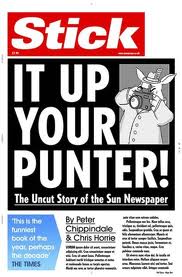
2. Stick It Up Your Punter: The Uncut Story of the Sun Newspaper by Peter Chippendale and Chris Horrie
Entertaining, funny and (for some) shocking all at the same time. Told in a lively way it delves into how the culture at News International developed over time. How investment in its brand of journalism and a swiftness to react made The Sun the country's best-selling tabloid and smashed its once superior rival dominance of the red top market. It may also give you a different perspective on the Wapping industrial dispute. The authors also wrote the equally excellent Disaster: Rise and Fall of News on Sunday - Anatomy of a Business Failure now out of print.
Pocket Books. Priced £7.99.


3. Tickle the Public. One Hundred Years of the Popular Press by Matthew Engel
Very interesting romp through the history of newspapers during the 20th Century. See how British newspaper habits moved from The Times to the Daily Star in a space of a few decades.
And if you think it is no longer applicable, then think again. The title comes from the rhyme popular in Fleet Street in the 19th Century: Tickle the public, make 'em grin, the more you tickle, the more you'll win. Teach the public, you'll never get rich, you live like a beggar, and die in a ditch. (In other words the perfect advice for new web start-ups.)
Now out of print but available on Amazon. Priced £00.01 to £98.27 + p&p.


4. My Trade: A Short History of British Journalism by Andrew Marr
You can't help but feel the Leveson Inquiry could have saved itself a few  weeks of questions if all the lawyers had bought themselves a copy of this enjoyable guide to modern reporting by the BBC's top - and very self-deprecating - interviewer. In a few pages the former editor of the Independent explains why by-lines are so important to reporters, how contacts work, the day to day of newspaper production - and, in particular, his own specialism the lobby - before moving on to how television reporting differs to print. Plus, as the title suggests, there is a wider view on how British newspapers have developed down the years.
Pan MacMillan. Priced £8.99.


5. Shock! Horror! The Tabloids In Action by Sally J. Taylor
It is easy - as well as being very lazy - to think that tabloids just make up all those sensational stories. That is not to say it has never happened but much of it is just down to hard work, dogged determination and (in the old days) very large cheque books being whipped out at just the right time. S.J. Taylor tells some of the stories behind the headlines (to use a cliche).
Now admittedly it has been a few years since I last read this excellent book but S J Taylor has written extensively on newspaper history since then. Particularly about the Daily Mail, An Unlikely Hero: A Newspaper Reborn - Vere Rothermere And How The Daily Mail Was Saved.
Out of print but available on Amazon. Priced £00.01 to £17.00.


To keep up to date with future tips follow @journalismtips on Twitter or sign up below.


Wednesday, 3 October 2012

41. Getting a job in journalism: How to make the most of work experience

Even the smallest of weekly newspapers can get inundated with requests for work experience. It means that in any given year 10 or 20 - perhaps even more on the bigger papers - wannabe reporters are coming through their doors.
Contrary to what you may be thinking (but not always) it is not purely an exercise in free labour. Believe me having dealt with the trail of destruction some trainees can leave behind it is often easier to do without them.

On the most part work experience is given for four reasons:
1. Almost everyone offering it will have done it themselves. It is the tried and tested method and they like to impart some of their own experience to the next generation.
2. It is part of the paper's "community remit". With budgets slashed to nothing it is a way of offering something extra to the people they serve.
3. They are looking for talent. That's right, they can even be looking for bright young journos (such as yourself).
If we are going to be cynical it can also be:
4. They need someone to churn out a dozen nibs, make tea and generally be a dog's body for a week.

Now reasons 1, 2 and 4 are all very laudable. It's No. 3 that we need to concern ourselves with. Bearing in mind a news editor can see so many trainees you will need to stand out from the crowd (let's call them people who haven't read this blog).

Newsrooms are usually much much smaller
So how do you do that? The answer is pretty simple... Make the news/editor's life easier. If you've been following this from the start you will have read tips 1 and 2 (I'm sure you can look them up yourself without need of a link).

If you've read the paper for a few weeks you should have a pretty good idea about what's going on in the local area, the topics they are interested in and gaps that aren't being filled.

The next thing to start doing is finding those stories - and that's before you go in. If you've never been in a real life newsroom before they can be daunting. The chances are you will start on a Monday and finish on a Friday. So far so normal. But unless you are working on a daily or a weekly that comes out at the end of the week you will get a rather disjointed view. 

For a start if the paper comes out on a Wednesday the reporters will be working to deadline. You won't see the process gearing up... it will be geared up. They will be busy trying to find a splash (front page) or chasing around after last minute quotes or trying to make the dang fool of an editor's "great" campaign - thought up over a tea and a biscuit 20 minutes before - become a reality. 

Sure they will try and throw you some stuff and take time out to go through it (if you are lucky) but, on the whole, they simply won't have time. You will certainly not their main priority.

This might be an altogether different story if come day one you walk in with that page 3 story that everyone was looking for two hours before.

If not, sit in a corner and expect to be largely ignored. Until Wednesday, with deadline passed the collective sigh of relief let's everyone relax for five minutes and even get around to asking you your name.

But that's only half the story. You may finish your week, if you are lucky, with experience of a newsroom, a couple of bylines, a notepad filled with squiggles purporting to be 15 words a minute shorthand and little else. 

Your week is up and you never see anyone in that newsroom ever again. That, after all, is what most people do.

Now think about it differently. This is the first stage of getting a job. Perhaps not this week, nor next month, maybe not even next year but you are feeling for an opening.

Firstly, you will know who to speak to when pitching a story. Secondly, you will have a good idea of when the news editor is busy (not a good time) and when it is quieter (a good time) to speak to them. Thirdly, you will have direct contact numbers for the people involved. Finally, they will have an idea of who you are when you are talking to them - and will give you some time.

For every story that makes the news editor will look kindly upon you, shine a little light in your direction, offer you more work experience and at some time in the future will advise you on any jobs that may be coming up ahead of the crowd. And if you are very useful may even give the editor a nod in your direction.

So instead of treating a week's worth of experience as a one off look at it instead as the start of a new and useful relationship with a newsroom.

After all the whole point of being a journalism student is to get a job in the trade. That is unless you really have more money than sense.

To keep up to date with future tips follow @journalismtips on Twitter.


Monday, 9 July 2012

Journalism Tips 36. How to get a job as a journalist.

Every year thousands of students graduate from some form of journalism or media course. It makes sense therefore that competition for the few jobs available really must be pretty fierce. Or so you would think.

Actually on the whole it's not particularly competitive because most young trainee reporters cannot be bothered - to rise above the herd really doesn't take very much. These odds are shortened by the growth in traineeships on national newspapers - which Hoover (it's a trademark - hence the cap) up most of the cream of that year's journalism graduates.

That is unfair since I have seen some brilliant - well almost - trainees fail to get one of the coveted places despite having an excellent CV and references...but you see where I am going with this.

Clearly you are the smarter than average trainee/student reporter - how do I know? You are reading this.

So what do you need to do? Well an excellent portfolio helps (more of what I mean by this on a later blog). A devotion to work experience helps also (ditto).

It's often said it is not what you know but who you know that makes a difference. When I started in this industry I didn't know any journalists - but I learned what I needed to know and got to know the people who helped me find work.

Within five years I was talking to former Observer reporter John (There are three rules in journalism. First, find a crocodile. Two, poke it in the eye with a stick. Three, stand back and report what happens next.) Sweeney whose original article on the tabloids - it was written in a fun not pious manner - got me interested in journalism.

A few years on (I was pretty slow) I was working with The Sun's brilliant chief reporter John Kay. It was reading his copy that helped shaped my own (it was never as good).

Each and every opportunity gets developed by experience and your knowledge....unless your parents are execs on a newspaper, in which case forget all I've said.

Some people are naturals most are not...if you're not preparation is the key and this is in part what this blog is all about. Going back to one of the earlier posts you will see that I claim most work experience is a pain in the butt for the majority of news editors. But if a good attitude, decent work ethic and a few stories makes the difference.

It helps also if you can bring new skills to the table but get the old ones first. If you are sent out on a story there's no point getting a first class video if you haven't got the names of the people you're interviewing. You'll note the headline is deliberately geared to SEO - we are all learning new skills, as we shall see in another post that too will prove important as your career progresses.

Given the state of much of the competition you should find a job with two/three months. If you are doing work experience and following this blog (and assuming there is a position available) it shouldn't take even that long. If you are getting lots of stories and the news editor is not rewriting all your copy ask him or her if they know of any jobs around - note not necessarily on their paper. It might even be worth asking for feedback at the end of the week (but be wary news editors put in massively long hours and come the end of the working week are more interested in getting out of the newsroom that sitting talking to the workie).

Again follow up good work experience places with more calls offering stories. Being dynamic and useful are welcome attributes. But make sure you are not the cause of more problems - write the story up so it is ready to go.

Being a pain is more likely to guarantee you won't get an opportunity even if you may have an occasional good idea.

For several months I had one caller who would ask in a vague manner if I'd be interested in certain stories when I asked him to send them over he'd tell me he hadn't written but didn't want to waste his time if I wasn't going to be interested... I took his name and didn't take any more of his calls.

Most of what you do will be a waste of your time. But do enough of it and, not only will you improve as a reporter, it will get you noticed. But, but, but it's got to be to at least to a half-decent standard - again this is something that past and future blogs will cover.

But first and foremost read the papers...you'll be surprised how much you can learn.

To keep up to date with future tips follow @journalismtips on Twitter or sign up below for email updates.


Tuesday, 20 March 2012

29. Pen – paper. Paper – pen. You only need two things to do this job. Always carry spares (esp when covering court).

(Press For Time: Bike not required)

If you strip away everything else - the local newspaper reporter only needs two things. A pen and a pad. That's all.

(Although you walk into a newspaper office without a mobile phone - which naturally they won't pay you for - and you won't be staying very long.)

So it always surprises me the number of trainee journalists who walk into a newspaper office without either.

It shows a distinct lack of preparedness by the reporter. No, you shouldn't have to pay for your equipment but at the same time if you are doing an NCTJ course or a degree in journalism you would hope you would be carrying these things around with you at all times anyway.

It's what makes you look like a potential journalist and not the GCSE student considering journalism as a possible career.

Having said that pen - paper. Paper - pen.

(Tommy Cooper: The joke only works with a jar AND spoon)


It's amazing how difficult it is to bring these two elements together. But it shouldn't be.

Carry spare pens with you at all times (although I have been in court and seen three pens fail on me during a case...I should have brought a fourth).

And always have a pen and paper ready when you call or get a call from news desk - you don't want to sound unprofessional rummaging around.

It is the most basic lesson you can learn as a professional journalist - because if you are not recording it,  what are you doing?


Wednesday, 14 March 2012

26. Avoid putting banalities in your stories (ie a budget is a budget not a “pot of cash”). They make copy look amateurish.

When I started editing a local newspaper I wanted to make a few changes - actually, I wanted to change everything.


Which isn't quite as bold as it sounds. The paper once a thriving weekly in a beautiful market town was losing ten per cent of its sales year-on-year.


If you are not prepared for change you are part of the problem.


It occurred to me that one of the issues was we were not writing for readers. Which isn't quite as daft as it sounds. People who read newspapers still read. They don't flit from article to article reading the first few...hey! come back here, thank-you....pars.


So they want something that will inform and entertain them.


What they don't want is a collection of cliches and hackneyed phrases clumped together in a 350 word page lead - tied to together with some quotes from a local councillor.


I was trying to explain this to the worst offender, a junior reporter, who "agreed" with everything I said and then did her own thing again and again....and again and again and again....


And again...and again...and again and again (ok that's enough of that).


A big part of the problem is the language we use. Sometimes you get the impression local newspaper editors hate words (see left - quite why it can't have even a few paragraphs on the front is beyond me.


Especially when even the "downmarket" Daily Star manages to fit a few precious words on the front of its pages.)


But back to my point I was left with a problem. The copy was moribund at best but what could I tell her? They weren't cliches exactly. I explained the problem to a friend, a retired English professor, giving some examples: "Ah! he said" (he was dramatic that way) "you mean banalities."


And indeed they are. Council spending comes out of budgets - it is a perfectly acceptable and understandable word. They do not have "pots of money" like some old grandmother who keeps her savings in a jar. It's a bloody budget. Two examples of how stories sound amateurish:


COUNCILS in Dorset have warned there is not enough money in the pot to repair the county’s damaged roads.


And the second:


But while the district council insists the cost of the ‘jolly’ was allocated in the budget, the authority claims there is no money left in the pot to spend on toilets.


Actually the second example simply doesn't need the "left in the pot" at all - it doesn't add anything except banality.


It's not even being used as a pun.


As always it's not difficult to find examples when you start looking. Take this 


Homes in Havering boss Sheila Belgrave has been suspended from office – but the borough’s top brass are refusing to say why!


Simply dreadful on so many different levels.


The "borough's top brass"? I mean really? What's wrong with "her managers"? or "housing chiefs" or "councillors" or "senior officers" or "the local authority".


The trouble with using banalities like this is that you are removing any gravitas from the story. This is potentially a rather serious matter but the use of "top brass" and that exclamation mark bring it down to the language of the Beano (a future blog will deal with the usage of exclamation marks).


There have been plenty of other examples all pet hates of friends and former colleagues - many of whom are respected national newspaper journalists.


What about "slammed" as in "Councillors last night slammed protesters.."? It's not so much that it should never ever be used but use it and them sparingly.


Another is "floral tributes" or "flowers" or "bouquets" or wreathes" as they are more commonly known to everyone outside of local newspapers.


I'm sure you have other examples. Please feel free to get in touch because I'd like top include them. Thanks.

Thursday, 23 February 2012

13. Most journalists, esp on locals, aren’t well paid. Don’t take a job then whine about pay. Be good at it and find another

Some things happen by chance. One being that just as I am about to start writing about journalists' pay I read the brilliant Simon Kuper in the FT's Weekend Magazine (I'd suggest it's worth a read but at £3 an edition the FT is probably out of your price bracket...I get to claim it back).

But just in case the link goes down or it gets squirrelled behind a pay-wall this is what your average reporter - and he's talking about nationals not regionals or locals - has to contend with:


In 1947, Winston Churchill wrote a story about an imaginary conversation with his father’s ghost. Churchill tells the ghost that he writes books and journalism. “Ah, a reporter,” the ghost replies. “There is nothing discreditable in that. I myself wrote articles for the Daily Graphic when I went to South Africa. And well I was paid for them. A hundred pounds an article.” Churchill’s father visited South Africa in 1891. If he wrote those articles for certain newspapers today, he would still get £100, or maybe nothing.
If you've read the full article he is wrong about one thing - in locals lots of what you write can make a difference...even that week.

In the UK the average salary is £26,200. If you are earning this or possibly even more - congratulations you must be the editor (perhaps you could be kind enough to suggest this blog to trainees or mention it if you give a talk journalism students).

The fact is you are not going to be earning anything like this. Now I could talk about how unfair it all is...or why you should go on strike, but I'll leave that up to the NUJ (these are practical tips not Never Never Land).

Quite frankly if there were a lot less of you so keen to get into this job my pay would go up because there would be a shortage of reporters - so bugger off.

Since you are hell bent on becoming a reporter - stop complaining. The one sure fire way of getting anything like a decent pay increase is to leave the paper - and if that's to stay in journalism it is to move to a bigger one. Either that or get promoted.

So don't - whatever you do - move to your first paper and think that's it. Keep flexible at least for the first few years (unless you are fabulously wealthy and just slumming it or your partner happens to be).

And don't whine about the pay. If you're not a reporter don't bother becoming one if money will be an issue - you've been told. Even if you become a senior in two/three years time the chances are you'll only be on £20,000 - and probably only £18,500 if you are at the same paper you were a junior at).

Loyalty - quite honestly - doesn't pay. But you are still there to do a job. So do it because the best way to get another job is to have great cuts and know what you are doing. And then you can keep moving up.

Tomorrow: Where and tear....

Wednesday, 22 February 2012

12. At least feign enthusiasm when doing work experience on local newspapers – even if you don’t actually feel it

In a newsroom people's impressions of you are made very quickly.

It is filled full of people making snap judgments through years of interviews and doorsteps.

So one mistimed word, an ill-conceieved phrase, an insolent look can ruin your chances of ever working in that newsroom again.

Do everything - without complaint. Better do - and offer to do - even more.

You see it's very well turning up to a newsroom believing it to be staffed with cynical seen-it-all hacks.

Nothing could be further from the truth, he lied.

Sure there are a lot of reporters who see out one day to the next - occasionally (but not always) bothering to stir when something suitably big or exciting comes along.

And then there aren't. There are the ones that can get up each morning and know that what ever is going on in their patch that day they will get to see or experience the best and the worst of it.

I must confess after returning to local newspapers - following a decade long stint on the nationals - I did wonder how so many (but certainly not all) reporters end up the way they do.

After all journalism colleges churn out thousands of bright, young things all with dreams of becoming the next Woodstein or Burnward or - holy of bloody holies working for The Guardian - and within a year they are as depressed and depressing as even the oldest hack.

(Which is largely unfair to old hacks - many of us retain some interest in our chosen trade.)

(Scene from The Paper - features the word "art" they mean photographs)

It has  to be the newspaper industry itself which weighs upon them. Uninspiring leadership, the churn it out, finish at five attitude (at least for the editor...everyone else can stay until the paper is finished).

But clearly I'm going off on a tangent. The point is that as a young reporter you are expected to rise above all this. You haven't got a mortgage to worry about, you haven't seen half the staff disappear from the newsroom like some Stalinist purge, you pay levels kept to near subsistence levels for four years on the trot, or senior reporters replaced five months after they left with a green junior - a bit like yourself (on three-quarters of the pay because if it was any less it would be beneath the NMW), or good stories spiked because the editor doesn't want to upset someone, or put up with good editors replaced with cheap and nasty versions. Or indeed just become fed up with the fact

You've yet to see any of these things so don't think for one minute you can walk into a newsroom and have the same world weary cynicism that even the office junior is allowed to adopt...because no one will thank you for it.

Indeed, you'll have plenty of time to be cynical later on in your career.

The truth is newspapers rely on the young and enthusiastic (in other words the naive, cheap and stupid) so don't think playing the hard-bitten reporter is going to wash with anyone - because the jolly chap in the corner cheerfully writing about the W.I. meeting might just be a former national man with more experience in their back pocket than you shall ever have in your entire career (btw I was not that reporter - bloody hated WI reports and can be seen moaning in a corner...very loudly).

So what people want is the enthusiasm. This is not to be confused with going up to news desk or bothering the reporters every 10 minutes asking for something to do...see earlier point.

Later I'll go on to other ways you can fill your time productively while doing work experience.


Tomorrow: Don't get too settled. The (bad) pay in local journalism.


Tuesday, 21 February 2012

11. There is nothing clever about not using Twitter, Google, Facebook, MySpace &c. they are useful tools for reporters.

It is really quite amazing how many journalists resist using social media...actually scrap that because we know how much information can be farmed from social media and obviously are exceptionally wary of it all.

But really it can't be ignored and the sooner you get to grips with it the better. In fact it is probably no small exaggeration to say that, as a junior reporter, you have no place in a modern newsroom if you don't "get" social media.

And yet there are many that don't - it seems they walk into a newsroom and immediately think that the large screen in front of them is purely a rather flashy typewriter.

The number of 20ish year olds I've had to tell to use Google to look something up is mind-boggling (this being the most computer-literate generation ever).

By the time you enter a newsroom you should be at least able to Twitter, LinkedIn and Facebook. But also be aware of others such as MySpace, FriendsReunited, Bebo and so on...although less popular they still contain information - and photographs - about a great deal of people.

Plus you should be learning any new systems that set-up.

They won't always be able to help and they certainly do not replace traditional newspaper skills - certainly not the doorstep.

But these are useful and transferrable skills (and part of the reason I'm trying out this blog).

Btw any other suggestions as must-know please feel free to let me know.

Tomorrow: It may be the dullest newsroom or you could get dumped in a corner and forgotten about for a week...but smile, smile, smile....


Monday, 20 February 2012

10. When starting work experience, a new job or going to an interview bring in a story or idea – editors will be impressed.

I can tell you what it's like to work for a newspaper. Imagine a combine, one of those huge threshing machines that eat up a row of wheat like nothing, bearing right down on you. You're running in front of it, all day long, day in and day out, just inches in front of the maw, where steel blades are whirring and clacking and waiting for you to get tired or make one slip. The only way to keep the combine off you is to throw it something else to rip apart and digest. What you feed it is stories. Words and photos. Ten inches on this, fifteen inches on that, a vertical shot here and a horizontal there, scraps of news and film that go into the maw where they are processed and dumped onto some page to fill the spaces around the ads. Each story buys you a little time, barely enough to slap together the next story, and the next and the next. You never get far ahead, you never take a breather, all you do is live on the hustle. Always in a rush, always on deadline, you keep scrambling to feed the combine. That's what it's like. The only way to break free is with a big story, one you can ride for a while and tear off in pieces so big, the combine has to strain to choke them down. That buys you a little time. But sooner or later the combine will come chomping after you again, and you better be read to feed it all over again. --Ray Ring
from the novel Arizona Kiss
(Taken from: http://www.schindler.org/quote.shtml)

And it's true. Newspapers need constant filling and it is a grind. You can make a good impression by actually bringing a story in.

Believe me bringing in even a half decent story will get you noticed - bring in two or three and you're practically in the door.

But watch for the pitfalls...we've all done them. Before suggesting a story idea check that it hasn't been done before. Hopefully you will have been taking note of the earlier tips about reading the paper first but it's worth double checking the paper's website too.

Secondly don't get disheartened if your idea isn't taken up. There may be reasons, not immediately obvious, why the paper won't run it (there may be legal issues with previous stories, you could be writing about the editor's best friend, could be something to do with advertising).

However the very fact that you bring in something will at least be noticed.

Don't wait until you start the job/work experience to write it up. Write as much as you can - you may want to leave the official comments until later (many press offices will refuse to talk to people who are not bona fide journalists - so calling from the paper's offices does have an advantage).

If you are very organised try putting in a Freedom of Information request weeks beforehand. Don't make it too complicated and don't expect a reply within the time - a general rule of thumb is six or seven weeks before.

For ideas check the brilliant David Higgerson blog. So what if it's a rip from a successful FoI in Dundee, if you are in Surrey the same idea can be used. The chances are no one in the newspaper office has had the time to do it.

Alternatively use your local knowledge. Listen out for stories - and check them out to make sure they will work.

There is no point putting up a great idea and then watching it fall apart after you've told the news editor.

And really don't take offence if he wants a staff reporter to help you with it. It means it was a good idea and they want to make doubly sure.

If nothing else bringing in an idea shows you are a go-getter.

Being a smart Alec I once turned up to an interview bringing in 67 ideas for stories and follow-ups based on that week's newspaper which I'd written on - quite literally the back of an envelope. (Note I can say literally because it was on the back of envelope as opposed to a cigarette packet which, if I had done and I hadn't, would mean I have very small hand-writing....or perhaps short ideas....ok let's just park that and move on).

So back to ideas. Bringing in your own story/stories also helps because in the vast majority of cases no one knows what to do with you or what you are capable of....be that for good or ill.

But if you do it and do it well, you are more likely to be entrusted with more work - perhaps even proper work...it sure beats sitting twiddling your thumbs and being offered the chance to join a real reporter at the Magistrates' Court if you are very lucky...

So a quick recap. Make sure it's not been done, make sure it's doable, don't promise anything you can't deliver.

Tomorrow: Why being cool or curmudgeonly doesn't work.


Tuesday, 7 February 2012

5. Always remove unnecessary examples of “that” – you can test if it’s needed by removing it and seeing if a sentence scans

Possibly a controversial one if you read or write the broadsheets which use the word "that" in every other sentence.

Not entirely sure why since it hardly improves the copy neither does it make it more intelligent - no one is impressed by the use of "that".

It is not up there with say osculation in relation to, say, the use of the lips. Not does it have the same pleasingly pompous satisfaction of farrago. Not the simple joy of agog (clearly a word that should get out more).


So unless you've one of the handful of internships on a broadsheet it is probably best to leave out. Without it the copy is faster and cleaner.


Here are some examples where it is unnecessary:


The Home Office argued that he should be detained while officials sought further assurances from Jordan.


While Heathrow said it was confident that it will be able to cope with the next batch of snow...


The family of the 85-year-old founder of the Democratic Unionist party, now officially known as Lord Bannside, confirmed that he was being treated in Ulster hospital on the outskirts of east Belfast.


In each of the cases taken a random and there are thousands of them it is totally unnecessary for the modern reader - and perhaps even less so since many of the "serious" papers have become compacts. In other words space now counts.


But it's not just the broadsheets. Try this from one particularly bad local.


While councillors agreed that the display team is an asset to the town's tourist trade, they said the guild would be treated like any other local organisation that is desperate for cash.


It's a "that" double whammy. And means THREE unnecessary words - without the second "that" you don't need the "is"....and that is from a low rent tabloid.


On one occasion I was able to remove 25 unnecessary "thats" from one feature - a whole paragraph and no facts were lost or meanings changed. It was that simple.


Monday, 6 February 2012

4. When a senior reporter or editor tells you how to write something don’t say “I agree” say “thank-you”

If someone is trying to explain what is wrong with your copy - don't respond with "I agree" as if some how this is a negotiation taking place.

I once had a reporter do this again and again - despite me asking them  not to. It was infuriating and bad manners.

The idea of saying "sorry" or "thank-you" seemed to be impossible for them to say.

Needless to say they agreed so much  they made the same mistakes again and again week in, week out.

If someone has the patience to sit you down and go through your copy don't see it as a criticism just try and learn from it.

Wednesday, 1 February 2012

2. If doing work experience you MUST read the local paper (yes the paper itself) not online at least a month beforehand

Yes, more reading. Take note: Journalism is full of it. If you are easily bored by words then this probably isn't the career for you.

Even if you are pitching up at the local rag for a week of work experience read the paper beforehand. For just like the nationals you should get a feel for the style of stories and the writing.

I lost count of the number of students who walked into the newsroom who hadn't even bothered to read the newspaper they were about to work on.

Let's put aside sheer curiosity for just a second - surely research must play some part in this?  Apparently not. And again, we are not talking about schoolchildren cajoled into burdening offices up and down the country on work placements - these are students who, say at least, they want to become journalists.

Too many walk into the office and have to be handed the newspaper which they look at as if you've given the instructions to calibrate a spectrophotometer and told them to get on with it.

You might almost think that local newspapers were impossible to get hold of...

You may not think much of it and, indeed, there is often very little to recommend some of the turgid writing that passes for local newspaper journalism — but there are still some stars out there.

So by actually reading the paper itself you will have a chance to figure out what the various reporters do. You can see whose style (presuming there is more than one reporter — not always a given these days) you enjoy. Or perhaps the reporter whose stories are the most interesting, in other words you will have a head start and since a week goes by very quickly you will have saved a considerable amount of time.

(Be warned even the cruddiest reporters can have very good weeks.)

But more importantly, such is the very low standard of preparation for work experience, that actually reading the newspaper and knowing something about it will put you ahead of the pack.

Figure out the roles of the reporters from what they write. See if you can generate follow-ups (see later on in this blog) from their stories that you can take into the paper when you arrive.

As we shall see at a later date this can also save some embarrassment.

However ignoring all of this as a matter of courtesy and professionalism you should be reading the paper you are about to do work experience with from the smallest weekly to the largest daily.


Tuesday, 31 January 2012

1. Read a national newspaper at LEAST twice a week – and not just the Guardian or Independent. Try the Mail and Sun as well.

Quite why this has to be stated is beyond me…the fact that it does says a lot about some of the competition (or lack of it) that trainee journalists face. In other words not a lot.

Indeed some have criticised journalismtips for being patronising - oh but I wish it was.

I decided it needed stating after talking to a second year - yes, a second year - journalism student. Having read the first draft of her copy - about a woman celebrating her 100th birthday - I asked her to re-write it into something that resembled newspaper copy.

Five drafts later and I wanted to know what newspaper she read. Her reply was actually more shocking than her copy, "The Guardian" she said with no small amount of pompousness in her voice before adding "...occasionally."

I suggested she might want to broaden her (limited) reading material to include the Daily Mail and The Sun…I may as well have asked her out on a date given the sheer revulsion that spread over her face.

Oddly enough she was unable to fulfill the rest of her week long stint of work experience, which was a relief for all concerned.

What she was doing in a newspaper office was beyond me…more worryingly, what they had been teaching her for the past 18 months was mystifying.

But she was - is - not alone.

So if you want to work in the media (any type of media not just in print) you should be reading national newspapers and not just The Guardian.

To do so is media equivalent of a dietitian only studying the nutritional make-up of muesli and no other foodstuffs on the grounds it is good for you. Yes, it might well be but a mixed diet is healthy and can be fun too.

I say a couple of times a week - I actually mean seven days a week. That's right every day - even at weekends. But, for the sake of form, twice is at least a start.

And please feel free to read the Guardian but make sure you include the Mail and the Sun and the Mirror and the Express and the Times and the Telegraph and the Independent. At £3 a pop you can skip the Financial Times (although it has a very good magazine at the weekend) unless you want to go into financial journalism.

You should be getting a feel for what makes news and the way to do that is by reading an actual newspaper. 

Don't rely on the internet that will only draw you to a few articles you are interested in. So yes, buy the newspaper.


Monday, 30 January 2012

Why Journalism Tips

Journalismtips - or more precisely @journalismtips - started life as a Twitter feed in spring last year. It has been picked up (and dropped) by a few journalism students but many who have read them have said how much they enjoyed them and how useful they have been.

So here's the blog….

It seems journalism has never been more popular - well let me rephrase that - journalism courses have never been more popular; journalists have never been more despised. Well, at least since the last general moral outcry (it is an occupational hazard).

Anyway despite finding ourselves ranking somewhere between kitten killers and, say, CEO of the RBS (a joke which will inevitably fade into obscurity in the next few months - unlike the £1m bonus) (a joke which is now already out of date since Stephen Hester gave up his bonus last night) journalism (courses) is booming…

What a pity then that there aren't hundreds - perhaps even thousands - of jobs to accommodate all these fresh faced things leaving college, NCTJ certificates in hand all ready to work for the ummm - Guardian.

So the point of this blog is to help people maximise their chances in newspaper journalism, it may help for television and online as well but it is principally about UK printed media. 

And it is very much from one person's perspective - mine. Not that I am professing to be a great journalist. In fact I would go as far as to say far from it.

But the ideas and concepts are so basic they are a start for anyone interested in setting out on a journalism career. All the complicated stuff, the wonderful turn of phrase, incisive original thought, a brilliant network of contacts - all that stuff which makes a truly great journalist isn't to be found here.

These are just a few pointers - well 297 at the last count - that might, just might, help you rise above all the others.

It is not a quick fix or easy guide….if you want easy have parents who are already in the newspaper industry. This is the hard way. Over the next few weeks and months (between sleep and going to the gym) I plan to put up journalismtips with examples and so on of what I mean.

Many (but not all) will be from my own cuttings and taken from nearly 20 years of personal experience only because they are easier to find...